
Europe is discovering what Israel has long known: extreme heat is no longer an occasional emergency. It is becoming part of the continent’s new normal.
The recent heat dome that swept across the continent pushed temperatures to record levels, strained electricity grids, disrupted transport, and forced governments to issue public health warnings. Meteorologists warn that more major heat events are likely to follow. What was once exceptional is rapidly becoming routine.
For decades, European climate policy focused primarily on slowing global warming. The Green Deal became the European Union’s (EU) flagship project for reducing emissions and achieving climate neutrality. Those ambitions remain essential. But Europe now faces an equally urgent challenge. It must also learn how to adapt to a hotter world.
That challenge creates an opportunity to rethink one dimension of the relationship between Israel and the EU.
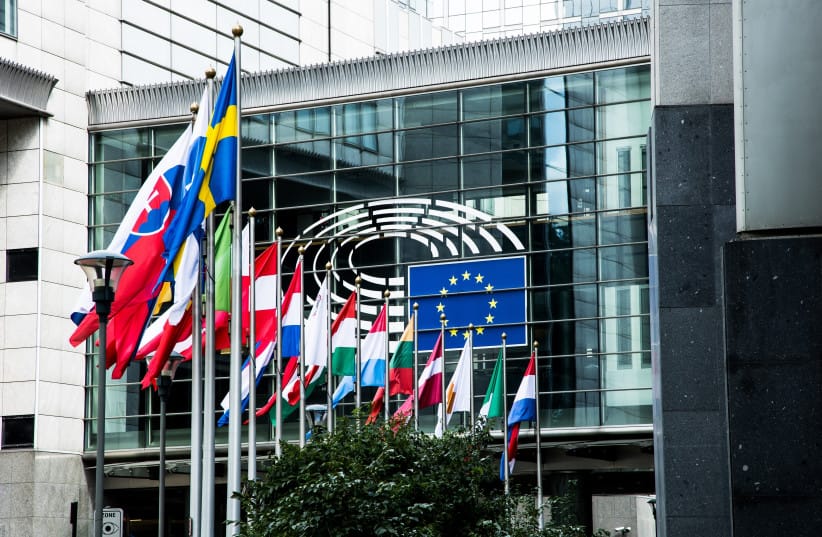
The conversation between Brussels and Jerusalem is usually dominated by disagreements over the Israeli-Palestinian conflict and wider regional politics. Those disagreements will continue.
Climate adaptation, however, offers a different agenda, one driven not by political division but by shared necessity. Extreme heat does not recognize borders or ideology. It tests farmers, physicians, engineers, urban planners, and governments alike.
This is where science diplomacy should take center stage.
Israel has spent generations building a modern state under conditions of chronic heat, scarce water, and recurring drought. Meeting those challenges required sustained investment in scientific research, technological innovation, and close cooperation among universities, government agencies, research institutes, and private industry.
Water illustrates the point. Today, roughly eighty percent of Israel’s drinking water comes from desalinated seawater. Combined with one of the world’s highest rates of wastewater reuse and decades of research on water-efficient agriculture, Israel has developed expertise that is increasingly relevant far beyond the Middle East.
Few European countries have built a national water system that combines desalination, wastewater recycling, and efficient water management on a comparable scale. That experience cannot simply be copied, but it can be studied, adapted, and improved through joint research.
Israeli researchers have also advanced drought-resistant crops, precision irrigation, renewable energy technologies, climate monitoring systems, and innovative approaches to managing scarce natural resources. These achievements belong to no single institution. They reflect decades of work across Israel’s universities, public laboratories, research centers, and technology sector.
Europe, for its part, brings equally important strengths. Its universities lead the world in climate science, environmental regulation, sustainable architecture, renewable energy, and urban planning. European institutions have also produced some of the world’s most ambitious climate legislation.
This is not a story of one side teaching the other. It is a partnership built on complementary strengths. Europe has become a global leader in reducing emissions. Israel has accumulated practical experience in adapting to heat and water scarcity. Together they can develop solutions that will benefit societies far beyond either region.
This is precisely the kind of partnership that Brussels and Jerusalem have spent decades building through scientific cooperation and research frameworks such as the Horizon Europe research program. These programs exist because both sides recognized that knowledge is among the strongest foundations of a durable relationship.
Yet today a striking contradiction has emerged.
At the precise moment Europe most needs climate-adaptation expertise, political pressure is growing in parts of the Union to suspend or restrict Israel’s participation in Horizon Europe. European governments are fully entitled to debate Israeli policies. But Europe will not strengthen its future by weakening scientific cooperation.
Climate change will not wait for political consensus. Every barrier to joint research reduces Europe’s ability to confront challenges ranging from water security and food production to energy resilience and public health. Excluding Israeli researchers would not slow global warming. It would simply deny the EU access to expertise that could help it adapt more effectively.
The historical dimension
There is also a deeper historical dimension to this story.
Israel’s first prime minister, David Ben-Gurion, believed that Israel’s future would be shaped in the Negev desert. He saw the desert not simply as territory to cultivate but as a laboratory where science and innovation would determine whether communities could flourish under arid conditions.
Almost 80 years later, that vision has acquired unexpected relevance. As Europe confronts longer droughts, more frequent wildfires, shrinking reservoirs, and increasingly dangerous summers, many of the questions Israeli scientists have explored for decades are becoming European questions as well.
None of this suggests that Israel has solved climate change. It has not. Israel continues to face rising temperatures and growing environmental pressures of its own. But experience matters, especially when it is shared with partners confronting similar realities.
For too long, relations between Israel and the EU have been viewed almost exclusively through the prism of political disagreement. A warming climate offers an opportunity to strengthen another pillar of the relationship, one built on scientific excellence, practical cooperation, and shared interests.
The next chapter in Israel-Europe relations may therefore be written not only in diplomatic meetings but also in laboratories, research centers, and university partnerships, where progress is measured by discovery rather than political rhetoric.
Europe is only beginning to learn what it means to live in a hotter world. Israel has been learning that lesson for generations. In a warming world, knowledge may prove to be the most valuable bridge between them.
The writer is a senior fellow at the Jewish People Policy Institute (JPPI) and a professor of European studies and international relations in the Department of Politics and Government at Ben-Gurion University of the Negev.