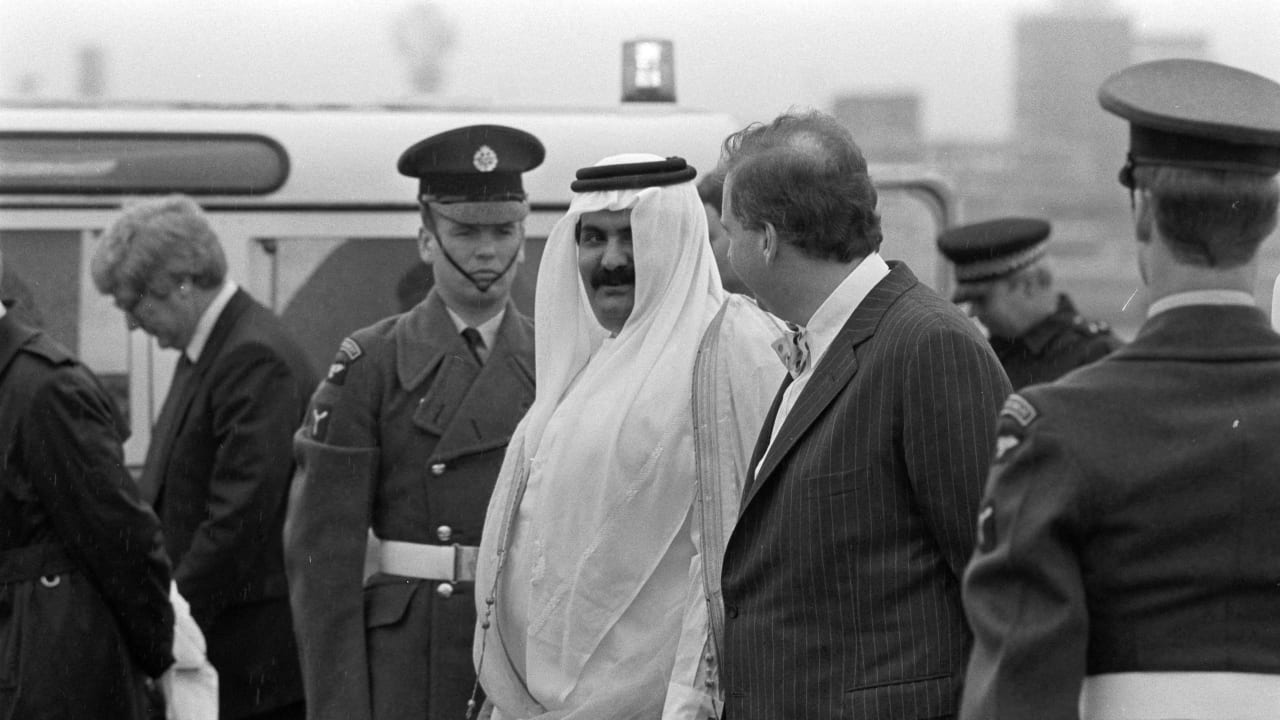
The recent passing of Qatar’s former ruler, Sheikh Hamad bin Khalifa Al Thani, has predictably triggered an avalanche of sanitized hagiography across Western capitals. Eulogists have rushed to celebrate the Father Emir as a visionary modernizer who transformed a desolate Gulf peninsula into an economic powerhouse. They point to the Doha skyline, the 2022 World Cup, and a staggering expansion of national wealth as proof of benign brilliance.
Yet, this glossy narrative deliberately obscures a far darker historical reality. Sheikh Hamad was the primary architect of modern state-sponsored Islamism, and a ruthless strategist who weaponized unimaginable energy wealth to institutionalize a toxic double game that continues to destabilize the civilized world.

The coup and the gamble
The blueprint for Qatar’s malignant rise began in June 1995, when Sheikh Hamad deposed his father in a bloodless palace coup. Inheriting dormant natural gas reserves, the young ruler embarked on an audacious gamble. By aggressively tapping into the North Field, the massive natural gas reservoir shared precariously with Iran, he engineered a rapid economic explosion.
Within a decade, Qatar became the premier exporter of liquefied natural gas, generating capital that defied its tiny population. Crucially, this fortune was never intended for mere domestic prosperity. Sheikh Hamad recognized that in a volatile region, traditional military might was unattainable.
Instead, he converted Qatar’s wealth into an asymmetric weapon, buying immense structural influence by deliberately empowering the most radical ideological movements in the Middle East.
The double game
The true genius of Sheikh Hamad’s strategy lay in a cynical double game that insulated his regime from external threats while exporting chaos. In 1996, the Emir funded the construction of the massive Al Udeid Air Base, granting the United States military a permanent presence on Qatari soil. By providing the Pentagon with a vital logistics hub, Sheikh Hamad secured an American defense umbrella that rendered Qatar untouchable.
Yet, in that same year, he established the Al Jazeera satellite network. While gullible Western observers celebrated the channel as a beacon of free press, Al Jazeera functioned as a sophisticated propaganda arm for the Muslim Brotherhood.
Under royal control, the network systematically mainstreamed virulent antisemitic tropes, glorified suicide bombers as holy martyrs, and provided an unrestricted megaphone to radical clerics. During the Arab Spring, Al Jazeera acted as an active combatant, stoking revolutions against moderate Arab governments to install Islamist regimes.
Financing jihad
Nowhere was the Father Emir’s destructive ideology more visible than in his personal patronage of Palestinian terror. In 2012, Sheikh Hamad became the first foreign head of state to visit the Gaza Strip after Hamas violently seized control. This visit did not merely provide diplomatic legitimacy to a genocidal organization dedicated to the destruction of Israel; it opened a permanent financial pipeline that channeled billions of dollars directly to militants.
While Doha defended these cash infusions as humanitarian relief, the financial reality was unmistakable. Qatari funding subsidized the administrative expenses of the Hamas government, allowing the group to divert its internal revenues toward building a massive subterranean fortress, acquiring weaponry, and executing catastrophic assaults against Israeli civilians.
To consolidate this alliance, Sheikh Hamad converted Doha into a sanctuary, hosting the political leadership of Hamas in five-star luxury as they orchestrated violence from the safety of air-conditioned high-rises.
The mediator myth
The embrace of Palestinian militancy reflected a systemic ambition to turn Doha into the capital of global radicalism. Under Sheikh Hamad’s stewardship, the Qatari capital became a safe haven for exiled Islamists. The regime allowed the Taliban to open a formal political headquarters in Doha, shielded designated terrorist financiers operating with complete domestic impunity, and maintained deep economic ties with the mullahs in Tehran.
To protect itself from backlash, Qatar crafted a masterful diplomatic fiction, presenting itself as a neutral regional mediator. This narrative turns reality on its head through a calculated arsonist and firefighter dynamic.
Qatar does not resolve conflicts out of a commitment to peace. Instead, the regime systematically finances, protects, and legitimizes the extremist movements that ignite regional conflagrations.
When these crises become unmanageable, Doha steps forward as the firefighter, offering its unique access to terrorists to negotiate ceasefires. This enabled the Al Thani dynasty to market its complicity as a diplomatic asset, forcing Western nations to thank the very state that funded the threat.
The enduring machine
When Sheikh Hamad abdicated the throne in 2013, passing leadership to his son, Sheikh Tamim bin Hamad Al Thani, many predicted a pivot toward moderation. That optimism represented a fundamental misunderstanding of Qatari statecraft. The transition was a refinement of the Father Emir’s machinery, not a rupture from it.
Tamim recognized that his father’s overt support for Islamism had brought Qatar to the brink of regional isolation. His solution was to wrap the radical infrastructure in a multi-billion-dollar layer of Western public relations. Under Tamim, Qatar perfected the art of sports-washing, acquiring European football clubs, investing in Western real estate, and hosting the 2022 World Cup to project an image of hyper-modernity.
Yet, beneath this glamorous veneer, the underlying mechanics of state-sponsored extremism remained untouched. The safe havens remained open, the financial pipelines to radical actors continued to flow, and the toxic messaging of Al Jazeera shifted into subtle digital formats.
A call for Western accountability
As Qatar observes its official period of mourning, the international community must finally discard the dangerous illusions that have compromised Western policy for three decades. The global Islamist infrastructure constructed by Sheikh Hamad cannot be tolerated any longer.
Strategic realism demands that the United States and its allies cease treating Qatar as a benign partner or an honest broker. The West must hold the Doha regime accountable by demanding an absolute, verifiable end to its financial and logistical patronage of extremist networks.
Sheikh Hamad has passed away, but the devastating fires of radical Islamism he systematically ignited and funded continue to burn across the Middle East, and the civilized world will suffer the catastrophic fallout of his decisions until it finds the courage to extinguish the source.
The writer, a fellow at the Middle East Forum, is a policy analyst and writer based in Morocco. Follow him on X: @amineayoubx.