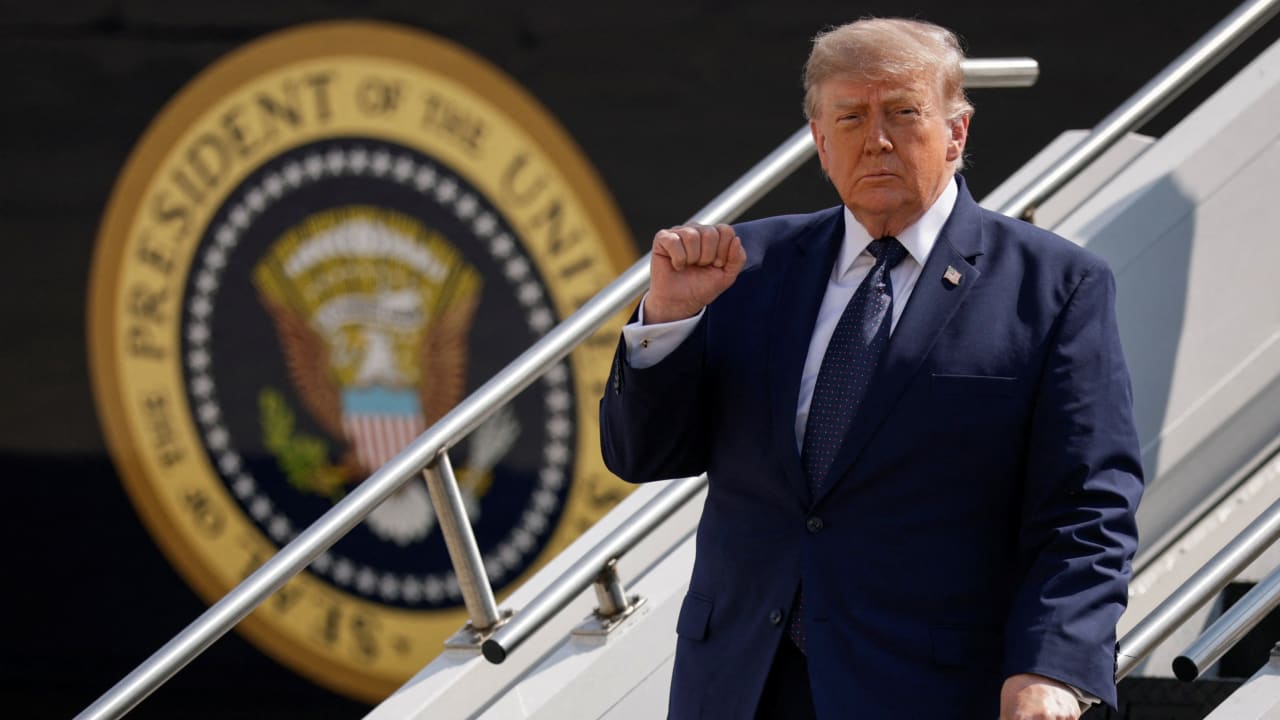
There’s a dark joke making the rounds these days: “If you want to see America’s future, look away for five minutes.” It’s not funny, because it captures a growing unease.
We’re living through a moment where the floorboards of democracy are creaking, and the people in charge seem more interested in testing the limits of the system than fixing anything.
The country that once prided itself on being a beacon of freedom is now wrestling with forces that are eroding the very norms that have sustained it for generations: a descent into moral confusion and the slow, quiet death of democratic norms.
Let’s start with perhaps the most consequential political narrative of recent years. In 2020, millions of Americans were told that the presidential election was stolen, that shadowy forces conspired to nullify their votes. Despite extensive litigation and recounts, no evidence emerged demonstrating fraud on a scale sufficient to alter the outcome.
The continued repetition of claims that have not been substantiated has fundamentally altered public confidence in elections. And it’s not just one individual. Many political figures have echoed these claims, choosing to repeat them, whether out of conviction, political calculation, or concern over alienating their supporters.
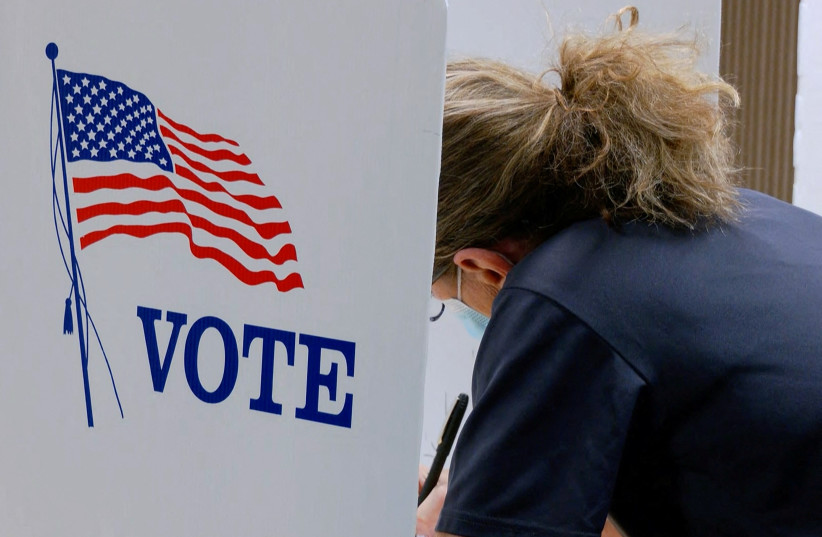
Take, for example, US Vice President JD Vance. He has made headlines for repeating the claim that the 2020 election was “rigged.” A striking pattern has emerged: allegations of widespread fraud seem to surface primarily after electoral defeat. Victories tend to reinforce confidence in the system, while losses often become evidence that the system itself is broken.
Vance has also faced criticism for comments suggesting that foreign governments, including Israel, exercise outsized influence over American politics. Those remarks have generated concern among some observers, who argue that they echo longstanding conspiratorial themes.
Reporters and Jewish organizations have also criticized him for failing to forcefully reject antisemitic rhetoric at public events and for responses they viewed as insufficiently clear.
Whether one agrees with those criticisms or not, the larger problem remains the same: accusations are increasingly made without compelling evidence, grievances accumulate, and the boundaries of acceptable political discourse continue to expand.
It’s not just the Right. On the other side, Rep. Ro Khanna recently drew attention after stating that he had been detained during a visit to Israel. Subsequent video released by his own staff appeared to show Israeli security personnel preventing his delegation from entering a restricted area while awaiting police, rather than detaining him in the conventional sense.
Critics argued that his public characterization overstated what had occurred. Khanna has also been associated with progressive organizations whose rhetoric toward Israel has, at times, drawn accusations of crossing the line from anti-Zionism into antisemitism.
So here we are: two politicians, from opposite ends of the political spectrum, both demonstrating how easily facts can become subordinate to narrative.
What they share isn’t ideology but a willingness to shape reality to suit political needs, to mobilize resentment and grievance, and to cultivate followers who increasingly trust only the voices within their own political tribe.
That may be the greatest threat of all.
America has always had its share of grifters, demagogues, and conspiracy theorists. But it also possessed a broad middle ground, a place where disagreement could coexist with mutual respect, compromise, and a shared commitment to objective reality. Today, that middle ground is shrinking.
Increasingly, movements on both the Right and the Left define themselves less by what they support than by whom they oppose. Empathy is replaced by suspicion. Debate gives way to moral certainty.
It is a culture war, yes, but it is also something deeper: a shift toward radical individualism and tribal identity, reinforced by political incentives, social media algorithms, and institutions that often profit from division.
Small incidents, big repercussions
History tells us where this road can lead. Erich Fromm, the philosopher and social psychologist, warned that societies that lose empathy and solidarity become increasingly vulnerable to authoritarianism.
In such an environment, it becomes easier to justify inequality, normalize discrimination, and erode the unwritten rules that sustain democratic institutions. Arguments that democracy is inefficient, compromise is weakness, or that only a strong leader can solve society’s problems begin to sound increasingly reasonable.
History demonstrates that democracies rarely collapse overnight. More often, they erode gradually, one norm, one institution, and one act of public indifference at a time.
It is tempting to believe that America is somehow immune, that its institutions, traditions, and national character will inevitably protect it. But institutions are only as strong as the people willing to defend them. Traditions can be rewritten. Constitutional protections can be weakened. Public trust, once lost, is extraordinarily difficult to rebuild.
The scariest part is how quiet this process can be. No tanks are rolling through the streets, no dramatic declaration that democracy has ended.
Instead, there are thousands of seemingly insignificant moments: a lie repeated until it becomes accepted truth; a politician refusing to condemn hatred because doing so carries political risk; a citizen dismissing every scandal with the comforting phrase, “both sides do it.”
Each incident seems too small to matter. Together, they reshape a nation. This is how democracies weaken. This is how citizens slowly become accustomed to the unacceptable.
Democracy does not usually disappear in a single dramatic moment. It fades when citizens lose confidence that truth matters, that institutions deserve respect, and that those with power are bound by the same rules as everyone else.
The middle ground is narrowing, the guardrails are weakening, and public discourse is increasingly organized around outrage rather than understanding.
The question before us is not simply whether America is moving in the wrong direction. It is whether we will continue retreating into ideological silos, each sustained by its own version of reality, until objective truth itself becomes impossible to recognize.
If that happens, authoritarianism will not arrive because democracy was defeated; instead, it will arrive because democracy was quietly abandoned.
Rather than fighting for democracy to continue, selfish leaders have been allowed at the helm, and their selfish desires have given voice to the old idea that the reign of the strongest nations often lasts only about 250 years.