The tragic deaths of two American service members in Jordan, followed by eight consecutive nights of US retaliatory airstrikes across Iran, have brought the Middle East to a critical junction.
As Washington intensifies its campaign against the Islamic Revolutionary Guard Corps’ maritime capabilities, the familiar, defeatist chorus in the West is already demanding immediate de-escalation. It is time to abandon this paralyzing dogma that the United States cannot achieve a decisive military victory.
A dangerous inversion of realities has infected Western strategic thinking – a naive assumption that fundamental geopolitical principles can be traded away for a fragile diplomatic deal. There is no reason to legitimize Iran’s absurd attempts to weaponize international law, such as distorting the UN Charter’s Article 51 to claim “self-defense” as a pretext for maritime piracy.
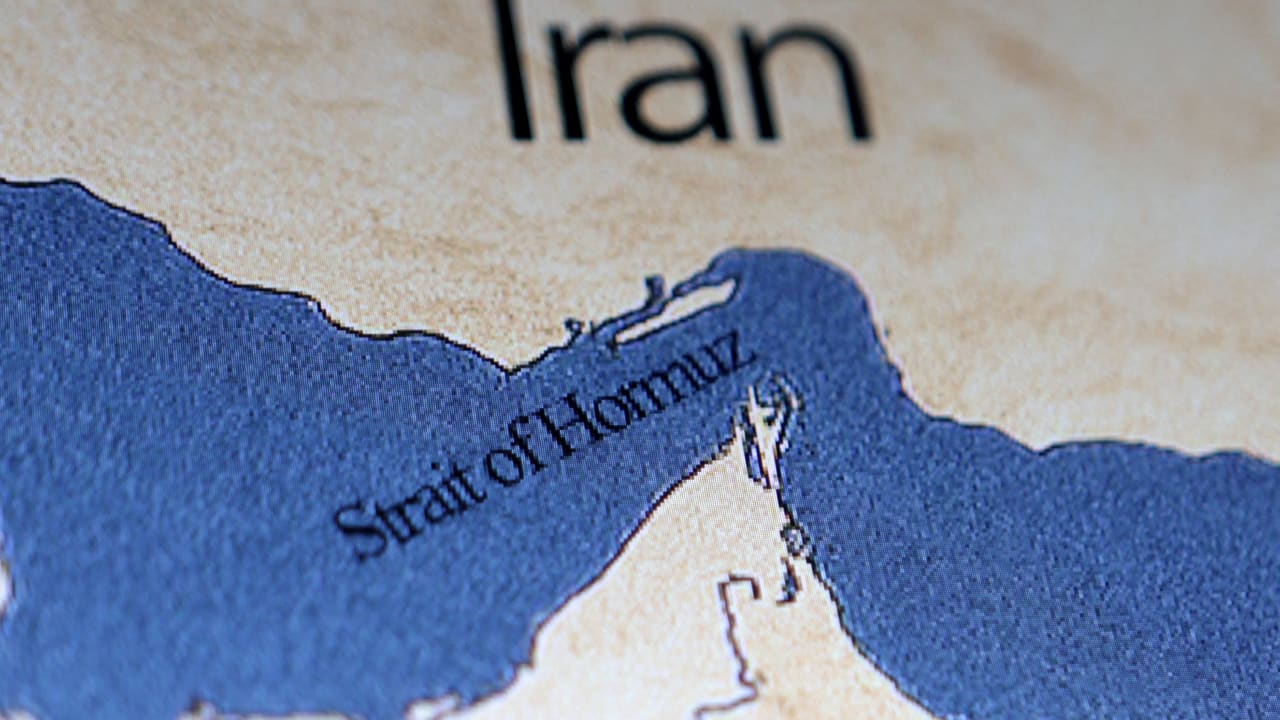
Euphemistically labeling Iran’s closure of the Strait of Hormuz as “negotiating leverage” is an immediate capitulation. Permitting a hostile power to choke a waterway carrying a fifth of the world’s petroleum validates extortion as statecraft. The United States must execute its strategic duty: securing and maintaining operational control over the strait.

Despite this imperative, a risk-averse foreign policy establishment dismisses this confrontation as just another “endless war,” wrapping its arguments in a misplaced moralism. For decades, Iran has waged an asymmetric war, directing terrorist proxies across the Middle East.
Under international law, this systemic proxy terror constitutes an indirect use of force, granting targeted nations an undeniable right to self-defense. Yet, current Western discourse perversely scrutinizes the lawful responses of Israel and the United States while ignoring Iran’s original sins.
Tehran’s reliance on proxy terror does not give it the right to bypass the freedom of the seas – a foundational pillar of global commerce. By closing the strait, Iran has escalated its covert campaign into overt defiance of global law, requiring an uncompromising military response.
The very notion that the hijacking of the Strait of Hormuz can be resolved through diplomacy is a fatal mistake. When a rogue state violates a cornerstone of global stability, leniency is not statesmanship; it is appeasement. Entering negotiations over an international waterway does not produce a compromise – it cements an institutional surrender.
It signals that Western resolve has a breaking point and that the United States is willing to bargain away global rules to avoid conflict. This creates a disastrous precedent, offering a blueprint for other revisionist regimes – from the South China Sea to the Baltic – to project power by taking global choke points hostage.
Not a war of choice anymore
The obsolete debate over whether this constitutes a “war of choice” must be put to rest. What is at stake today is the fundamental credibility of American military might. This is a conventional confrontation against a deeply entrenched state apparatus. Western analysts initially misjudged Iran as a fragile regime that would collapse under sanctions.
Instead, Tehran has maintained its capacity to launch sophisticated missile barrages while intensifying brutal domestic repression to crush internal dissent. This internal tyranny directly reinforces its external aggression: a regime that feels no accountability to its own people feels entirely unconstrained by the international community.
If strategic parallels are to be drawn, Iran should be compared to the aggressor, Russia, rather than a defending nation like Ukraine. Both are expansionist, authoritarian regimes attempting to dictate the terms of global commerce through violence.
Yet, the Western establishment exhibits a bizarre double standard. When Ukraine strikes critical infrastructure deep within Russian territory, it is applauded as a winning strategy. However, the moment Western forces target the Iranian regime, the West becomes paralyzed by an obsession with de-escalation and potential war crimes.
In any legitimate warfare scenario, dual-use infrastructure – bridges, airports, and energy grids – presents a lawful military target if it supports the enemy’s war machine.
The US cannot fight effectively without causing disruption. Yet the inevitable reality of collateral damage – which the Western narrative readily accepts when directed against Russian territory – is weaponized only when it applies to Iran.
The United States must refuse to surrender its strategic objectives to engineered public anxiety. Reopening the Strait of Hormuz cannot be achieved through economic sanctions; it can only be guaranteed by undisputed military force.
This campaign is not about enforced regime change, but about permanently detaching a vital global artery from the control of a terrorist state. The Strait of Hormuz is not an Iranian lake, and its closure undermines the very principle of freedom of navigation.
If the leader of the free world is incapable of protecting the global commons, it can no longer claim the status of a superpower. Western deterrence will only be restored when Washington demonstrates that a blatant violation of international order is met with overwhelming military reality.
Only when the strait is decisively removed from Iran’s grip will global security shift back in favor of the free world.
The author is a legal consultant on strategic international advocacy. She is a former senior lecturer on international law in Brazil and a Zvi Meitar Center for Legal Advanced Studies fellow researcher at TAU.