
One of the more irritating refrains heard whenever Israel comes under attack is that it has “the right to self-defense.”
Of course it does. Every country has the right to self-defense. Every society has the right to protect its citizens from those seeking to murder them.
The problem is that when these words are uttered by Israel’s critics, this right is acknowledged only in theory. The moment Israel actually exercises that right – whether against Hamas, Hezbollah, or Iran – they condemn it. The right exists only so long as it is never used.
The same principle applies beyond the battlefield.
In the modern world, public opinion is also a battlefield. Governments understand this. They spend billions trying to shape perceptions, build support, explain policies, and counter hostile narratives.
They hire public-relations firms, retain communications consultants, partner with influencers, produce digital content, and target audiences through social media.
Governments from the US, Taiwan, Russia, the United Arab Emirates, and perhaps most effectively, Qatar, among others, compete every day to shape perceptions.
Double standard applied to Israel
Only when Israel does so is it portrayed as something sinister. That was the unmistakable tone of recent articles in Time magazine and The Wall Street Journal, detailing Israel’s efforts to modernize its public-diplomacy campaign.
Both articles chronicled the government’s decision to hire a former Trump administration digital strategist and to deploy artificial intelligence, social media, influencers, and podcasters to improve Israel’s public standing. The implication was that there is something inherently troubling about this effort.
There isn’t. There is a clear line between covert influence operations and transparent advocacy. If the Israeli government or those acting on its behalf violate American law, conceal their identity, or secretly manipulate public discourse, that deserves scrutiny.
But if they are operating in compliance with the Foreign Agents Registration Act – which exists precisely because Congress anticipated that foreign governments would seek to influence American opinion – then there is nothing improper about what they are doing.
Indeed, it would be remarkable if Israel were not trying.
Vice President JD Vance recently accused elements within the Israeli government of mounting what he depicted as a nefarious influence campaign to sway American public opinion and policy-makers in an effort to keep the US at war with Iran indefinitely.
Vance’s frustration with the collapse of the Iran Memorandum of Understanding he brokered is understandable, but he is blaming the wrong party: Iran caused the agreement to fail, not Israel for doing what governments routinely do – engaging in public diplomacy.
Israel has an image problem. That is beyond dispute. Polls consistently show support for Israel declining sharply among Democrats and, increasingly, among younger Republicans. For too long, Israel fought this battle with yesterday’s tools – sending Prime Minister Benjamin Netanyahu to debate Hanan Ashrawi on CNN.
Israel fighting on today's battlefield
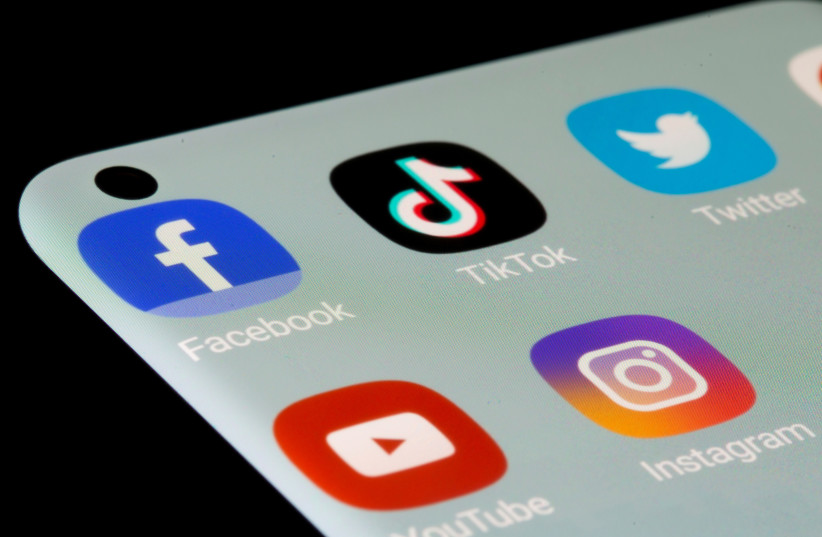
That era is over. Today’s information battlefield is TikTok, YouTube, podcasts, Instagram, X/Twitter, and AI-driven messaging. If Israel wants to reach younger audiences, it must communicate where those audiences actually are, not where they were 30 years ago.
According to Time and The Wall Street Journal, that is precisely what it is now attempting to do. Good.
As long as these efforts are legal, there is nothing untoward about them. As The Wall Street Journal put it, Israel is “trying to shore up its US reputation with help from influencers, Trump insiders and millions of AI-driven texts.”
Its enemies have understood the importance of this battlefield for years.
“Several countries and organizations” have penetrated social media and systematically poisoned minds, especially young minds, against Israel, Netanyahu said in a recent CNN interview.
Israel ignored that reality for far too long. The government’s decision in December to allocate NIS 2.35 billion in this year’s budget for public diplomacy and Israel advocacy is welcome. If anything, it should have happened years ago.
Jews around the world have asked for years why Israel’s public diplomacy is so poor. After the October 7 massacre, that question became impossible to ignore.
Whenever a commission of inquiry is finally established to investigate the failures surrounding that day, it needs to examine not only the intelligence and military breakdowns, but also why Israel entered perhaps the greatest communications battle in its history so spectacularly unprepared and flat-footed.
It is finally trying to correct that mistake. That is neither nefarious nor sinister. Rather, it is imperative and long overdue.