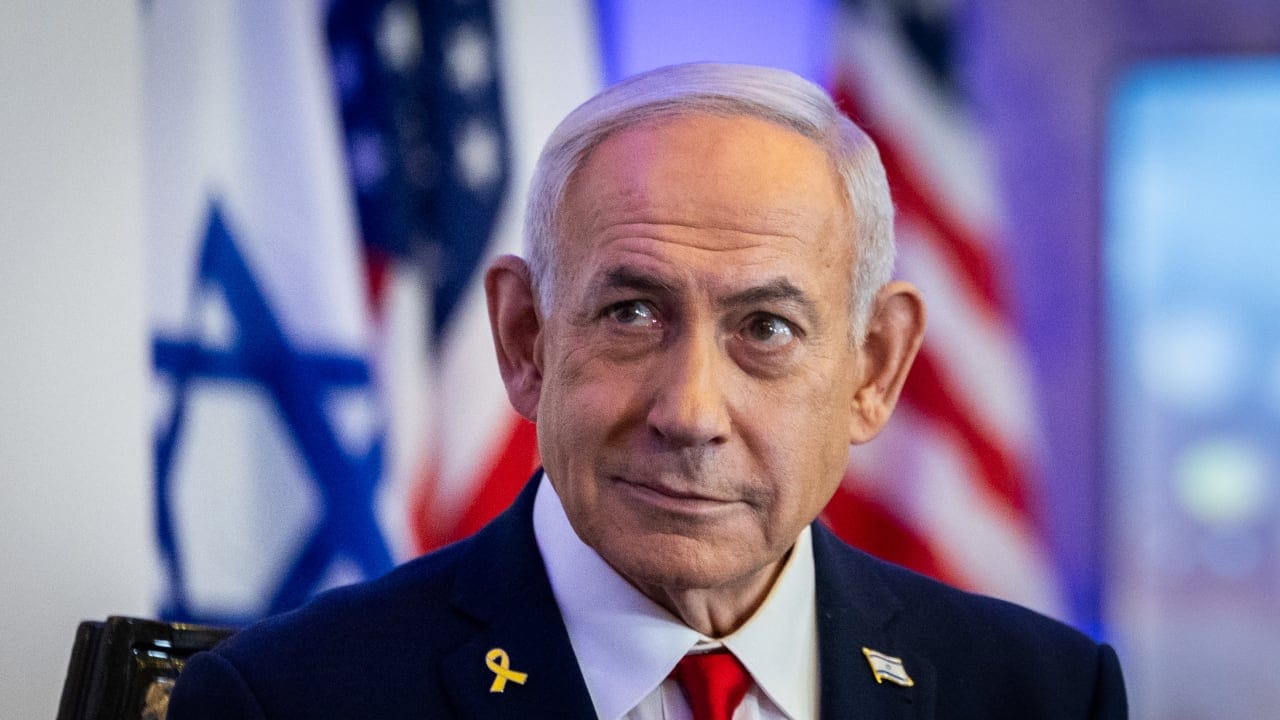
Benjamin Netanyahu will eventually leave office, another government will take his place, Israel’s democracy will continue as it always has, political arguments will remain fierce as they are in every healthy democracy, but none of those inevitable political changes will answer the defining question of the post-October 7 era: after the worst massacre of Jews since the Holocaust, does the democratic West still understand why the State of Israel exists?
That question is larger than Netanyahu. It is larger than any Israeli coalition. It is ultimately a question about whether the modern world still understands the Jewish story. Across much of the Western political conversation, Israel has increasingly become a symbol onto which competing ideological movements project their own theories. In the process, Jewish history itself often disappears.
On parts of the progressive Left, Israel is frequently viewed primarily through the language of colonialism, privilege, and power. Through that framework, Jewish history risks being compressed into a modern political theory that cannot fully account for centuries of exile, persecution, expulsions, pogroms, and genocide that shaped the modern Zionist movement.
On parts of the populist Right, influential commentators such as Tucker Carlson have questioned long-standing American support for Israel and argued that the United States should fundamentally reconsider its relationship with the Jewish state.
These political traditions disagree on almost everything else. Yet they increasingly converge on one remarkable tendency. They debate Israel’s military actions. They debate Israeli governments. They debate Netanyahu. Far less attention is given to the historical experience that explains why the Jewish state exists at all. The October 7 massacre did not create that history. It reminded the world of it.

I write not only as a black Ethiopian Jew, an Israeli, and an American citizen, but also as someone who served New York City for more than 20 years as a public law enforcement officer. My experience taught me that the first responsibility of every democratic government is the protection of innocent life.
The modern State of Israel is not merely the product of a 20th-century political movement. It represents the restoration of the ancestral homeland of one of the world’s oldest continuous peoples.
The Jewish people returned from Africa, Europe, the Middle East, Asia, and the Americas to rebuild one homeland – the ancestral homeland where Jewish civilization first emerged.
Jerusalem, established as the capital of the ancient Kingdom of Israel under King David, has remained the spiritual and national heart of the Jewish people throughout history.
Across nearly two thousand years of exile, Jews preserved that connection through prayer, scripture, ritual, and collective memory. They ended the Passover Seder with the words, “Next year in Jerusalem.” Modern Zionism did not invent that connection; it transformed one of history’s longest-enduring national memories into political reality.
New opportunity post-Netanyahu
The post-Netanyahu generation has an opportunity to present a new Zionism to the world. The strongest answer to the claim that Zionism is merely a Western colonial enterprise is not rhetoric but reality. Ethiopian Jews, whose community preserved Judaism in Africa for centuries while praying for Jerusalem, are living evidence that the Jewish people are not defined by one race, one continent, or one culture.
That reality should also be reflected in Israel’s leadership. The new Zionism should confidently appoint the most qualified Israelis from every part of Jewish society – including Ethiopian Israelis – to senior diplomatic and governmental positions.
Imagine an Ethiopian-Israeli serving as Israel’s foreign minister, ambassador, spokesperson, or senior international representative before the United Nations, African governments, American universities, or global media.
Such leadership would not merely symbolize diversity; it would demonstrate that the Jewish state is represented by descendants of Jews who returned from Africa to the ancestral homeland of the Jewish people.
It would challenge simplistic portrayals of Zionism as exclusively a European colonial movement by illustrating the historical diversity of the Jewish people themselves. Israel should elevate leaders because of their merit, experience, and ability, while recognizing that the nation’s diversity can strengthen its credibility and moral voice abroad.
As an Ethiopian-Israeli, I believe this is not simply a question of representation. It is a strategic opportunity. When qualified Ethiopian-Israelis, Mizrahi Jews, immigrants, and other voices stand before the international community on behalf of Israel, they tell a story that no slogan can erase: the Jewish people are indigenous to the Land of Israel and were dispersed across continents before returning from Africa, Europe, the Middle East, Asia, and the Americas to rebuild their ancestral homeland. That reality complicates narratives that portray Zionism solely through the lens of European colonialism.
That historical continuity explains why October 7 was experienced by Jews around the world not simply as another terrorist attack, but as an assault against a people who know from history what life without sovereignty has often meant. Criticizing Israeli governments is legitimate. Israelis themselves do so every day. I have disagreed with aspects of Netanyahu’s policies and strategic decisions, just as millions of Israelis have. Democratic disagreement is not a weakness; it is one of Israel’s defining strengths.
For too long, many Ethiopian-Israelis have argued that despite deep contributions in military service, public life, education, and diplomacy, they have remained underrepresented in some of Israel’s most visible international leadership roles. If Israel and the worldwide Jews wish to present a confident vision of a renewed Zionism, it should ensure that talented Ethiopian-Israeli ministers, ambassadors, and international spokespersons have genuine opportunities to serve at the highest levels. The Jewish people returned from Africa, Europe, the Middle East, Asia, and the Americas not to erase their distinct histories but to build a common future in the land that has united Jewish memory for millennia.
After Netanyahu, Israel will not simply need another prime minister. It will be determined by whether Israel remains secure enough to defend its citizens, democratic enough to preserve vigorous debate, united enough to draw strength from the diversity of the Jewish people, and confident enough to remind the world that Jewish sovereignty is not the beginning of the Jewish story.
The writer is a former New York City Supreme Court detective, an investigator and educator in conflict resolution and restorative peace, and a moral diplomacy expert. His upcoming book, Moral Diplomacy for a Broken World, is inspired by the late Rabbi Jonathan Sacks.