
On March 9, 2026, the US State Department designated the Sudanese Muslim Brotherhood as a Specially Designated Global Terrorist and announced its intention to list the group as a Foreign Terrorist Organization, effective March 16. Most of the coverage framed the move as an intervention in Sudan’s civil war, but that framing fails to see the bigger picture.
The designation is part of a widening campaign against the Iranian and Muslim Brotherhood global network, and Israel has clear reasons to make the same call under its own counter-terrorism regulations. Israel’s National Bureau for Counter Terror Financing should follow the State Department’s lead.
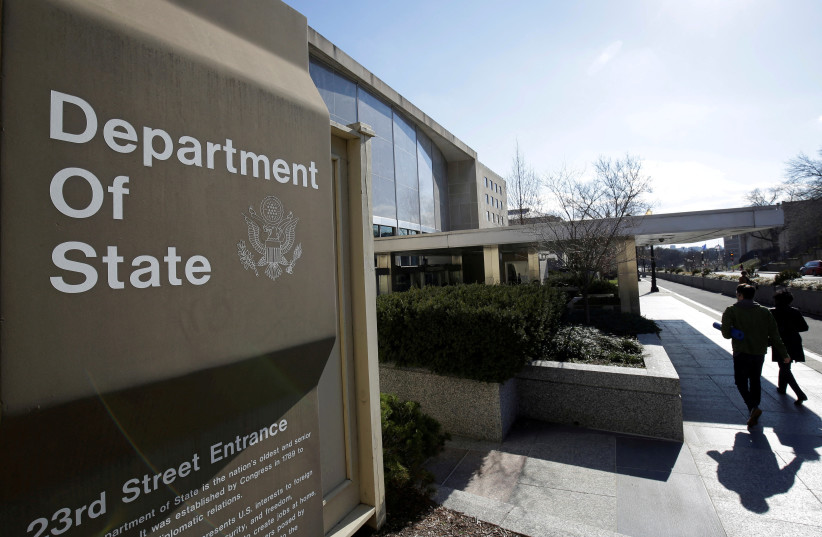
The State Department did not target a charity or an individual preacher. It named the Sudanese Muslim Brotherhood, which it identifies as the Sudanese Islamic Movement together with its armed wing, the al-Baraa Bin Malik Brigade, as a terrorist organization.
According to the department, the group has contributed upward of 20,000 fighters to Sudan’s war, and many of them received training and support from Iran’s Islamic Revolutionary Guard Corps. Its brigades have carried out mass executions of civilians selected by race, ethnicity, and suspected political affiliation.
The al-Baraa Bin Malik Brigade was already blacklisted in September 2025. The March action extended the designation from the fighting units to the movement that recruits, finances, and directs them. This is part of a larger Trump administration push to combat the Muslim Brotherhood’s ideology rather than just the tip of its spear.
Prime Minister Benjamin Netanyahu has issued multiple statements on his intention for Israel to designate the Brotherhood as well, and the Sudanese branch is a strategic starting point because it works as an explicit warning to Tehran, which the State Department described as the world’s leading state sponsor of terrorism and the source of the IRGC support flowing to the group.
This did not happen in isolation. In January, the United States designated the Egyptian, Jordanian, and Lebanese branches of the Muslim Brotherhood, citing their support for Hamas and, in the Lebanese case, its alignment with the Hezbollah-Hamas axis.
Read together, the pattern is deliberate and trailblazing. Washington has abandoned the debate over whether the Brotherhood is a single organization that must be labeled all at once, and is instead designating the chapters that independently meet the legal threshold, one theater at a time. Israel can and should follow suit.
The objection in Jerusalem will be that Sudan is a distant conflict and that Israel already carries a heavier load closer to home. That reading understates both the strategic stakes and the current opportunity.
The Sudanese Islamist networks operate along the western shore of the Red Sea, near the approaches to the Bab al-Mandab Strait that the Houthis have used to attack commercial shipping for the past two years.
Iran’s investment in these networks is consistent with its wider strategy of positioning armed proxies around shared chokepoints and opening additional fronts against Israel and Western interests.
An IRGC-supported force of roughly 20,000 fighters with a presence on that coastline is not a purely domestic Sudanese concern. It sits within the same geographic proxy structure that has fired drones toward Eilat and missiles at Red Sea traffic, and it could become a future choking force in tandem with the Houthis.
The organizational lineage is more direct still. Hamas identifies itself as the Palestinian branch of the Muslim Brotherhood, in its founding charter and in its own statements.
The American campaign, from the November 2025 presidential action against the Brotherhood through the January branch designations, is built on that connection: restricting the material support that moves between Brotherhood chapters and Hamas degrades Hamas itself.
Designating an armed wing is an established practice
The strongest objection is definitional: that a movement carrying an ideology is not the kind of discrete, organized entity a counter-terrorism statute is built to designate. But that objection collapses once you look at what Israel and its partners have already done.
The consistent, accepted practice is to designate the organized armed vehicle of an Islamist movement, and where the movement itself is the structure that recruits, finances, and directs those fighters, to designate the movement alongside its wing rather than stopping at the fighters.
At a minimum, Israel should designate the al-Baraa Bin Malik Brigade, the armed wing already blacklisted by Washington in September 2025. But the stronger and better-supported step is to do what the United States did with the Brotherhood’s other chapters: designate the movement and its armed wing together.
When Washington acted against the Muslim Brotherhood in January 2026, it did not confine itself to fighters. It designated the Egyptian Muslim Brotherhood and the Jordanian Muslim Brotherhood as organizations, as Specially Designated Global Terrorists, for the material support they channel to Hamas.
It also designated the Lebanese branch, al-Jamaa al-Islamiyya, as a full Foreign Terrorist Organization, together with its leader, an organization that operates the al-Fajr Forces and fires rockets into northern Israel alongside Hezbollah and Hamas.
In each case, the unit of designation was the branch itself, not merely its military arm. The Sudanese listing follows the same logic: the Sudanese Islamic Movement together with the al-Baraa Bin Malik Brigade.
Nor is designating an armed Islamist formation novel for Israel, which has long treated the organized fighting and financing structure of a jihadist movement as the designable entity, from al-Qaeda and its regional affiliates to a long roster of armed groups already carried on terror lists:
Al-Qaeda
Army of Islam (Jaysh al-Islam)
Islamic Army of Aden
Army of Emigrants and Supporters (Jaysh al-Muhajireen wal-Ansar)
Jaysh Khalid ibn al-Waleed
The Tawheed Brigade
Jund al-Khilafah in Tunisia
Khatiba al-Tawhid wal-Jihad (KTJ)
Khatiba Imam al-Bukhari (KIB)
Islamic International Brigade (IIB)
Riyadus-Salikhin Reconnaissance and Sabotage Battalion of Chechen Martyrs
Israel’s own counter-terrorism list already reflects this logic: it carries local armed formations such as the Jenin, Tulkarm, Nablus, and Balata battalions, alongside older Sudanese Islamist entities designated in 2008 and 2014.
Designating the al-Baraa Bin Malik Brigade would break no new ground; designating the Sudanese Islamic Movement alongside it would simply apply, one theater further, the same movement-plus-wing standard Washington used in Egypt, Jordan, and Lebanon, and that Israel has used for years closer to home.
The time to act is now
Some will argue that an Israeli designation is redundant once Washington has acted. It is not. Two listings compound rather than repeat; they close different legal and financial channels, and an independent Israeli listing reinforces alignment with Washington during a trying period.
Some may argue that Israel should not open a new file while managing Iran, Lebanon, and Gaza. But these are not separate files. The Sudanese Brotherhood, the Houthis, Hezbollah, and Hamas draw on the same Iranian support structure, and Sudan could turn into the next Yemen. The effective response is to map that structure and cut the strands that can be reached legally.
Washington has handed Jerusalem one that is already documented. The precedent is set, the armed wing is named, and the only remaining question is whether Israel chooses to take simple action.
The writer is a geopolitical and security consultant and an expert on emergency response to drone warfare. He frequently writes on MENA affairs in outlets including Fox News, The Hill, The Diplomat, Gulf Business and more.