Last week, I attended the Ideological Conference: On State and Jews organized by the Department for Zionist Jewish Identity at the World Zionist Organization and dedicated to the complex relationship between Israeli Jews and those living in the Diaspora.
During the discussions, voices of deep concern were heard regarding the decline in aliyah to Israel, the weakening of Jewish identity, and even grim forecasts regarding the future of Diaspora Jewry. Israel’s Diaspora Affairs and Combating Antisemitism Minister Amichai Chikli went so far as to say that “Diaspora Jewry is dying.”
I listened to these words, but precisely out of my deep love for the Jewish people and the State of Israel, as well as my own decades-long work with Diaspora communities, I felt a need to offer a different perspective – a view that sees Diaspora Jewry not as a temporary phenomenon on its way to disappearing, but as a vital, creative, and meaningful part of the ongoing story of the Jewish people.
Jewish history teaches us to be wary of premature eulogies. Time and again, it seemed that Jewish centers had reached their end, yet out of crisis, new hubs of creativity, leadership, and Jewish life emerged.

Throughout the generations, the Jewish people have demonstrated a rare capacity to change, adapt, and renew themselves. Migration, social shifts, and cultural transformations have reshaped the Jewish map repeatedly, often in ways no one could have predicted.
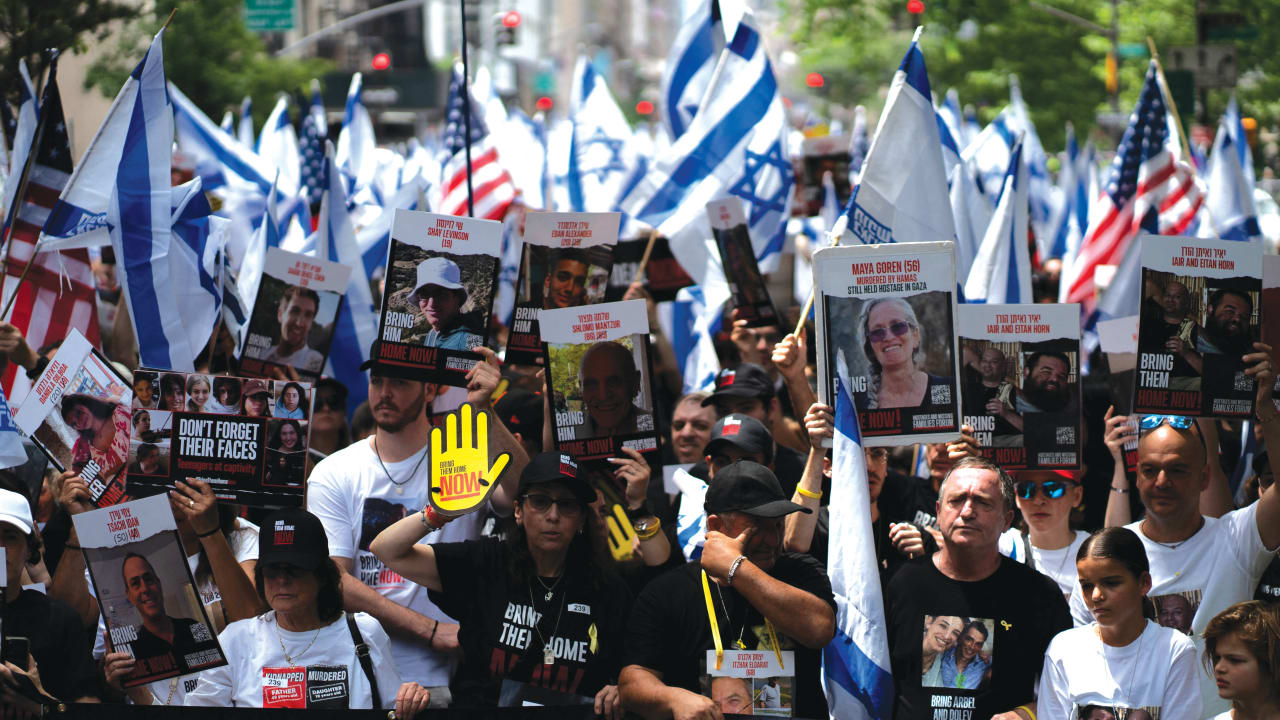
Such processes are occurring today as well. Alongside communities coping with demographic challenges, new communities are rising in Europe, in the Gulf States, and elsewhere. Joining them are hundreds of thousands of Israelis living outside Israel, who bring with them a new language, culture, and lifestyle, impacting the character of local Jewry in ways whose full significance it is still too early to assess.
Anyone measuring Diaspora Jewry solely through synagogue membership rates or affiliation with a specific religious stream misses a significant part of reality. Jewish identity today is also shaped through cultural centers, open batei midrash (study halls), Israeli communities, social initiatives, learning, art, and new connections to tradition.
Judaism is not disappearing; it is changing its forms of expression.
The challenges must not be ignored. Assimilation exists, and in some communities, there is also a decline in numbers.
But at the same time, we are witnessing significant growth in Orthodox and haredi (ultra-Orthodox) communities, as well as an awakening of Jewish identity among many young people, especially since October 7. The picture is far more complex than a sweeping declaration of demise.
Partnership, not concern
Diaspora Jewry also has a unique, value-based role. Many Jewish thinkers saw Jewish existence outside the Land of Israel as a mission, not merely a historical constraint. Social psychologist and philosopher Erich Fromm emphasized the moral responsibility of the Jewish people within broader society.
The philosopher Franz Rosenzweig saw Jewish dispersion as an expression of a spiritual purpose that transcends the borders of any single state. Even if we do not accept all of their conclusions, it is difficult to ignore how the global Jewish presence has enriched Jewish culture and expanded its influence on humanity.
A similar idea appears in the writings of 19th-century sage Rabbi Tzadok HaKohen of Lublin, Poland. In his view, the dispersion of the people of Israel among the nations is not merely a result of exile, but part of a process of tikkun, or repair.
As Jews encounter different cultures, they discover sparks of truth and goodness within them, and bring them back into the Jewish world. Dispersion thus becomes a source of spiritual influence rather than an expression of weakness.
The late Rabbi Lord Jonathan Sacks, former chief rabbi of the UK, emphasized that the relationship between Israel and the Diaspora is not a one-way street. Just as the State of Israel provides world Jewry with a national and spiritual anchor, Diaspora communities enrich Israeli society with experience, creativity, leadership, and a broad perspective on our place in the world.
Perhaps the time has come to replace the language of mere “concern” with the language of “partnership.” Israel should view Diaspora Jewry not only as a community in need of our help, but as a full partner in shaping the future of our people.
Diaspora Jewry is not dying. It is changing. It is searching for new languages, creating new frameworks, and seeking new ways to be Jewish in a changing world. Our great challenge is not to eulogize it, but to learn to listen to it, collaborate with it, and build the future of the Jewish people together.
The writer is director of the Women’s Division of the Beren-Amiel/Straus-Amiel Emissary Training Institute, part of the Ohr Torah Stone network.