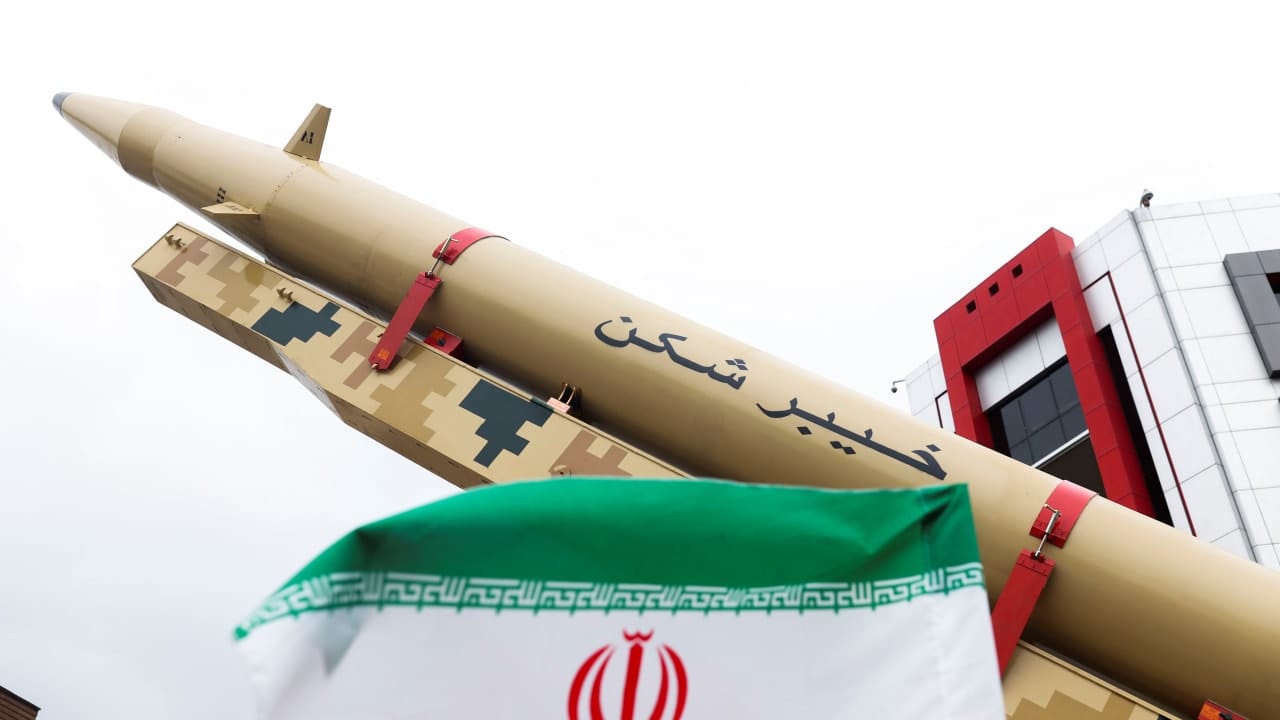
Across Washington and European capitals, the weakening of Iran’s regional proxies is increasingly presented as proof that Tehran’s influence in the Middle East has been decisively diminished.
Hezbollah has been battered. Hamas has suffered devastating losses. The Houthis face mounting pressure.
That verdict may be dangerously incomplete. It assesses the condition of Iran’s proxies without asking whether their attrition has served the purpose for which Tehran built them.
Iran’s proxies were never intended simply to defeat Israel or the United States conventionally. They impose costs, generate simultaneous crises, and complicate enemy planning. They divide intelligence assets, disperse military forces across multiple theaters, and trap political leaders in a permanent cycle of crisis management.
Their objective need not be victory on any single front. It may be strategic delay.

For Tehran, the degradation of peripheral assets may be an acceptable price if it exhausts its adversaries, fragments their attention, and shields what the regime regards as its ultimate guarantee: the ability to cross the nuclear threshold. Instability across Lebanon, Gaza, Yemen, and the West Bank does precisely that, reducing the nuclear file to one crisis among many.
This is the attrition illusion: the inference that weaker proxies necessarily mean a weaker Iran.
A state can expend peripheral assets once they have served their strategic purpose. The relevant measure is therefore not the damage inflicted on Iran’s proxies, but whether the time spent inflicting it has made the nuclear program harder to stop.
Iran has invested heavily in the survivability of its nuclear infrastructure. Enrichment facilities have been hardened, dispersed, and positioned to complicate conventional military action. As the program becomes more deeply buried and resilient, the prospect that a single strike, or even a brief campaign, could eliminate the underlying capability recedes.
This creates the paradox of intelligence success.
Israeli and Western intelligence services have demonstrated exceptional penetration of Iran’s military and security apparatus. Yet intelligence, once operationalized, can expose and erode the access that produced it. A successful action may reveal what was discovered, how it was discovered, and which vulnerabilities were exploited.
An exposed network can be dismantled. A compromised channel can be closed. A revealed method can trigger new counterintelligence. Iran can compartmentalize sensitive activity, redesign its security architecture, relocate critical functions, and fortify the infrastructure on which its strategic programs depend.
Every operational success may therefore narrow the window for the next one.
Covert operations and targeted actions remain valuable. They can disrupt critical capabilities, impose delays, and force Tehran to divert resources towards protection and recovery. But tactical disruption is not strategic resolution.
Repeated operational victories may coexist with an adverse strategic trajectory. As Iran adapts, intelligence collected today may lose value tomorrow. The challenge then shifts from locating known capabilities to determining, with sufficient confidence, what remains concealed.
Iran, proxies, and nuclear achievements
Iran's regional aggression and nuclear ambitions are components of one strategic system. The proxy network creates pressure and distraction at the periphery. The nuclear program promises survival at the center. An integrated doctrine of deterrence must address both.
Washington and its allies should establish that escalation conducted through Iranian proxies will not be treated as separate from the regime that funds, equips, and directs them. Sustained aggression across several fronts must carry consequences not only for the proxies, but also for the Iranian institutions and strategic assets that enable them.
Western governments must replace tactical accounting with strategic measurement. The number of commanders eliminated or weapons depots destroyed matters, but it does not determine the outcome.
The decisive tests are whether Iran’s capacity to regenerate its proxy network has been reduced, whether its ability to coordinate regional escalation has been constrained, and whether its nuclear trajectory has been durably altered.
Intelligence policy must preserve the continuity of the intelligence picture. Its value lies not only in the action it enables today, but in the understanding it preserves for tomorrow. Operational opportunities must be weighed against the danger of exposing sources, methods, and access that may prove indispensable when the stakes are higher.
Time is not neutral.
In conventional war, time may favor the actor with greater resources, resilience, and industrial depth. In a nuclear contest, it may favor the state approaching an irreversible threshold.
The weakening of Iran’s proxies may constitute meaningful progress. Tehran may nevertheless regard their losses as the tolerable cost of dispersing attention, draining adversaries, and shielding the capability that could transform the strategic balance of the Middle East.
A diminished proxy network will mean little if achieving it leaves Iran closer to an irreversible nuclear threshold.
The writer is a strategic adviser and former senior adviser to the chairman of the Knesset Foreign Affairs and Defense Committee.