Relations with our Arab neighbors are shaped by more than a century of competing national claims, religious passions, and accumulated trauma. Anyone who pretends that simply sharing a strip of land between the river and the sea will, in itself, produce peaceful and fruitful coexistence has not been paying attention. Land does not reconcile people. People do, when they choose to.
And it cuts both ways. Arab Israelis are not a passive backdrop to our story. Just as we have responsibility toward them, they have agency over their own future. The choices their leaders make about violence, governance, religion, and citizenship are real choices, and the consequences are real consequences.
If we want Israel to thrive as Jewish and democratic, we have to take the question of living together with our Arab citizens seriously. One of Zionism’s historic achievements is that two million Arabs are full citizens of the Jewish state. This should not be forgotten, understated, or taken for granted.
Some carry a fantasy that Israel could exist without any Arabs at all. I want to offer a different dream: a country that treats its Arab citizens as partners rather than as a problem to be managed. That is both a Zionist and Jewish mission. It is also a matter of crime, security, economics, and social solidarity.
To live here together, we need a vision. Not a tactic. Not coalition arithmetic. A vision.

The background behind Ra'am
Part of that vision is the patient, often unpopular work of building partnership with those who actually want it, politically, and where possible religiously. That is why I have spent recent months learning about Ra’am, the United Arab List, which has become the lightning rod for the entire question of whether Arab Israelis can be political partners, and to understand the opportunity this opens.
The story is more interesting than the slogans allow. The Southern Branch of the Israeli Islamic Movement, from which Ra’am emerged, was founded by Sheikh Abdullah Nimr Darwish, a man who in the 1980s went to prison for involvement in a militant Islamist underground.
What happened after he came out is the part that ought to be taught in Israeli and Palestinian schools. He renounced violent jihad, formulated a religious doctrine of Wasatiyyah, the Islamic “middle way,” and ruled that Muslim citizens of Israel are religiously obligated to obey the laws of the state, to reject political and religious violence, and to seek the welfare of all who live in the land.
His successors have built a body of jurisprudential rulings – fatawa – that govern everything from organ transplantation to public health. This is not a movement waiting for its moment. It is a religious authority taking responsibility for the complexities of life inside an actual state.
Dr. Nesya Shemer of Bar-Ilan University, whose research examines the religious jurisprudence of the Southern Branch of the Islamic Movement, has argued that its positions should be understood as a serious and internally developed Islamic legal tradition, rather than automatically dismissed as a tactical disguise for Muslim Brotherhood intentions (taqiyya).
Her research also challenges the assumption that every expression of moderation must be dismissed as taqiyya. If no behavior, no vote, no demand that one’s own MK resign for denying Hamas’s October 7 atrocities can ever count as evidence, then we are no longer engaged in analysis. We are engaged in conspiracy theory.
Mansour Abbas's role
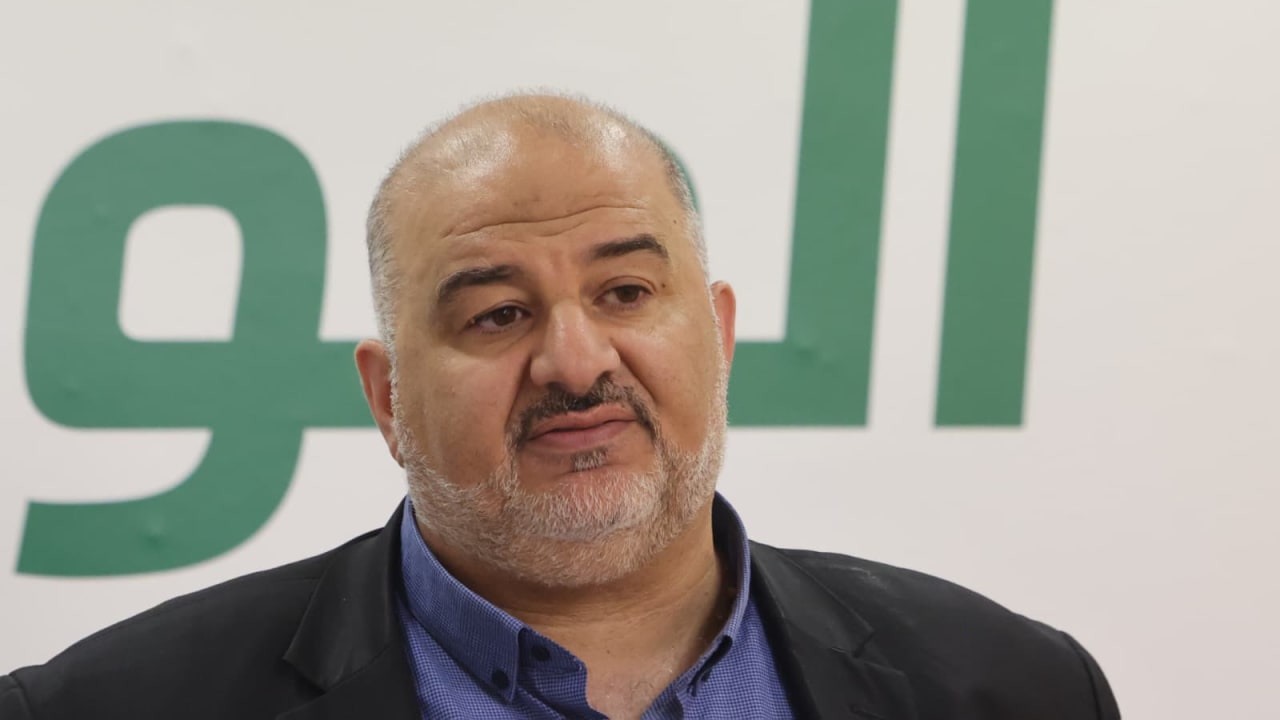
Mansour Abbas has done all of these things and enjoys substantial support within the Arab community. He has publicly recognized Israel as a Jewish state in both Hebrew and Arabic, not because of his identity as a Palestinian citizen of Israel but despite it.
In 2021, he visited an arson-destroyed synagogue in Lod and pledged to help rebuild it. He demanded the resignation of MK Iman Khatib-Yassin after her remarks denying the October 7 atrocities, telling the media that her words “negate our values and also the religion of Islam.” All this in spite of strident opposition from other Arab Israeli factions. Beyond this, Hamas leader Yahya Sinwar called him a traitor.
That is not the resume of a sleeper agent.
Abbas himself has said he does not want to be the deciding vote – the 61st finger – in the next coalition. He understands the anxieties such a configuration would generate, and he is wise to defuse them.
But I want to suggest something deeper. Partnership with the forces of religious and political moderation in Arab Israeli society should not be the tactic of last resort when no Jewish coalition can be assembled. It should be what we seek, because the Abrahamic vocation of the Jewish people, articulated to our father Abraham himself, is to be a blessing to all the families of the world.
This is not naivety. The risks are real and the failures will be many. Abbas does not represent the entire Arab community, and Ra’am itself is complex, which demands us to proceed with caution and to insist on real accountability from potential partners.
But a Jewish state that cannot extend its hand to those Arabs who have extended theirs to us, to those who have paid for it in their own community, would be squandering a historic opportunity.
We should answer the offer. Honestly, carefully, and without illusions. But we should answer it with the politics of hope, not fear.