
Four loaves of challah, a Friday afternoon in Australia, and the long reach of one Jew who refused to be embarrassed.
I am currently in Perth, Australia, celebrating my granddaughter’s bat mitzvah. When I arrived, I was shown a photograph. It is not a picture of my family, or of Israel, or of anything a stranger would think worth saving.
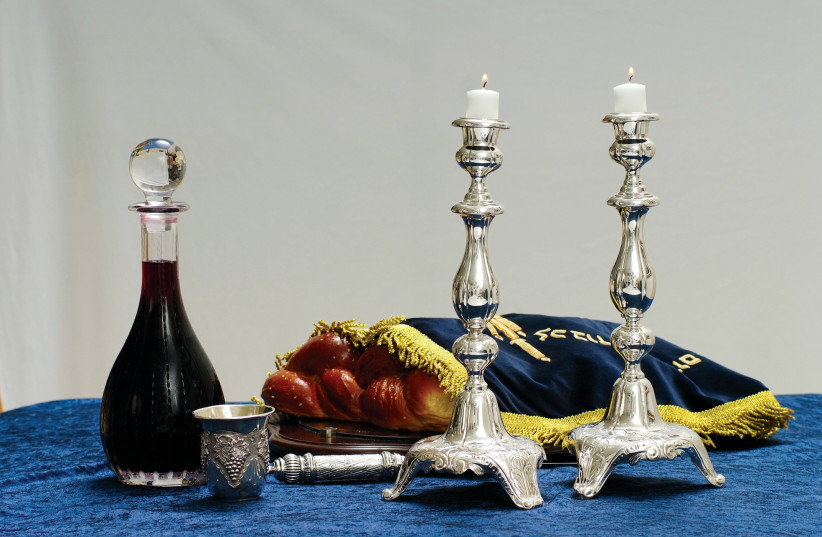
It is a photograph of four loaves of challah, slightly lopsided, still steaming on a wire rack in a kitchen somewhere in Australia. It was sent by a young man I have never met, to my son, whom he had known for only three weeks.
Let me explain how it got there.
My son is a rabbi. Recently, he spent three weeks on an intensive residential course in Australia – long days outdoors, very little sleep, and a great deal of mud. The organizers made sure he had kosher food. This meant airline meals. Anyone who has eaten a long-life kosher airline meal will tell you it is less of a lunch than an act of faith.
So there he sat one afternoon in the dining hall, with his tray of foil-sealed devotion in front of him and his kippah on his head. Another participant sat down beside him. He mentioned, quietly, that he too was Jewish. Then he reached into his pocket and pulled out a kippah of his own.
He did not normally wear it. He had not felt comfortable wearing it there. But now that somebody else was wearing one, he said, he would wear his too. He wore it for the rest of the course.
I have thought about that pocket a great deal since. A young Jewish man, capable and committed, carrying his Judaism folded up where nobody could see it. Waiting. Not for permission, exactly. Waiting for company.
The program did not pause for Shabbat. There were activities on Saturday, as there had to be. My son kept Shabbat, of course, but in somewhat difficult circumstances, as Jews have done in every generation. And as the two of them walked, they sang “Lecha Dodi,” the song that welcomes the Shabbat. Two Jews walking through the Australian bush, welcoming the Shabbat bride in the only way available to them. I cannot think of a purer act of Jewish defiance in a long time.
My son told me that something else extraordinary also happened. The non-Jewish participants noticed. They watched this young rabbi stay committed to the strictures of Shabbat observance and, instead of mockery, they offered to assist him by, for instance, carrying the bags he was not permitted to carry.
During the rest of the week, my son did the same for them. Christians, Muslims, and people of no faith whatsoever quietly worked out between themselves how to make room for one man’s covenant.
The bond that formed between them was not built on anybody pretending to be less than they were. It was built on the opposite.
On the Friday after they came home, the young man baked challah. And he sent my son the photograph, with a message thanking him for giving him back his Jewish identity.
Nobody preached. Nobody argued. Nobody won a debate. One man simply ate his terrible airline schnitzel with his head covered, and the ripples reached a kitchen he will never stand in.
Same pocket, different setting
Now for the uncomfortable half of this article, because I am not writing a feel-good story. I am writing a warning wrapped in one.
We are living through the ugliest wave of open Jew-hatred most of us have known, and the Jewish response, in too many places, has been to get smaller.
The baseball cap over the kippah (I admit that I did just that on my Emirates flight this week). The Star of David tucked inside the shirt on the train. The mezuzah taken down from the door of the apartment. The Hebrew name shortened on the office directory. The hesitation before saying where you spent the summer.
I wrote recently about a statistic that stopped me cold: requests for kosher meals in some British hospitals have reportedly halved in two years. Not because British Jews stopped keeping kosher, but because, at the moment they were most frightened and most dependent, they hesitated to tick a box that said, “I am Jewish.”
That is the same pocket. It is simply a different setting.
I understand the instinct completely. It is not cowardice; it is arithmetic, done quickly, by frightened people: Why invite the risk? And in genuinely dangerous situations, discretion is no sin. Our tradition has never demanded martyrdom over a hat.
But we should be honest about the price. A kippah that goes into a pocket does not merely make one Jew invisible. It withdraws the permission that another Jew was waiting for.
That young man was not converted by an argument. He was released by an example. Had my son quietly accepted the standard meal and left his head bare – which might have been entirely understandable, even defensible – there would have been no conversation in that dining hall, no singing on that walk, no challah on that Friday.
The absence would have cost nothing anyone could measure, which is exactly what makes it so dangerous. We can never see the ripples we fail to make.
The late Rabbi Jonathan Sacks put it with characteristic bluntness: non-Jews respect Jews who respect Judaism, and they are embarrassed by Jews who are embarrassed by Judaism.
Forty years in medicine have taught me he was right about something deeper still. Patients, colleagues, and strangers all take their cue from your posture. Apologize for your existence, and you invite others to audit it. Stand comfortably inside your own skin and, in the overwhelming majority of cases, the world simply makes room. The people around my son did not respect him despite his Shabbat. They respected him because of it. Nobody is inspired by a person hiding.
Our oldest story says the same thing. The midrash teaches that our ancestors were redeemed from Egypt because they did not change their names, their language, or their dress. Not because they out-argued Pharaoh, but because in the middle of an empire built to erase them, they remained visibly, stubbornly, unmistakably themselves.
I am not asking anyone to be reckless. I am asking us to notice what is at stake when we shrink.
Wear it, or don’t – that is between you and your own courage on any given morning. But understand what you are carrying.
Somewhere in your office, your ward, your lecture auditorium, or your neighborhood, there is a Jew with something folded up in a pocket, waiting to find out whether it is safe to be who they are. You may never meet them. You may never know it happened.
But three weeks later, somebody bakes challah.
The writer is a rabbi and physician. He writes and teaches on Jewish ethics, leadership, and resilience. His work appears on rabbidrjonathanlieberman.substack.com and youtube.com. @rabbidrjonathanlieberman.