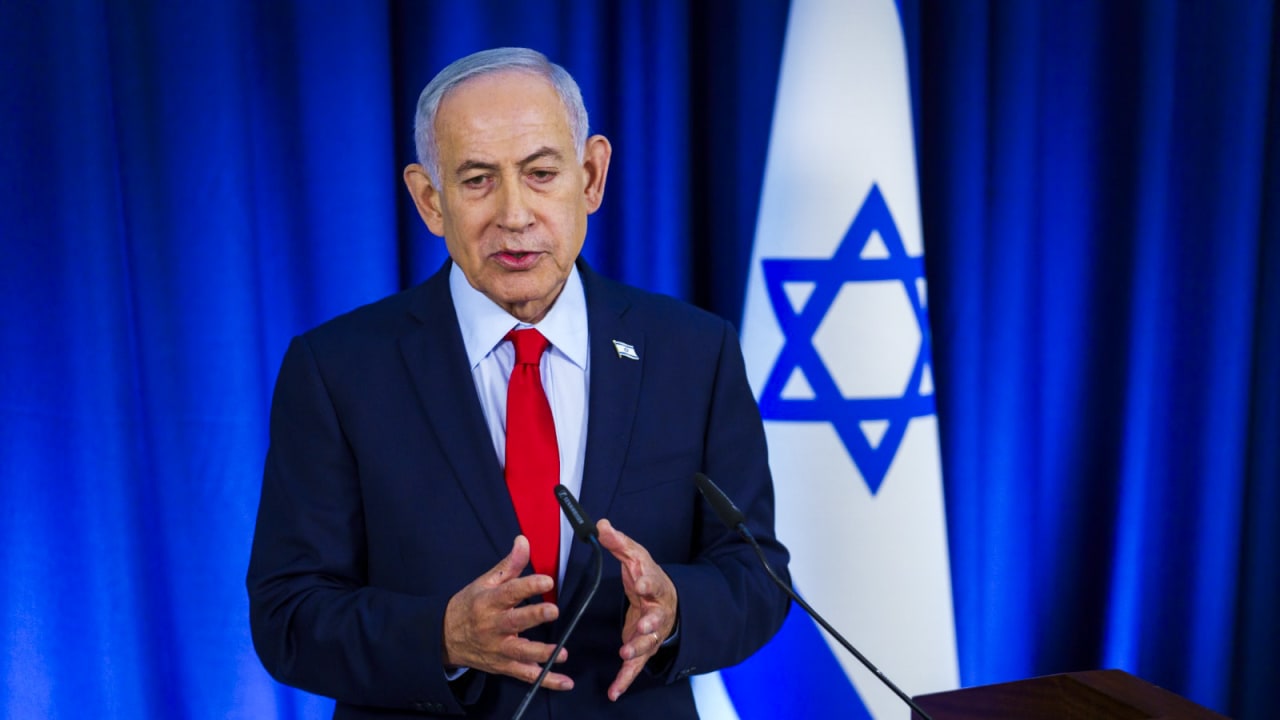
Monday’s Likud primary produced a clear winner, and it wasn’t just Eli Cohen. It was Prime Minister Benjamin Netanyahu’s grip on the party itself.
Cohen’s first-place finish, followed by Knesset Speaker Amir Ohana and Justice Minister Yariv Levin, tells part of the story: This is a base that rewards firmness – on security, on the judiciary, on Israel’s institutions more broadly.
But the real signal came further down the list. Almog Cohen, who crossed over from National Security Minister Itamar Ben-Gvir’s Otzma Yehudit, finished among the top vote-getters.
Four years ago, that would have been hard to imagine inside a Likud primary. Today it barely raised an eyebrow. The ideological distance between Likud’s activist core and the far Right has narrowed dramatically. That may strengthen Netanyahu’s hold on the party; whether it strengthens Likud with the broader electorate is another question.
None of this happened by accident. The departures of Yuli Edelstein and Gilad Erdan to form a new party showed every sitting MK what an internal challenge could look like. Netanyahu moved first: eight slots reserved for his own picks, plus guaranteed seats for Israel Katz, Gideon Sa’ar, and Haim Katz.

Add it up and he has effectively shaped 11 of the top 29 places on the list before a single vote from the general public is cast. The members did the rest – no faction organized against him, and no internal challenge gained meaningful traction at the ballot box.
Here’s the part that should give Likud pause. If the goal, even quietly, was to pull back some of the centrist voters who have drifted to Gadi Eisenkot’s Yashar or the Naftali Bennett-Yair Lapid B’Yachad slate, this primary did the opposite.
The list that came out of it speaks to the base, not past it. Tally Gotliv holding her spot despite reported efforts to sideline her, the controversies that keep following Miri Regev, Dudi Amsalem’s combative style – none of it reads as an outreach strategy to exhausted, undecided voters. It reads as a party talking to itself.
To be fair, this isn’t a simple lurch toward Otzma Yehudit. Cohen’s win, alongside a strong result for coalition chairman Ofir Katz, suggests members aren’t just rewarding noise. They’re also rewarding people who know how to run something – negotiate, pass legislation, get things done.
That speaks to one of the outgoing government’s central vulnerabilities: too many political appointments, too many ministries carved up for coalition math, not enough competence. Whether this new generation can govern rather than just campaign remains an open question.
Tension surrounding haredi enlistment
The more interesting shift, though, is the growing tension around haredi (ultra-Orthodox) enlistment. Shas and United Torah Judaism remain Likud’s default coalition partners, and that is unlikely to change. But a number of hardline, thoroughly loyal Netanyahu figures – Eli Cohen, Amichai Chikli, and Almog Cohen among them – are pushing, in their own ways, for meaningfully higher haredi enlistment numbers.
That pressure sits uneasily alongside Likud’s continued reliance on its traditional haredi partners. The emerging Likud may be more right-wing without being uniformly more deferential to them. Something new may be taking shape: yes to the alliance, but with a louder internal demand for greater burden-sharing.
Put it all together and Likud walking out of this primary is further Right, unmistakably built around Netanyahu, security-minded to its core, still ready to sit with the haredi parties but facing more internal pressure over military service – and keen to present itself as a Right that can run a country, not just fight for one.
What it hasn’t answered is whether any of this travels beyond its own membership. Winning a primary is one thing. The general election will pose a harder question: not just where Likud stands but whether it can actually govern – and persuade Israelis outside its base that it can.
The writer is a senior fellow at the Jewish People Policy Institute (JPPI), where he leads the institute’s activities in Europe.