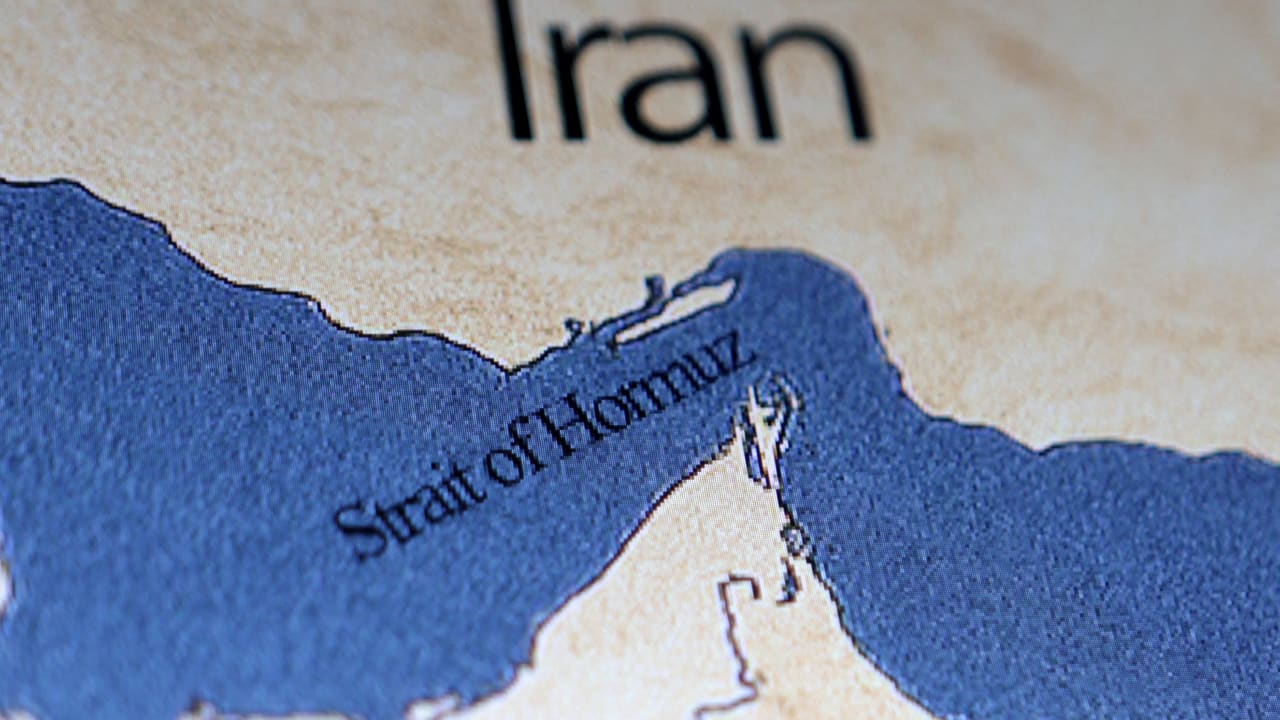
Iranian control over the Strait of Hormuz is eroding, and with it part of the risk premium in oil prices.
According to recent US government estimates, roughly 15 million barrels of Gulf oil are now leaving the region each day through the strait and alternative export routes. That remains below prewar levels, but it represents a substantial recovery from the first months of the war.
It took time, but the United States appears to have significantly weakened Iran’s ability to enforce its blockade.
Over recent months, US forces repeatedly struck Iranian coastal radar and surveillance sites, degrading the systems used to detect and target commercial shipping. Tankers have meanwhile increasingly crossed Hormuz with reduced electronic visibility, including by switching off their Automatic Identification System (AIS) transponders.

That matters because civilian ship-tracking services rely heavily on AIS signals. Vessels going dark can therefore disappear from commercial data, helping explain the striking gap between official US estimates and the much lower volumes visible to independent trackers.
US Energy Secretary Chris Wright said in August that oil moving through Hormuz had risen to almost 9 million barrels per day, while another 5-7 million barrels were leaving the Gulf through pipelines and other facilities.
By comparison, the US Energy Information Administration estimates that 21.6 million barrels per day of crude oil and petroleum liquids moved through Hormuz in the fourth quarter of 2025.
The recovery is real, though its exact scale remains disputed.
The global picture is also less rosy than these numbers alone suggest. Additional production outside the Gulf and emergency stock releases have softened the shock, but they have not fully replaced lost supply.
The International Energy Agency estimated in August that global oil supply in July was still 6.3 million barrels per day below the level a year earlier, while observed inventories had fallen by about 410 million barrels since the war began.
Saudi Arabia adapted early.
By July, over 70% of its crude exports were reportedly being rerouted through the East-West Pipeline to Yanbu on the Red Sea. The United Arab Emirates likewise relies heavily on its pipeline to Fujairah, which bypasses Hormuz.
These alternatives could never fully replace the strait, but they reduced Iran’s leverage.
How the blockade was broken
Iran’s blockade never depended on sinking every tanker.
It only had to demonstrate that passage was sufficiently dangerous to frighten shipping companies, crews, and insurers. Its main tools were coastal radars, drones, cruise missiles, fast attack boats, and naval mines.
The vulnerability in this strategy was detection. To hit a moving tanker, Iran first had to find and track it. In a narrow choke point such as Hormuz, that is easier than on the open sea, but it still depends on a functioning surveillance network.
The United States therefore concentrated on the infrastructure that made Iranian interdiction possible. CENTCOM reported repeated strikes on coastal radar and surveillance sites, command-and-control networks, missile and drone facilities, and maritime capabilities.
In one three-night period in July, it said more than 300 Iranian military targets had been struck.
The result was not the complete destruction of Iranian surveillance, but a serious degradation of it. Darkness, emissions control, and electronic countermeasures further complicated Iranian targeting.
Mine clearance was equally important. CENTCOM began a dedicated operation in April, and by late August said Iranian sea mines had been cleared from recognized transit routes.
The dramatic development, then, was less a single technological breakthrough than adaptation. The US and Gulf exporters gradually reduced Iran’s ability to detect, mine, and intimidate commercial shipping.
What initially looked like a durable Iranian advantage became increasingly difficult to sustain.
Some tankers now travel with transponders off and some transfer cargo ship-to-ship beyond the strait. In practice, a partially hidden transport network has emerged, helping restore a significant portion of Gulf exports.
Iranian oil is being squeezed
The irony is that while more oil from Iran’s Arab Gulf rivals is getting out, Iranian oil itself is under growing pressure.
Kharg Island remains the key vulnerability. Roughly 90% of Iranian crude exports pass through the island.
Iranian exports have not fallen to zero, but Reuters reported that Chinese imports of Iranian oil were provisionally down to around 534,000 barrels per day in August, compared with peaks near 1.58 million barrels earlier in 2026.
Washington has also intensified pressure on the wider network that sustains Iranian oil exports: tankers, commercial intermediaries, financial channels, and buyers vulnerable to secondary sanctions.
This is not economic collapse, but it is serious economic constriction. Oil remains Iran’s main source of export earnings and hard currency.
The Revolutionary Guards may continue to speak as if Tehran holds the upper hand, but the leverage Iran gained by disrupting Hormuz is clearly diminishing.
The remaining problem for the global market is therefore not simply current flows. Inventories have been heavily depleted and restoring them will take time.
Iran was never as strong, or as weak, as it looked
There is a broader lesson here about the difficulty of assessing Iranian power.
An old diplomatic adage about Russia holds that it is never as strong as it looks, and never as weak as it looks.
The saying has been attributed to Otto von Bismarck, Winston Churchill, Talleyrand, Klemens von Metternich, and others, though none of those attributions is firmly established. Its logic applies remarkably well to Iran today.
At the beginning of the war, one camp of pundits and experts dramatically underestimated Iran. Predictions that the Islamic Republic might rapidly collapse under the combined weight of American and Israeli military power proved wrong.
Iran absorbed enormous blows, reorganized itself, retaliated, and demonstrated a resilience its enemies had not expected.
But the opposite analytical error soon emerged. Survival was transformed, in some commentary, into evidence of victory.
John Mearsheimer argued early on that there was “no way” Iran would back down over Hormuz and later described the balance of coercive leverage as favoring Tehran. Vali Nasr similarly spoke of Iranian “strategic wins,” including control of Hormuz.
These assessments captured something real: Iran had demonstrated striking resilience and, for a time, gained substantial leverage over the global economy.
But resilience is not the same as dominance.
Surviving an attack is not the same thing as winning a war. Temporarily exploiting an adversary’s vulnerability is not the same thing as possessing durable strategic superiority.
Iran proved considerably stronger than those who expected it to collapse. It also proved considerably weaker than those who interpreted its resilience as evidence of a lasting Iranian triumph.
Hormuz illustrates the distinction especially clearly. American forces adapted. Iranian surveillance was degraded. Mines were cleared. Gulf exporters rerouted production. Iranian oil exports, meanwhile, were increasingly constrained.
The instrument that appeared to demonstrate Tehran’s new command of the Gulf is now being turned, at least partly, against it.
Perhaps the old Russian saying deserves an Iranian version: Iran is never as weak as its enemies hope, but neither is it as strong as its admirers imagine.
Both errors – expecting imminent collapse and proclaiming enduring triumph – substitute wishful thinking for an assessment of actual capabilities.
Iran remains a formidable regional power. It is not, however, the master of the Gulf.
What is left for Tehran?
Iran now faces three broad choices: accept some version of Washington’s terms, return to negotiations while offering meaningful concessions, or escalate against the Gulf states to restore its leverage.
The last option would be extraordinarily dangerous.
Large-scale attacks on Gulf energy facilities, desalination plants, or oil infrastructure could trigger retaliation against Iran’s own critical infrastructure and inflict damage lasting years.
Even the most radical elements of the IRGC would have reason to hesitate before crossing that threshold.
The more likely course may be to absorb mounting economic pressure while hoping that American domestic politics eventually changes the strategic environment, particularly if Republicans lose control of the House in the November elections.
But Tehran should not count too heavily on Congress ending the war. The Kosovo precedent is instructive.
In April 1999, the House tied 213-213 on a resolution expressly authorizing former US president Bill Clinton’s ongoing air campaign against Yugoslavia. The authorization failed. The air campaign nevertheless continued.
Iran has survived. That is not the same as having won.
And increasingly, Hormuz demonstrates why.
The writer is a lecturer and senior researcher in Islamic and Middle Eastern studies at the Harry S. Truman Institute of the Hebrew University of Jerusalem and at Shalem College.