For nearly three years, Israel and Jewish communities around the world have been living in a near-constant state of emergency.
In Israel, our attention has been consumed by the Israel-Hamas War, the hostages, and the evolving threats posed by Iran and its proxies.
The philanthropic response has been extraordinary. Faced with urgent and immediate needs, donors and institutions did what they have always done at their best: they responded with speed, generosity, and resolve. They supported emergency relief, trauma care, rehabilitation, and countless other efforts that became indispensable overnight.
That work is far from over.
But prolonged emergencies carry a risk. They narrow our field of vision. When every day presents another urgent challenge, it becomes difficult to think beyond the next one. Emergency response becomes not only our priority, but our mindset.
The future, however, cannot wait for the crisis to end.
Alongside the responsibility to respond to today’s needs, we must also ask a different question: What are we building?
What investments will shape Israel not next month, but 20 years from now? What are the foundational assets that will determine the resilience, prosperity, and character of Israeli society? And what are the building blocks that will strengthen not only Israel, but the future of the Jewish people?
Jewish history offers a remarkably consistent answer.
Time and again, following periods of destruction and upheaval, our communities invested in education. After the destruction of the Second Temple, Jewish leadership rebuilt around centers of learning. Following expulsions, persecution, and pogroms, communities established schools and academies alongside homes and synagogues. They understood that rebuilding a society begins with rebuilding its people.
That lesson has not changed. Only its context has.
In the 21st century, education cannot be separated from research, deep science, innovation, and entrepreneurship.
The breakthroughs that define Israel’s future, whether in medicine, artificial intelligence, food security, cybersecurity, or climate resilience, will not emerge spontaneously. They will emerge from people whose talent has been cultivated over years of education, research, and discovery.
Countries ultimately compete on the quality of their human capital. For Israel, perhaps more than for any other nation, that has always been our greatest strategic advantage.
Israel among the world's leading innovation economies
And that advantage is measurable. Israel consistently ranks among the world’s leading innovation economies, with exceptionally high levels of investment in research and development and a remarkable concentration of entrepreneurship, venture capital, and collaboration between universities and industry. Hi-tech has become a central engine of the Israeli economy and a major source of its exports.
These achievements did not emerge from natural resources, a vast domestic market, or a large population. They are the return on decades of investment in human capital: in universities, researchers, scientists, engineers, and entrepreneurs.
Universities are part of the national infrastructure. But this infrastructure cannot be taken for granted. Israel is entering a period in which enormous public resources will necessarily be devoted to defense, reconstruction, and the social consequences of war. Those obligations are unavoidable. Yet they also create a long-term risk: that the institutions responsible for Israel’s future strength will be asked to do more precisely when public resources are stretched most thin.
Israel’s universities have never depended on government alone. Their ability to conduct ambitious research, attract and retain exceptional faculty, build world-class laboratories, support students, and compete with the best institutions internationally depends on a broader partnership, one in which philanthropy plays an essential role.
Their impact also extends beyond Israel’s borders: international academic collaborations connect Israeli researchers and students with colleagues around the world, building lasting relationships and ensuring that Israel is known not only through the headlines, but through its ideas, discoveries, and contributions to global knowledge.
Our universities cultivate the scientists who will make the next breakthrough, the physicians who will transform healthcare, the entrepreneurs who will build new industries, the jurists who will strengthen public institutions, and the educators who will prepare the generation that follows, and the citizens who will sustain Israel as both a Jewish and democratic state.
Universities are among the few places where rigorous inquiry, respect for evidence, open debate, and civic responsibility are cultivated together, values that are essential to the resilience of any liberal democracy.
If we want to see the leaders who will shape Israel in the decades ahead, we need only look to today’s classrooms and laboratories.
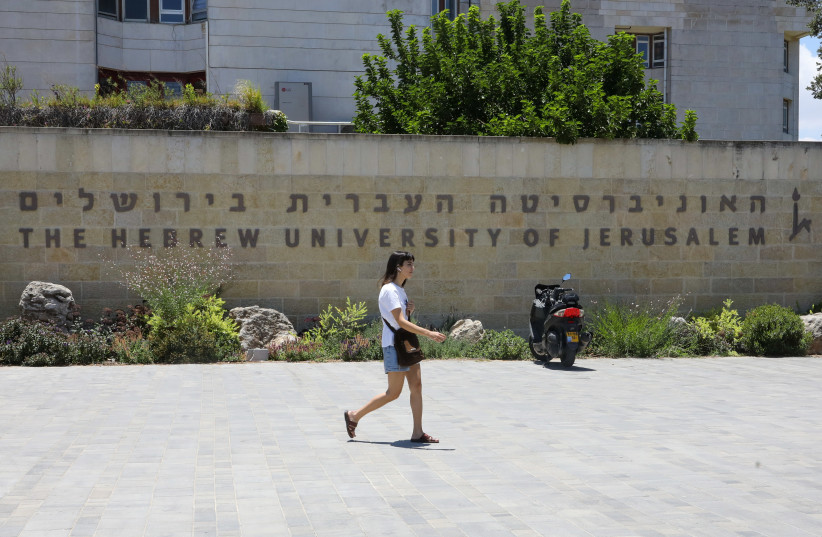
At the Hebrew University, those future leaders already reflect the remarkable diversity of Israeli society. Religious and secular Jews, Arab students from east Jerusalem, haredim (ultra-Orthodox), new immigrants, and students from every part of the country study alongside one another. They do not arrive with the same experiences or perspectives, but they share an intellectual environment that challenges assumptions, rewards curiosity, and prepares them to lead in a society whose complexity is one of its defining characteristics.
That, too, is part of investing in human capital.
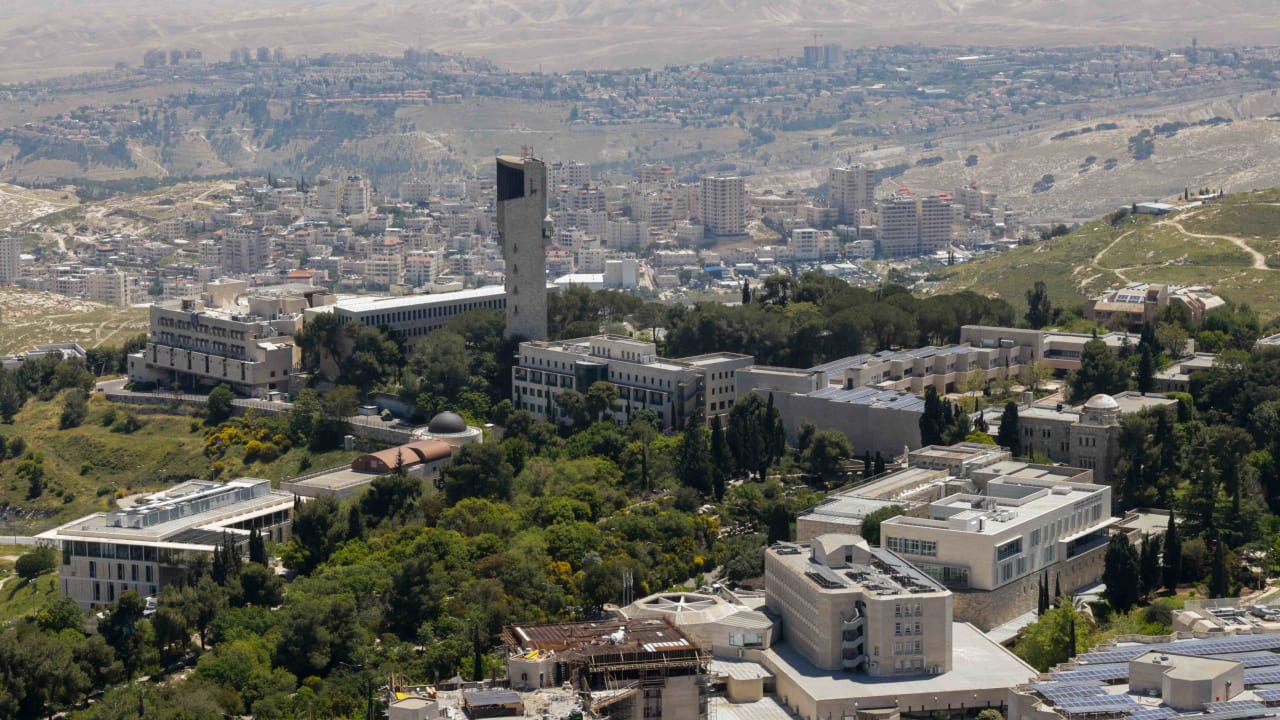
For more than a century, the Hebrew University has demonstrated what sustained investment in people can achieve. Founded before the State of Israel itself, it has helped shape the country’s intellectual foundations, produced 10 Nobel laureates, pioneered discoveries that have transformed fields from agriculture to medicine to computer science, and educated generations of leaders in government, academia, business, law, and technology.
Philanthropy has always been about more than meeting immediate needs. At its best, it invests where the returns are measured not in months, but in generations.
Today’s emergencies remain painfully real, and they deserve our continued attention and support. But we should resist allowing the urgency of the present to crowd out the responsibility to invest in the future.
The crisis may continue for some time.
Israel’s intellectual and innovative edge took generations to build. We cannot afford to let our educational excellence erode while we wait for the crises to subside.
Our investment in Israel’s future, and in the future of the Jewish people, cannot wait that long.
The writer is Vice President for Advancement and External Relations at the Hebrew University of Jerusalem. He previously served as the university’s Vice President and Director General, and held senior leadership positions at Intel in Israel and the United States.