
This month brings together two dates that call for Israeli soul-searching: the 33rd anniversary of the signing of the Oslo Accords, and the 10th anniversary of the death of the man who brought them about, Shimon Peres. More than three decades on, it has become easy - even fashionable - to deride the accord, but hard to admit that no real alternative to the logic of Oslo has yet been found.
The collapse of Oslo resulted from a destructive combination: Hamas terrorism, the impotence of the Palestinian leadership, the settlement enterprise that tripled the number of Jews living in the West Bank, and right-wing governments that preferred to strengthen Hamas rather than the Palestinian Authority. Yet the failure of the process does not disprove the logic at its core.
Oslo’s logic was Zionist and realistic. It was neither an act of moral atonement toward the Palestinians nor naïve wishful thinking. Peres sought to address an existential challenge: if Israel wishes to remain both Jewish and democratic, it cannot permanently rule over millions of Palestinians. The division of the land therefore serves Israel's interests in terms of demography, identity, security, and geopolitical standing. Tellingly, Peres did not initially regard an independent Palestinian state as the preferred solution. For years, he advocated either a Jordanian option or a confederative arrangement. It is no coincidence that the term "Palestinian state" does not appear in the original Oslo Accords.
The October 7 massacre deeply - and justifiably - shook the public's trust in a Palestinian partner. Yet the enormity of the disaster does not exempt us from deciding our own future. To that end, we must separate two questions: what should Israel's permanent borders be, and what should be the character of the entity beyond them? The first requires urgent resolution, the second can wait.
Israel's borders and what lies beyond
Israel cannot remain indefinitely without a recognized eastern border. The absence of a border prevents the formulation of a coherent national strategy, hinders the normalization of Israeli life, and damages the country’s regional and international standing. In this context, a distinction must be made between the sovereignty border and the security border: the former should ensure a Jewish majority and democracy, while the latter should allow security control up to the Jordan River for as long as circumstances require it.
As for the route of a permanent border, there is no room for illusions. The 1967 lines will remain the baseline of any internationally accepted agreement, with land swaps. But Israel cannot assume that the terms available to it today will remain available indefinitely. Under less favorable circumstances, it could face growing pressure to accept a border far closer to the 1967 lines, with less accommodation for the major settlement blocs and Israel's security needs.
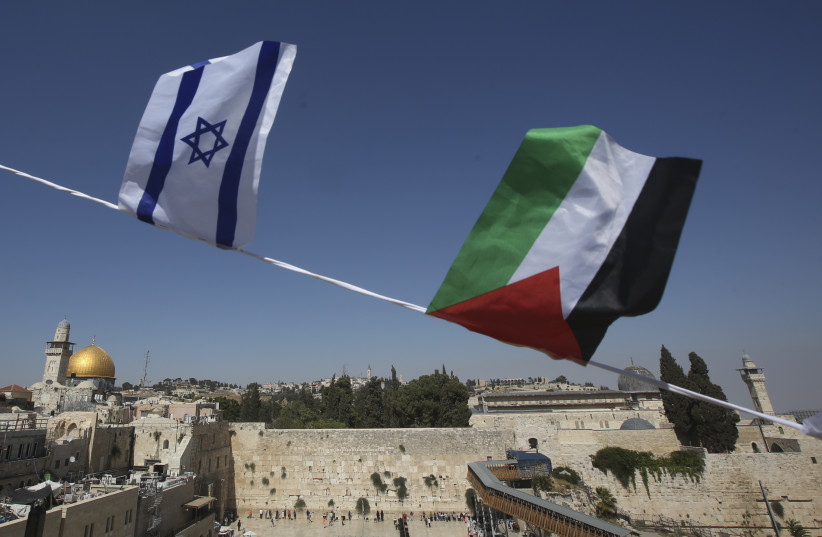
That is what makes the present moment so consequential. Trends in the United States offer no guarantee that the exceptional level of support Israel has enjoyed will continue indefinitely. Donald Trump's presidency therefore presents a historic opportunity that may not return: to secure American, Arab, and broader international acceptance of a permanent eastern border on the most favorable terms Israel can realistically expect. Such a border would keep the major settlement blocs under Israeli sovereignty and give substantial weight to Israel's security requirements.
Trump has demonstrated an ability to break diplomatic conventions and enlist Arab states. With American backing and by leveraging the Arab Peace Initiative, it may be possible to pursue an international resolution that enshrines Israel’s permanent borders without, at this stage, determining the political character of the entity beyond them. Such a move could pave the way for expansion of the Abraham Accords, peace with Saudi Arabia, new economic opportunities, and the weakening of Iran.
Setting a sovereignty border would not constitute a security withdrawal, nor would it determine whether the territory beyond it would become a confederation with Jordan, a demilitarized Palestinian state, or another political framework. The status of Jerusalem's Holy Basin could likewise be deferred to future negotiations.
Once a sovereignty border is established, the incentive to "create facts on the ground" would diminish, because the territory's fate would already be sealed. There would be little reason to invest in infrastructure or expand settlements in areas that will not fall under Israeli sovereignty.
Over time, this reality will lead a growing number of settlers to move voluntarily back into sovereign Israel. The proposed course - which is first and foremost the realization of an Israeli interest - will at the same time strengthen those Palestinians who seek compromise, because they will see a credible horizon capable of replacing despair with hope.
Ten years after the death of Shimon Peres, Israel does not need to return to the Oslo of 1993, but rather to the logic that underpinned Peres’s initiative: securing Israel’s future as a Jewish and democratic state requires the division of the land. This objective should be pursued from a position of military strength and clear-eyed realism regarding the other side.
The relevant question today is not, "A Palestinian state: yes or no?" but rather, "Permanent borders for Israel: yes or no?" Perhaps President Trump, for reasons of his own, will ultimately answer this question for us and lead the country toward permanent borders. Or perhaps he will lose interest in the vision of regional peace he once championed.
Either way, the likelihood that such a move will emerge from within Israel itself appears slim, because it would require a leader who does not currently exist: one willing to fight for a political alternative to occupation without shame and without apology. Indeed, a look at those competing to lead Israel makes one conclusion difficult to avoid: Shimon Peres has no heir.
The writer is a former director-general of the Foreign Ministry. His latest book, The Leviathan Option: A Deep State Story, is available on Amazon.