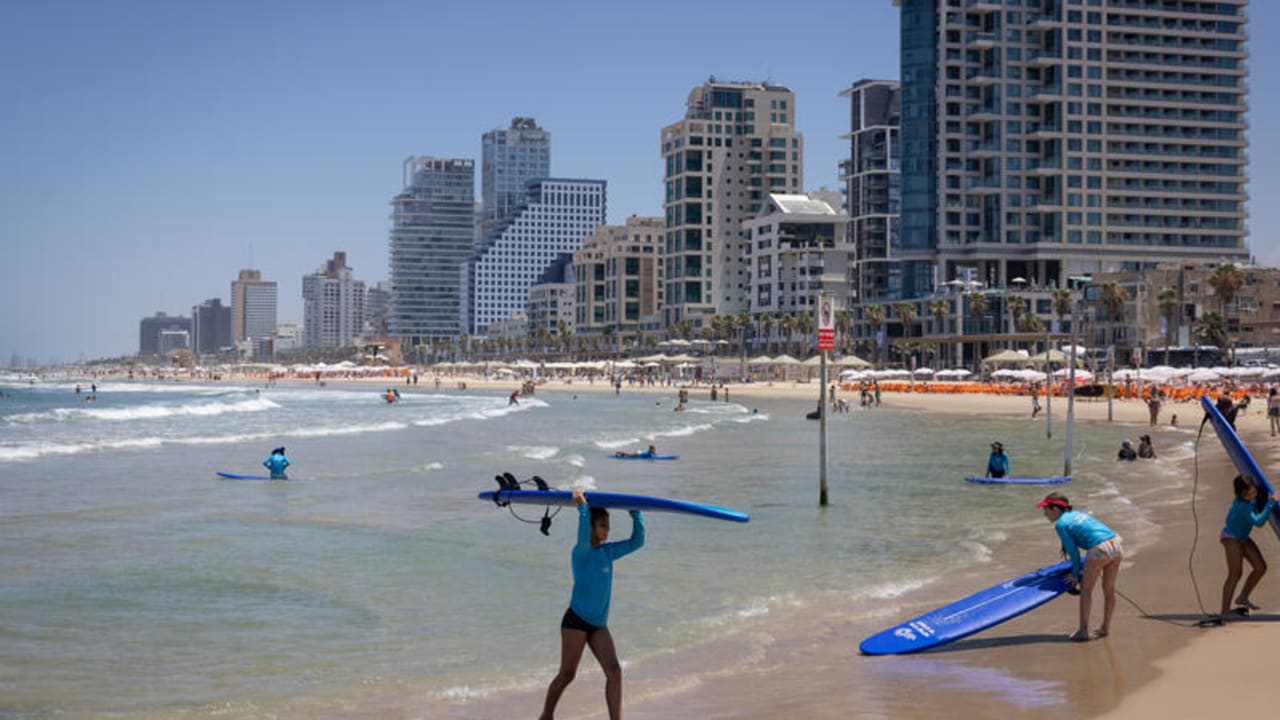
I am a lifelong surfer, but I’ve never been much of a surf traveler. The search for the perfect wave has long been embedded in surfing culture, but I feared the letdown I'd feel returning to the mundane surf on the Mediterranean coast of Israel, where I call home.
As a mohel who often works abroad, I normally limit my international travel to 36 hours the minimize time away from my family. A few years ago, however, I was asked to participate in a conversion in Lisbon, and I knew it could be the trip of a lifetime. I convinced my wife to let me spend five days on the coast and, as surfers do, I began to pray for waves, hoping there would be something to ride.
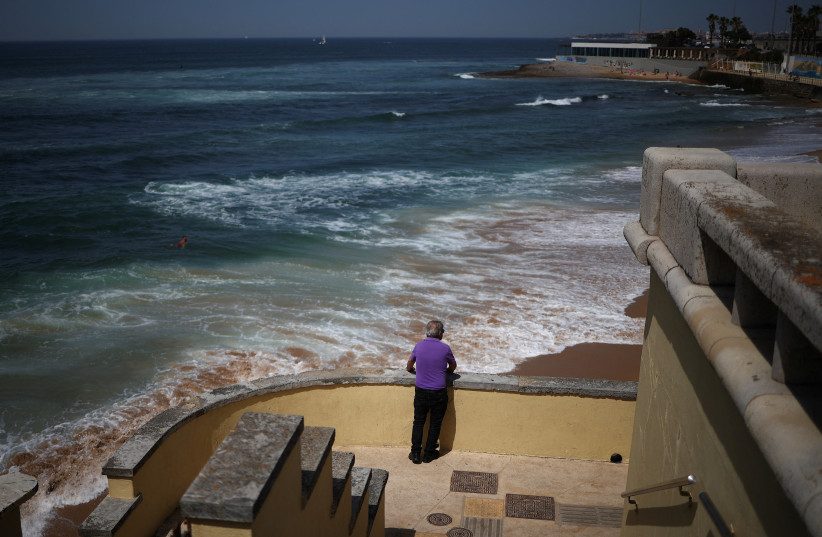
As my plane touched down, Portugal’s first big swell of the season was rolling in. Wary of these unfamiliar waters, I remember looking at the waves and thinking I’d probably found my limit. In the end, the surf was great from north to south, but the people I met had just as much of an impact as the waves I rode.
In my first two sessions, I overlapped with a man in the resort town of Cascais. Upon the second encounter, we struck up a conversation. I told him I live in Israel. Although this took place well before the October 7 attacks, I was unsure of what his response would be.
“I’m an airline pilot and fly to Tel Aviv often. I love Israel,” he told me. In the parking lot, we exchanged information and still message each other from time to time.
Positive experiences helped me embrace my Jewish identity abroad
During the second session, I noticed a woman in the lineup who moved with the grace and confidence of a professional surfer. We also crossed paths in the car park, and I couldn’t contain my curiosity. She acknowledged that she competed in the World Surf League. “Do you know Anat Lelior?” I asked, naming the only Israeli surfer on the tour at the time. It turns out they were close friends.
As our conversation came to a close, another person saw my kippah and began to speak to me in Hebrew. He happened to oversee the kosher food for the entire country. He seemed astounded to find another Jew outside of Lisbon, and the interaction brought a bit of home to this faraway land.
Experiences like these helped reinforce my practice of not hiding my identity when I travel, despite my wife’s warnings. If I had hidden my Judaism or that I was Israeli, I never would have met these people who made my trip that much more special.
But that feels like eons ago. The world has changed for Jewish people since Hamas launched the current war on Oct. 7, 2023, with its deadly raid in Israel.
Recent coverage of the political climate in Portugal makes it seem that the country is returning to ancient habits. From an alleged plot to poison Israeli visitors, to graffiti reading “Expel the Jews” on street signs, to the same chants heard in street protests, Portugal is experiencing examples of the kind of Jew hatred once seen from the 15th century through the Holocaust.
However, this behavior is not confined to Portugal alone. These currents are gaining momentum in Europe and beyond. From violence in the streets of England and New York to healthcare workers threatening Israelis in Australia, the world is becoming increasingly hostile towards Jews. When our son traveled to New York, we warned him to hide all markers of his Jewishness.
More than half of Israelis fear revealing their nationality while traveling
According to a recent poll by the Tel Aviv-based Center for Jewish Impact, 52% of Israelis feel some level of concern or fear about revealing their nationality while traveling abroad, and 41% of respondents have actively altered their travel behavior since Oct. 7.
I finally understood my wife’s point of “you just never know.”
Last summer, my family and I visited a kosher hotel in Greece for a few days. Unfortunately, this wasn’t a surf outing, but the location was still astounding in its beauty.
We spent the final day of our visit in Athens. The moment we stepped out of our rental car, we were greeted with anti-Israel graffiti reading “IDF: Murderers.” We walked on eggshells through the streets, wearing hats, keeping our tzitzit hidden, and only speaking English.
The only place we felt comfortable was the kosher takeout window we frequented for dinner. As we placed our order, I noticed, on the yellow wall just below the counter, black writing that read, “Zionist is safe here.” I assumed the syntax was off due to the translation from Greek. I remarked to the cashier how much I appreciated the sentiment. “I fixed it,” she replied. I’m sure she could see the confusion on my face. “I covered the first word. The vandalism originally read ‘No Zionist is Safe Here.”
I have the means and the opportunity to search out beaches with great waves to ride. The hardest thing to accept is that I can no longer go to these places as myself. It may seem excessive to suggest that Jews have to hide their identities abroad, but Israel’s Ministry of Foreign Affairs has been advising just such caution.
If I returned to Portugal and struck up a conversation in the water, I’d most likely say I’m from New York. If I met a pro surfer I wouldn’t bring up an Israeli Olympian. And if the kosher food worker and I crossed paths, we’d simply pass each other by, hats on, tzitzit tucked in, unaware that the other was Jewish.
While I’d revel in the flawless point breaks and do my best to get barrelled, covered up inside the curling cylinder of a wave, this time, I’d be hiding something beneath the surface: my Jewish identity.