Every morning begins with an act of concealment: I don the mask. It is that familiar, well-worn veil of optimism, composure, and quiet control. I no longer venture past my threshold without it; it has settled into my essence like a vice, or an unbidden ocular spasm—a persistent, unwanted companion that refuses to take its leave.
The mask fits poorly. It is synthetic, suffocating, leaving me gasping for air, pleading silently: Grant me a moment’s respite; be gentle with me. Have my facial contours faded, erased by its weight? No, they linger beneath. Yet the mask chafes and stings, etching ever-deeper furrows into my skin. Have I aged? Unquestionably. The silver strands now weaving through my hair accord with these new lines, subtle artifacts reminding me that fragments of my former self endure.
At times, the oppression of the mask becomes so absolute I long to scream. Yet were I to cry out, would a voice resonate from beneath this artificial facade? It seems no one truly hears me, nor perceives the interior life buried within.
Am I genuinely hopeful, or am I merely sustaining the finest theatrical performance in town—a collective, unspoken exercise in make-believe? I attempt to persuade myself that life inherently prevails, that we shall endure, that we are an indomitable people—all those noble platitudes we eagerly adopt whenever an outsider glances in our direction.
Nurith, are you truly an optimist? I query myself, pressing a hand against my chest, momentarily uncertain whether I register a pulse at all. What is your assessment of the situation? How shall you cast your vote in the coming election?
What are these vacant inquiries? I cry out inwardly. Spare me your politics. Can you not perceive that I am hemorrhaging? That I remain here merely as a fraction of a human being, fundamentally altered from who I was yesterday? I wear the most exquisitely crafted mask in the city, yet those around me fail to peer behind it. They remain oblivious to the tear.
On the eve of Yom Kippur, an interviewer questioned me regarding the events of October 7th. I offered a simple truth: I am no longer the person I was prior to that day. For me, it marked an absolute watershed. He inquired as to what had altered within me, noting that trauma had been collectively thrust upon us all.
I replied that, for me, October 7th has never receded into the past tense. It did not merely transpire three years ago; it commenced three years ago, and its reverberations remain unresolved. This was no finite historical event after which a nation simply turns a clean page, reconstituted and ready for peaceful coexistence. Rather, it was an avalanche that gathered momentum as it descended. It penetrated my core, my psyche, my very phenomenology. I smell October 7th; I think October 7th; I exist within October 7th.
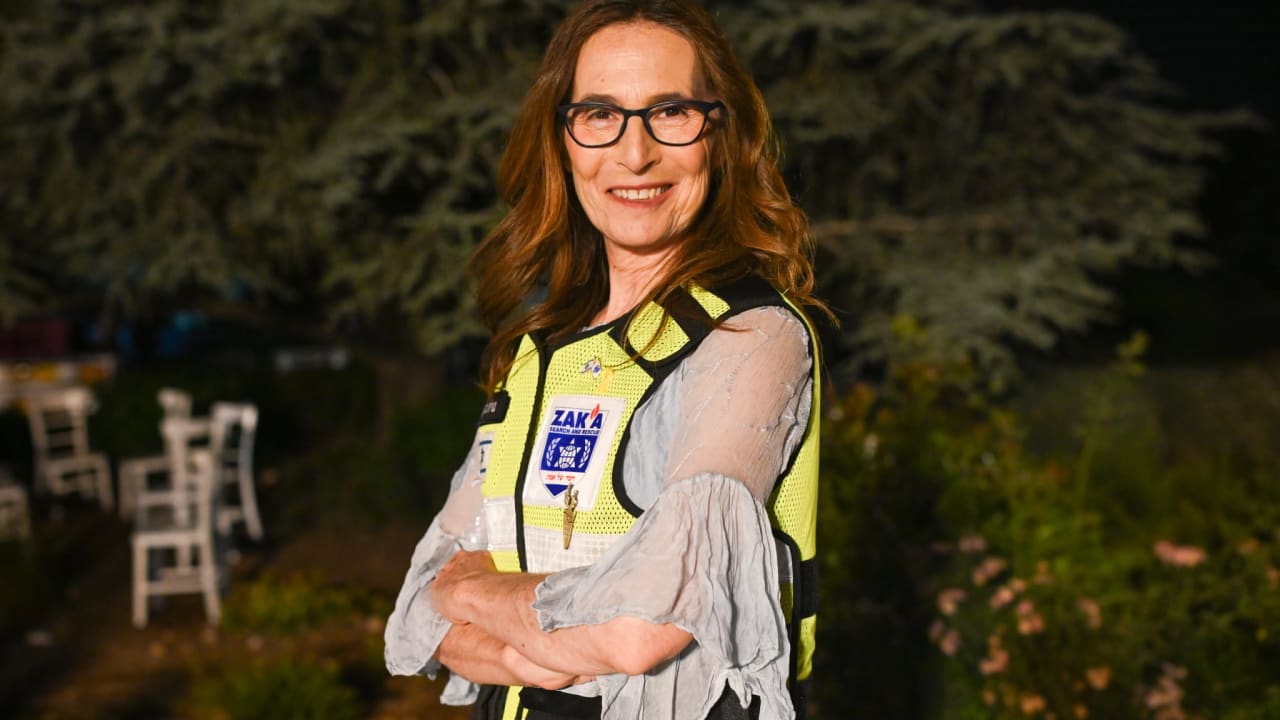
Upon waking each morning, my eyes meet the "relics" arranged upon my shelf—artifacts salvaged from the Gaza border communities during the three months my colleagues and I from ZAKA, the sacred search and rescue organization, devoted ourselves to honoring the deceased. We labored across shattered kibbutzim, within the devastated grounds of the Nova festival, amidst incinerated vehicles, and inside reinforced bomb shelters.
These silent objects greet me daily: "Good morning. Do you possess the fortitude for another act in this theater of existence?"
They are small, quiet tokens of catastrophe: spent cartridge casings from Kibbutz Nir Oz; an unused EpiPen retrieved beside a bullet-riddled vehicle in the Negev fields; a fabric patch bearing the Nova emblem salvaged from the Re'im lot; a small, charred tobacco tin recovered from a burned-out chassis.
My gaze rests upon these artifacts, and they return my glance with a profound, unspoken empathy. Only they truly comprehend. They, too, were immersed in the atrocities, at the absolute epicenter of the slaughter; they bore witness to it all. I arrived in the aftermath merely to gather the fragments. We share a common destiny, and in their presence, I find an improbable solace: I am not entirely alone.
Yet the question persists: who among the living can truly understand?
The interviewer continues his inquiry, and I clarify that I do not suffer from post-traumatic stress in the conventional diagnostic sense. The proof lies in the mask—it functions flawlessly. I perform my societal obligations with clinical precision: I maintain my professional practice, rear three daughters, engage in civic life, volunteer, and lecture on psychological resilience. I am, after all, a practicing psychotherapist.
Yet I feel compelled to offer him an instance of the lingering phantom that accompanies my daily life—a gentle, almost intimate trauma that rears its head without preamble or warning.
This past summer, my daughters and I took a family retreat to Denmark. While traversing the northernmost expanse of Jutland in the Skagen region, we walked along the coastline to observe the geographical confluence of the Baltic and North Seas. Suddenly, the endearing head of a seal emerged near the shore. Surrounding onlookers erupted in delight and wonder.
In that precise fraction of a second, the immediate cognitive association that flashed through my mind was that of a floating corpse. Rationality affirmed it was a seal, yet the visceral image had already claimed my consciousness. Such occurrences are endless. I have chosen to welcome them, learning to coexist with their presence—much like John Nash in A Beautiful Mind, who comes to accept that while the figure he perceives is immaterial, he will nonetheless continue to walk beside him.
He asks of my memories from the vehicle reclamation site at Tekuma. I articulate ZAKA’s operations there with a vividness as though they occurred yesterday. Perhaps they did; perhaps time has folded in on itself. It feels simultaneously distant and perpetual.
Moving systematically from vehicle to vehicle... attempting to gain access... a door welded shut by the thermal blast of an RPG... crawling through a shattered window frame... gathering what remains can be salvaged... decontaminating what must be cleansed. The process demands hours. One vehicle concludes, and the next awaits.
I vividly recall a wounded young woman arriving at the site—a heroine of this land—her arm tightly bandaged, trailed by a pair of photojournalists. She identified her vehicle. One of my ZAKA comrades turned to her and expressed our deep relief at her presence for two distinct reasons: First, above all, that she had miraculously survived the inferno. Second, because she had lived, her vehicle required no decontamination. In accordance with Jewish law, every effort is made to commit a person’s blood to holy burial; since she remained among the living, we were spared the task and could proceed directly to the next car.
Recently, during a seminar on spiritual care, a musician was brought in to play for our cohort. As my colleagues joined in songs of praise, surrendering to the beauty of the melodies, quiet tears welled unbidden at the margins of my eyes.
Three years have elapsed, and for the first time, I felt the internal capacity to hold another’s grief. Over Yom Kippur, I read Rachel Goldberg-Polin’s memoir, When We See You Again. Until now, I had deliberately shielded myself from literature documenting the worlds shattered on October 7th, as though my internal capacity were entirely saturated. I had witnessed the atrocity unmediated, with my own eyes; I could absorb no more.
Yet I read her words in a single, uninterrupted breath, tears flowing silently. What is this shift within me? I pondered. I was relinquishing a fraction of my own private October 7th to make space for Hersh’s, and for Rachel’s.
Does this signal that I am on a meaningful trajectory? Am I beginning the slow process of recovery? I cannot say. Will any of us ever fully recover?
Perhaps when I feel sufficiently secure to lay down the mask—if only for a few fleeting moments each day—perhaps then, and only then, will true healing begin.
The author is a veteran volunteer with ZAKA and serves as the sole female member on the front lines of its elite Diving Unit. On October 7th, 2023, she deployed to the Gaza border region to assist in recovering victims of the attack, and bringing them to burial. She was honored to light a torch on Yom Haatzmaut 2024 on Mount Hertzel on behalf of ZAKA and the rescue forces.