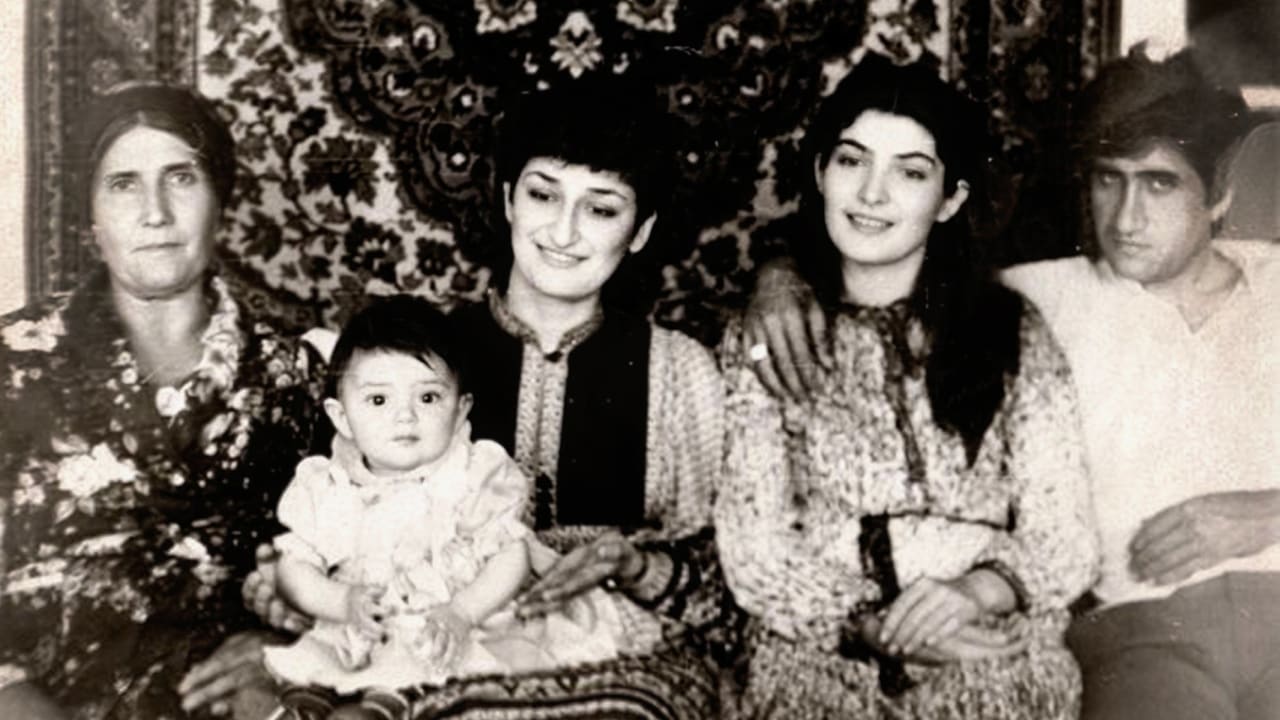
At breakfast in Queens, New York, before my first day of school in America, my parents spoke in hushed, urgent voices, as if planning a heist.
I was eight years old, and we had just emigrated from the Soviet Union as refugees fleeing religious persecution. In the USSR, “Jew” appeared on internal documents as an ethnicity or nationality, not a religion. But it wasn’t until after arriving in America that I learned that my father was Jewish and my mother was not. And that meant, under traditional Jewish law, or halakha, which traces Jewish identity through the mother, I was not Jewish.
So in our Rego Park kitchen at 7 a.m., nervously crunching Corn Flakes and sipping Tropicana orange juice with extra pulp, I watched my parents make a call, whisper, scheme, and hang up.
“It’s good,” my dad finally said, giving me a thumbs up.
Soon after we arrived in America, my father enrolled me in a yeshiva, a Jewish school, afraid I would otherwise become a corrupted American girl. “Girls in America smoke and have sex at 11,” his Jewish American cousins had warned.

My father had been born in predominantly Muslim Soviet Turkmenistan but raised in a Jewish home. Here in America, he wanted his daughter to stay connected to the Jewish identity his parents and generations before them had preserved. His parents, my grandparents Baruch and Rachel, were observant Jews who kept kosher and observed the holidays, and after my parents married, my mother learned customs, recipes, and traditions from them. To my father, sending me to a Jewish school was a way to make sure that identity survived immigration, too.
So now I was on my way to my first day at the yeshiva in America that my father, with the help of his cousin who had vouched for my Judaism, had schemed to get me into. I mourned the house, school, friends, grandmother, and country I had just left behind in the USSR, while struggling to assimilate into a new place and learn a new language. Now I was also on a clandestine mission that involved lying.
“What do I say if they ask me?” I whispered to my mother, not even sure who they were or what they might ask.
“You’re Jewish,” she replied plainly.
From that moment on, I carried with me a fear of being found out. If the rabbis and teachers discovered that my mother was not Jewish, would I be kicked out or, worse, arrested, imprisoned or deported? (Remember, we had just left the Soviet Union.)
For the next four years, I attended two yeshivas in Queens. In the second one, I wore clothes that covered my collarbone, elbows and knees. I learned to read Hebrew, prayed facing Jerusalem every morning, ate kosher, and kept Shabbat.
Fear transforms into anger
Over time, my fear transformed into anger. In fifth grade, after a growth spurt left my clothes fitting more snugly, my Orthodox teacher scolded me for dressing immodestly. My parents, struggling immigrants, couldn’t afford to replace my entire wardrobe. Furious, I called her a “jealous witch” in front of a classroom of gasping 10-year-olds. “Maybe if you cared about looking good,” I said, with more chutzpah than was probably called for, “you wouldn’t be so miserable!”
In the sixth grade, I started getting kicked out of class and made to write, “I will not question Ms. Rosenthal about the teachings of the Torah again,” 500 times in the hallway. For me, it felt less like a punishment and more like a badge of honor. No matter how many times I wrote the sentence - devising systems to get it done faster - I would indeed question her again the next day.
Questioning authority was something I recognized in my Jewish father, too.
But while I debated at school about King David and Queen Esther, I carried a deeper pain at home. My extended Jewish family didn’t think I was Jewish, and some of them even said so.
“Not a Jew” was an insult I heard hurled at my mother and me more than once.
Even when nothing was said, “Not a Jew” was the elephant in the room for me. I felt it hanging in the air at every family occasion, from bar mitzvahs and weddings to Shabbat and Passover dinners.
In private, however, I felt a deep connection with my Jewish roots.

As a child, I read The Diary of Anne Frank and watched Schindler’s List on repeat, feeling deeply that this was the history of my people. In school, whenever I had the chance to write an essay on a historical topic, I always chose World War II.
I cried when I learned that my two Jewish paternal great-grandfathers had been taken during Joseph Stalin’s Great Purge as enemies of the State, never to be seen again, and felt a deep sense of pride and when I read about how my father’s mother’s family escaped to Turkmenistan from the Iranian city of Mashhad and the forced conversion of its Jews.
In my early 20s, I traveled to the former Sachsenhausen concentration camp outside Berlin, where I met a Holocaust survivor, and we hugged and cried together. I went on Birthright trips to Israel, eventually leading one. All the while, I carried a sense that my identity was being rejected or denied.
I knew my history. I felt my faith. I was Jewish.
But many Jews I encountered kept reminding me that, because my mother was not Jewish, they did not consider me Jewish either. I felt pushed out and repeatedly reminded that I was the other. Not good enough. Not one of us.
Conversion meant conceding not belonging in Judaism
I could have converted. There were times when I considered it to settle the question once and for all. No one questions Ivanka Trump, even though she had no Jewish history before her engagement to Jared Kushner. But conversion presented a contradiction. It would have required me to approach Judaism as an outsider, and I had never experienced myself that way. I didn’t need a stamp or diploma to become what I already was.
Conversion wasn’t about becoming a Jew. It was about conceding that everything I had loved until then somehow did not belong to me.
I wasn’t willing to do that.
I questioned how family can be family if they see you as something other than them. How can your tribe dismiss you?
Jewishness was also sadly bound up with separation for me. It was part of why my parents and I were able to come to America as Soviet refugees, while my mother’s non-Jewish family remained in the Russian Federation. As a child, I sometimes wished they were Jewish too, because in my eight-year-old mind that might have meant my grandmother, aunts, uncles, and cousins could have come with us. I might have grown up with them instead of having a deep ache of missing them all the way in Queens.
Jewish meant family. Jewish meant America. Jewish meant who came with you and who was left behind.
For decades, I allowed other people to complicate that answer. Some did so through religious law. Some through jokes. Some through whispers across tables.
I understand that some Jews will never consider me Jewish. They are entitled to their beliefs, but not to rewrite my childhood or my inheritance.
I am not asking every Jewish community to bend the rules for me. But I do think the children of Jewish men get a raw deal. Jewish fathers are very influential in the home. They often set the tone, raise their children Jewish, share customs and histories. Fathers pass down identity.
Over the years, I also learned that the history of who is considered a Jew or not is more complicated than I had understood as a child. Biblical lineage was often traced through fathers, while the matrilineal standard became normative in Jewish law starting in the early Talmudic period.
Exclusion says more about others' Judaism
Ultimately, what I have realized is that I don’t need to figure out 2,000 years of Jewish law to know what I am.
Jewish history is my history. Jewish exile shaped the course of my life. Jewish traditions are my inheritance.
Long gone are the Soviet documents that classified my father’s nationality as “Jew.” In America, I found another kind of othering - this time within my own community. Eventually, I understood that the impulse to exclude me said more about other people’s understanding of Judaism than it did about me.
At eight, I needed my mother to tell me what to say.
“You’re Jewish.”
At 43, I understand what my mother was giving me - not a legal definition, but an inheritance.
I no longer need anyone to tell me what I am and whether I belong.
I know what I inherited.
I know who I am.
The views and opinions expressed in this article are those of the author and do not necessarily reflect the views of JTA or its parent company, 70 Faces Media.