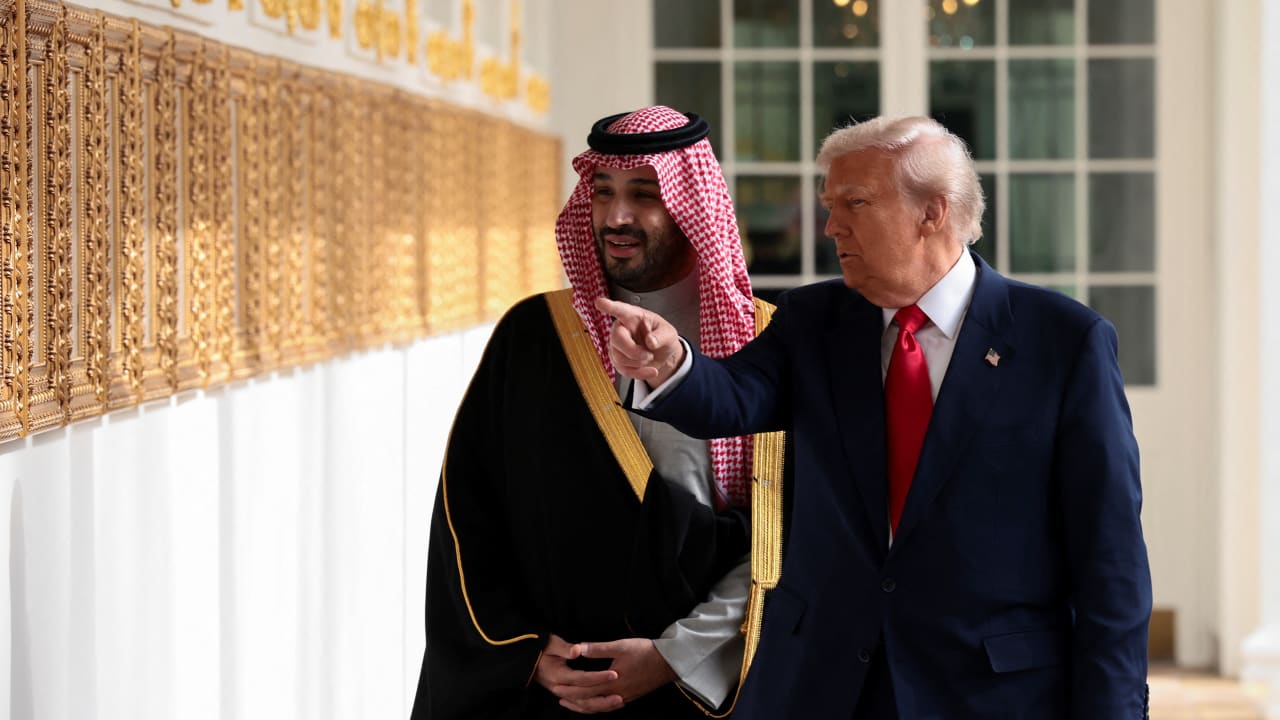
In September 2025, US President Donald Trump introduced the 20-point Comprehensive Plan to End the Gaza Conflict, which established a framework for ending the war, returning the remaining hostages, providing humanitarian assistance, establishing transitional governance, and ultimately demilitarizing Gaza and facilitating its reconstruction.
On November 17, 2025, the UN Security Council adopted this plan through Resolution 2803, which also welcomed the establishment of the Board of Peace.
However, nearly one year after the ceasefire, the UN reported in September 2026 that Hamas and other armed groups had not disarmed, the transitional governance arrangements had not yet become operational in Gaza, and the International Stabilization Force had not deployed.
The main obstacle has been disagreement over the sequencing and implementation of the second phase.
While the US and Israel insist on dismantling Hamas as an initial step according to the plan, and before a complete withdrawal of the IDF, leaders of Arab states maintain that the second phase must include immediate delivery of humanitarian assistance, rehabilitation of critical infrastructure, and a clear path to the two-state solution.

These gaps have created a significant financing problem, as the failure to establish the security and governance conditions has prevented reconstruction from proceeding.
On February 19, 2026, Saudi Arabia joined eight other founding donors in signing the Declaration of the Founding Donors to the Board of Peace.
Riyadh committed to providing core financial support to implement the plan and pledged $1 billion toward peace and reconstruction.
However, it has since withheld these funds, making full delivery of humanitarian aid and a clear path to a two-state solution preconditions for its support.
The impasse therefore threatens to prolong humanitarian suffering, delay reconstruction, and perpetuate the broader regional instability that emerged from the Gaza war.
Saudi Arabia is the country best placed to break the diplomatic deadlock and restore US credibility in the region. Saudi Arabia has agreed that proceeding to phase two won’t happen as long as Hamas holds military capabilities. Additionally, strengthening Saudi security serves a core US interest in regional stability, which is why the two countries signed the Strategic Defense Agreement in November 2025.
Houthis pose a threat to Saudi Arabia
Saudi Arabia faces an increasingly serious security challenge from the Houthis in Yemen. By September, the Houthis escalated attacks on Riyadh. While Pakistan and Turkey remained cautious about the extent of their involvement under the Mecca Joint Defense Agreement, Saudi Arabia may seek alternatives.
Since the US has already considered a military campaign against the Houthis, Washington should now go further and turn that readiness into a more strategic course of action that serves long-term US interests. It should offer Riyadh security guarantees that are stronger than the 2025 agreement and more credible than the Mecca Joint Defense Agreement.
In exchange, Riyadh would recommit to implementing phase two of the 20-point plan without further preconditions.
The subsequent escalation of Houthi activity and the abstention of Pakistan and Turkey from taking an active part in the defense alliance have exposed the limits of relying exclusively on regional partners.
Israel and Saudi Arabia have already shown an intention to collaborate and share intelligence against the Houthis. The US could exploit Pakistan’s and Turkey’s hesitancy by offering Saudi Arabia an alternative: a US-Saudi joint defense agreement that commits US forces to direct action against the Houthis while deepening the US-mediated channel for Israeli-Saudi security cooperation.
This course of action would demonstrate that the US remains the only credible security guarantor capable of assisting Saudi Arabia’s national security. A joint defense treaty with the US would give the Saudis the ultimate strategic “carrot.” This would give Riyadh the political cover to translate its commitment into concrete action on phase two of the 20-point Comprehensive Plan.
Bringing the US and Saudi Arabia into direct ties through a joint defense agreement could lead to the most desirable outcome in aggregate terms.
Sharing responsibilities with Israel, which has a strong incentive to eliminate the Houthi threat, the US could create a framework for gradual engagement, allowing Israel to serve as their frontliner in the Middle East. In other words, the US could devise a plan of escalating measures, providing an initial, indirect response through intelligence, weaponry, and advanced defense systems, while intervening actively only when necessary.
This framework could also strengthen Saudi-Israeli ties and improve the prospects for normalization, which Washington has declared a US national security interest.
Finally, by giving Saudi Arabia incentives to reengage with the 20-point plan, the US could restore the plan’s credibility, encourage other members of the Board of Peace to follow suit, and strengthen regional stability.
This course of action reflects the understanding that a two-state pathway is a possible outcome that should be discussed simultaneously through diplomatic means, but not as a precondition for implementing the plan. It depends on both sides implementing the plan in good faith, which would create the conditions for Palestinian self-determination.
The writer is an Israeli attorney and an MA candidate in international relations at Johns Hopkins University, School of Advanced International Studies, specializing in International economics and finance. The writer has a comprehensive security background, with about eight years of service as an officer and combatant commander in the IDF.