
On October 16, 1946, 80 years ago, 10 Nazi war criminals were executed following the Nuremberg trials. Atrocities were investigated. Evidence was gathered. Witnesses testified, and criminals were judged and sentenced.
Three years after the atrocities of October 7, 2023, we confront a different reality. Hamas terrorists launched a brutal assault on Israeli lives.
Today, a second assault is underway – not over territory or sovereignty, but over truth itself: whose testimony is believed, whose suffering is acknowledged, and what future generations will know about what happened that day.
I recently had the opportunity to meet Dr. Cochav Elkayam-Levy, chair of the Civil Commission on October Crimes by Hamas Against Women and Children.
She helped lead a two-year investigation resulting in Silenced No More, a nearly 300-page report documenting the sexual and gender-based violence committed during the Hamas attacks and against hostages in captivity.
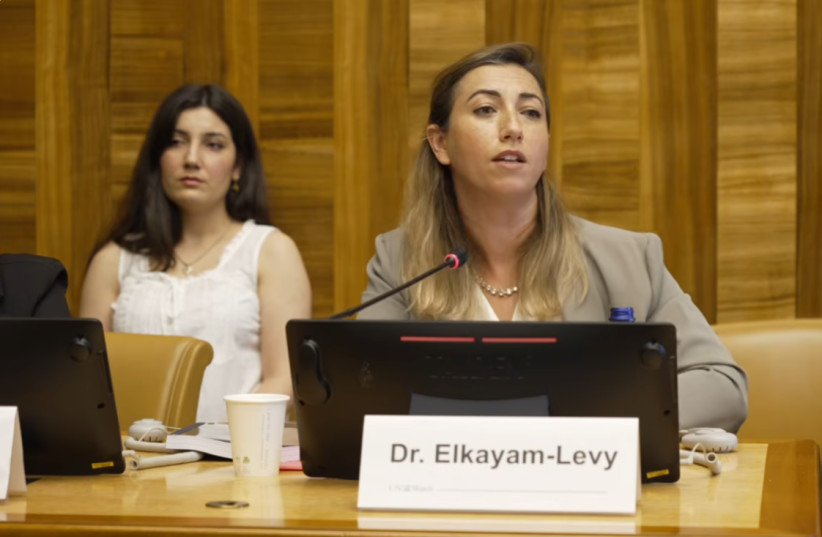
Drawing on survivor and witness testimony, photographs, videos, interviews, and official records, the commission concluded that sexual violence was not incidental to the attacks. It was widespread, systematic, and integral to them.
The report is harrowing. Women, children, and men were assaulted and violated in ways that defy comprehension. At the Nova music festival. In kibbutzim. Along the roads of southern Israel. During October 7 itself and through hundreds of days of captivity.
Paradoxically, the report’s power lies in its dispassionate character. No rhetorical embellishment. Testimony corroborated. Evidence cataloged. Patterns identified. Conclusions carefully drawn.
The language is forensic, almost clinical, set against atrocities that strain the limits of human understanding. The unspeakable given language.
Reading the report, I found myself asking a question that initially seemed inappropriate: What, practically speaking, is all this documentation meant to accomplish?
At Nuremberg, the answer was clear: there were defendants to prosecute, verdicts to render, sentences to carry out. The perpetrators of October 7, by contrast, may never face anything resembling judicial accountability.
Many are already dead. Others may never be identified, much less brought before a court. No verdict will restore the murdered. No prison sentence will erase the trauma of survivors.
So why such painstaking attention to testimony, corroboration, photographs, dates, locations, and legal categories? Why document crimes that may never be prosecuted?
An answer comes, unexpectedly, from the opening chapters of the Bible. When Cain murders his brother Abel, God confronts him: “What have you done? The voice of your brother’s blood cries out to me from the ground.”
The original Hebrew presents a grammatical curiosity. The word translated as “blood” is actually plural: d’mei achicha. Literally, “your brother’s bloods.”
For centuries, Jewish commentators have debated the significance of that plural. One explanation is that Cain murdered not only Abel but also the generations of descendants who might have followed him. Another suggests that the plural evokes the many wounds inflicted on Abel’s body.
Documentation matters
October 7 suggests another interpretation. The first blood cries out for justice for the lives taken. The second cries for fidelity to the truth of what occurred.
The first demands that perpetrators be held accountable. The second demands that we, the living, bear witness, safeguard the evidence, tell the stories, preserve the names, and ensure that those murdered are not victimized a second time through the erasure or distortion of their suffering.
The first demand may never be fully answered. The second remains within our power, urgently so.
Consider the grotesque inversion surrounding the response to October 7’s sexual atrocities. Ordinarily, perpetrators seek to conceal their crimes, while human rights organizations seek to expose them and stand with victims.
On October 7, the perpetrators recorded, broadcast, and celebrated their brutality.
Yet so deeply entrenched is the hostility toward Israel, so toxic the epistemic antisemitism, that even in the face of overwhelming evidence, many institutions dedicated to defending victims of sexual violence responded not with solidarity but with skepticism, equivocation, silence, and even outright denial.
The dangers of historical revision abound, such as the moral perversity of New York Mayor Zohran Mamdani’s October 7 social media post offering only passing acknowledgment of Hamas’s atrocities before pivoting to Israel’s conduct in Gaza.
Or the choices made by those who award the Nobel Peace Prize.
We see it on university campuses, where the reality of October 7 continues to be contested. We see it on social media, where lies travel faster than facts and documented atrocities are already subjected to denial, distortion, and revisionism.
Nothing about investigating the crimes of October 7 requires minimizing Palestinian suffering or excusing Israel’s conduct in its prosecution of the war. The suffering of one people does not negate the suffering of another.
We can, and must, hold more than one truth at a time.
In our post-truth, AI-driven age, memory is no longer merely inherited. It is constructed, searched, summarized, and increasingly mediated by algorithms. What future generations know about October 7 will depend on the archives we preserve, the education we provide, and the technologies we harness today.
This is why documentation matters even when prosecution appears unlikely. Testimony is not merely preparation for a courtroom. It is an obligation to history.
On October 7, innocent blood was spilled. We cannot undo the horrors. We cannot restore the lives taken. But we can ensure that the truth of what happened is not buried alongside the victims.
That is the second blood crying out from the Earth. And it is ours to answer.
The writer is rabbi of Park Avenue Synagogue and author of For Such a Time as This: On Being Jewish Today (HarperCollins).