
The Hebrew Bible clearly demands and delineates essential character traits for leaders. Wisdom, honesty, resistance to corruption, and submission to law are non-negotiable. Only those who fulfill those criteria are eligible to wear the mantle of leadership.
While the democracies established by the Founding Fathers of America and Israel were separated by over a century, by geography and history, they all chose the Hebrew Bible as their blueprint for leadership.
Benjamin Franklin, Thomas Jefferson, John Adams, George Washington, Thomas Paine, and yes, David Ben-Gurion all gained great inspiration and guidance from the Hebrew Bible. More than a text, it was their political resource guide.
The foundation blocks of America’s democracy and Israel’s democracy drew on shared important biblical themes. It was the Hebrew Bible that gave inspiration and life to their democratic dreams.
America’s Founding Fathers answered a call to reject monarchies, kings, and superimposed leaders, especially corrupt leaders. In the Hebrew Bible, they found a spectacular story of liberation. More than simply a text to believe in, it was a foundation for leadership.
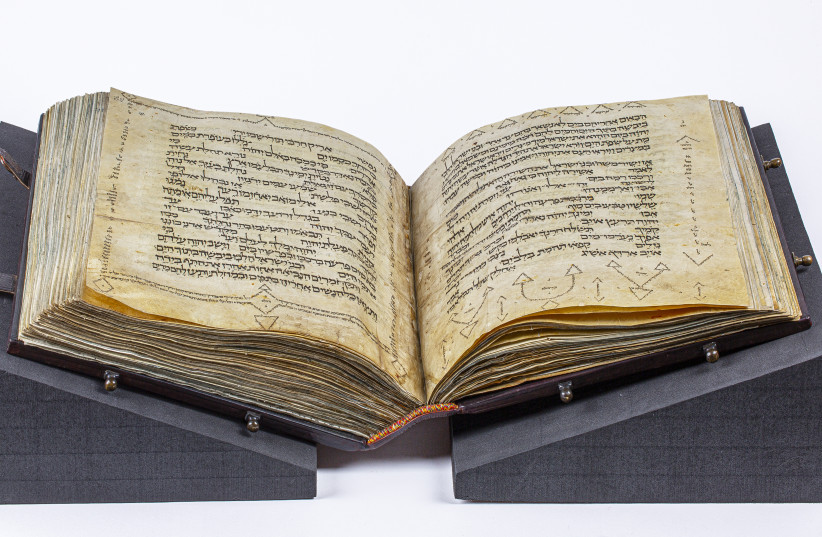
These strong, determined, and demanding believers drew on the Bible to dictate the essential behavior that they and all future leaders must emulate. That meant rejecting corruption and bias and embracing accountability and honesty.
When Franklin and Jefferson imagined the enduring symbol for the United States, neither selected traditional images from Ancient Greece or Rome. Both drew on the story that they thought best represented the new democracy called America – from the Hebrew Bible.
Franklin proposed the image of Pharaoh pursuing Israel through the Red Sea with Moses lifting his hand and the waters overwhelming Pharaoh. His chosen motto was, “Rebellion to Tyrants is Obedience to God.”
For Franklin, the critical need for founding America, for creating the United States of America, was the fight against tyranny, the rebellion against the British. It was not simply a legitimate battle against an oppressive force or a fight for freedom; it was an even higher requirement, a divine obligation.
And for him, creating that new democracy took on higher moral authority, and he used the Hebrew Bible as proof.
Jefferson also drew on the Book of Exodus as his image for America. For him, the powerful picture of the children of Israel being led through the desert by a pillar of fire and a cloud of smoke resonated most. The image of being led to freedom, of trekking toward a new future, was the motif that he wanted as the symbol of the new America he was helping create.
These two biblical images were part of the mindset of the leaders of the new fledgling nation: Franklin embraced the dramatic defeat of an oppressor; Jefferson extolled the journey of liberation and the joy of heading toward a new future.
Role of a leader
Common Sense, written by Thomas Paine in 1776, slams kingship. He referenced passages from 1 Samuel and Judges that excoriated monarchies, writing that the king will take your sons, labor, property, and freedom. He wrote: “The will of the Almighty as declared by Gideon and the Prophet Samuel, expressly disapproves of government by kings.”
Moreover, he wrote: “That the Almighty hath here entered his protest against the monarchical government is true or the scripture is false.”
Paine advocated for a direct break from King George III.
The first chapter of Deuteronomy clearly lays out the role of a leader.
Speaking to the people of Israel, Moses says: “How can I bear unaided the trouble of you and the burden, and the bickering! Pick from each of your tribes individuals who are wise, discerning, experienced, and I will appoint them as your heads. You answered me and said, ‘What you propose to do is good.’
“So, I took your tribal leaders, wise and experienced men, and appointed them over you chiefs of thousands, chiefs of hundreds, chiefs of fifties, and chiefs of tens, and officials of your tribes. I charged your magistrates at the time as follows. Hear out your fellow Israelites and decide justly between one party and the other, be it a fellow Israelite or a stranger.
“You shall not be partial in judgement: hear out loud, low and high alike. Fear no one for the judgement is God’s. And any matter that is too difficult for you, you shall bring to me, and I will hear it.”
Moses was issuing instructions. His model of biblical leadership embraced integrity and honesty. Moses rejected dishonest gain.
The perfect counterpart to the American founders was David Ben-Gurion. He, too, was deeply influenced by the Bible.
A biblical scholar in his own right, Israel’s first prime minister’s writings on the Bible show a deep understanding of the burden of leadership. The Hebrew Prophets were Ben-Gurion’s powerful image of leadership, a theme he frequently developed. He thought the Bible was key to returning sovereignty to the modern State of Israel.
Ben-Gurion was building not just another Western democracy; he was building a “Jewish democracy.”
For Ben-Gurion, Israel was not an exclusive “ethno-democracy” for Jews only. It was a democracy of Jews created in the image of the Israelite prophets, an exemplary society and a better world.
That is why Israel’s Declaration of Independence includes the hope, the promise, that the new democratic state will be: “based on freedom, justice and peace as envisioned by the prophets of Israel. It will ensure complete equality of social and political rights to all its inhabitants irrespective of religion, race, or sex.”
The founders of both great nations drew on similar sources. Our duty is to keep present-day leaders accountable to the dreams and visions as laid out in the Hebrew Bible and set forth by our Founding Fathers. The torches have been passed to us, the voters.
The writer is a columnist and a social and political commentator. Watch his TV show, Thinking Out Loud, on JBS.