Prime Minister Benjamin Netanyahu’s transformation of Israel’s security doctrine has helped turn technological ingenuity into regional military primacy – and made Israel an increasingly valuable strategic partner for Washington.
Under Netanyahu, Israel has increasingly sought not merely to deter its adversaries, but to preempt them, dismantle their military capabilities and reshape the regional balance of power. The result is a country moving beyond its celebrated identity as a “Start-Up Nation” toward something more consequential: a defense-tech nation, whose military capabilities increasingly serve as an asset to American strategy in the Middle East.
The significance of this transformation is reflected in the Pentagon’s 2026 National Defense Strategy, which describes Israel as a “model ally,” valuing it as an ally capable of independently confronting threats directly rather than requiring the continuous deployment of American forces.
The Netanyahu-Trump strategic compact
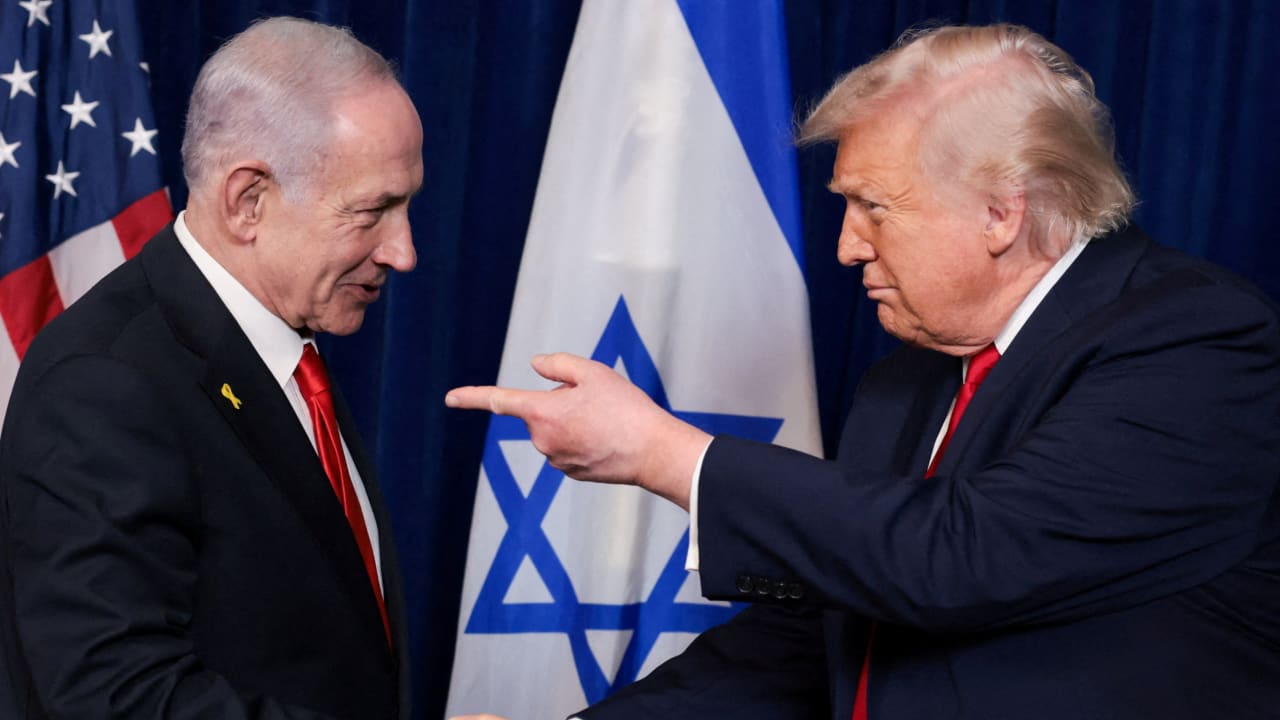
US President Donald Trump’s endorsement of Netanyahu crystallizes this relationship. In a statement reported in October 2026, Trump declared: “If Israel has the wrong leader, which would be anyone other than Bibi, America will have to do this work ourselves, and I am not inclined to do so.” A strong Bibi “is the kind of partner that the United States of America is demanding of Israel.”
The rhetoric is revealing. Trump’s argument is not simply that Netanyahu is a reliable political ally. It is that Israel, under his leadership, is prepared to undertake military operations that advance shared American objectives without requiring Washington to shoulder the entire burden.

The 2025 conflict with Iran offered an illustration of this division of labor. Israel demonstrated its capacity to independently initiate extensive operations against Iranian targets, while the US subsequently contributed capabilities of its own, including the strikes against Iranian nuclear facilities during Operation Midnight Hammer. Israel’s strategic value under Netanyahu lies in its serving as a force multiplier to the US.
From deterrence to proactive military dominance
For Netanyahu, being referred to as a “model ally” represents more than diplomatic validation. Prior to the October 7 massacre, the traditional emphasis was on containment through economic incentives to achieve deterrence, intelligence warning that relied on border technology, and periodic military operations.
Israel arose from the ashes of October 7 to embrace a doctrinal shift in which Israel was to take the offensive initiative, technological superiority, and the willingness to use force to advance preventative measures against adversaries and destroy emerging threats.
In turn, Israel resisted relying on limited exchanges to restore deterrence, and pursued the degradation of Hamas and Hezbollah, eliminating Syria’s conventional and unconventional capabilities in the aftermath of the fall of the Assad regime while striking Iranian infrastructure and the Houthis thousands of kilometers away in Yemen.
This demonstrates Israel’s ambition to confront threats at their source rather than wait for them to reach Israeli territory. The Pentagon’s 2026 strategy presents the degradation of these Iranian proxies as a setback for Iran’s wider regional network.
Netanyahu’s updated national security doctrine in October 2026 formalized this direction. Its stated priorities include offensive prevention over containment, stronger home-front defense, regional military superiority, technological leadership and greater independence in munitions production.
The ambition is to prevent threats from maturing, rather than merely intercept them once they materialize. That involves targeting weapons programs, supply networks, command structures and military infrastructure before they can generate a sustained threat. This entails Israel adopting a more forward-leaning conception of defense, including security buffer zones in Gaza and Lebanon.
The defense-tech nation
Netanyahu’s strategic ambition has extended to ensure that Israel can independently manufacture, sustain, and replenish the weapons needed to use them.
The updated doctrine emphasizes domestic munitions production and reducing vulnerability to external supply disruptions. It also prioritizes advanced technologies, including artificial intelligence, quantum computing, and cyber capabilities.
No longer can Israel be satisfied with having a qualitative military edge that is reliant upon the political willingness of foreign suppliers to provide munitions, which can lead to Israel having depleted stockpiles.
Instead, Netanyahu has envisioned a defense-tech nation with a resilient industrial base, a skilled workforce, research institutions, reliable supply chains and the capacity to convert technological breakthroughs into deployable military systems at scale.
Netanyahu’s strategic vision is to integrate these elements into a national security architecture. This will lead Israel’s technological edge to become an instrument of deterrence, operational reach and geopolitical influence.
Power projection across the Middle East
This reach matters because it changes adversaries’ calculations. Iranian-backed groups can no longer assume that geographical distance or dispersed infrastructure will necessarily shield them from Israeli action.
Israel’s intelligence networks, air power, precision-strike capabilities and operational experience together create a capacity to impose costs across a geographically extensive theatre, leading Netanyahu to advance that the Iranian regime be toppled.
While Iran retains the capacity to threaten Israel with missile and drone attacks, Netanyahu has helped establish a model of regional security in which Israel seeks to disrupt hostile military capabilities before they become fully operational. For Washington, this creates a partner capable of shaping events across several fronts, while potentially reducing the need for sustained American ground deployments.
The Abraham Accords and America’s regional architecture
Netanyahu’s strategic ambition extends beyond the battlefield. Rather than adopt an inside-out approach that the prerequisite for Israel’s normalization with Gulf states depends upon resolving the Israeli-Palestinian conflict, he adopted an ‘outside-in’ approach to regional diplomacy way before the Abraham Accords of 2020.
Already in the early 2010s, Netanyahu championed an “outside-in” strategy, with his doctrine becoming formalized as central policy around 2014 to 2015, arguing that shared economic, technological, and security interests – particularly a common concern regarding Iran – allowed Israel to forge direct ties with Gulf and Sunni Arab nations first.
The significance for the US is considerable. A militarily capable Israel, linked to regional partners through trade, technology, and security cooperation, can become an anchor for a more integrated regional order.
Intelligence sharing, interoperable defense systems, and cooperation against missiles and drones could enable participating countries to respond collectively to common threats without relying on US military intervention.
The Pentagon’s 2026 national defense strategy explicitly identifies this opportunity. It argues that Gulf partners are increasingly willing and able to defend themselves against Iran and its proxies, including through the acquisition of American military systems. Washington sees opportunities to strengthen individual partners’ capabilities while encouraging greater regional integration.
Israel’s contribution to this vision is not that it can single-handedly guarantee regional security. Rather, its technological sophistication, intelligence capabilities and demonstrated willingness to employ force make it a potentially important partner in a broader American-led security network.
Netanyahu’s approach thus connects three strategic objectives: strengthening Israel’s own military position, expanding its diplomatic relationships and creating conditions in which American influence can be sustained through capable regional partners.
A model ally – and a consequential legacy
The Pentagon’s designation of Israel as a “model ally” captures a central feature of the Trump administration’s strategic outlook: partners should possess the capabilities and political determination to shoulder more of their own defense while advancing shared interests.
Netanyahu has sought to make Israel precisely that kind of partner. By linking technological innovation to domestic defense production, offensive military doctrine to regional power projection, and military strength to diplomatic outreach, he has helped reposition Israel as more than a small state defending vulnerable borders.
It is increasingly a technologically advanced military power with the capacity to influence the wider Middle East.
Barak Seener is an Associate Fellow at the Henry Jackson Society, founder of Strategic Intelligentia and co-presenter of The Geo Godfather Wars Podcast. Barak can be followed on X at @barakseener