The politics of delegitimization and defamation, particularly the demonization of Prime Minister Benjamin Netanyahu by the Left, make the establishment of a broad Israeli government of repair an unlikely scenario.
Yet this is exactly what Israel needs now – the partnership in government of Netanyahu and one of his major rivals, say, the political parties led by Yashar head Gadi Eisenkot and/or Naftali Bennett – to together tackle Israel’s major challenges.
The question is: Who is going to disabuse both the Left and the Right of their belligerent, separatist, extremist dreams of establishing a one-sided government that relies on haredi (ultra-Orthodox) or Arab parties? Who is going to cajole Likud and Yashar and/or B’Yachad into a pseudo “unity” coalition government?
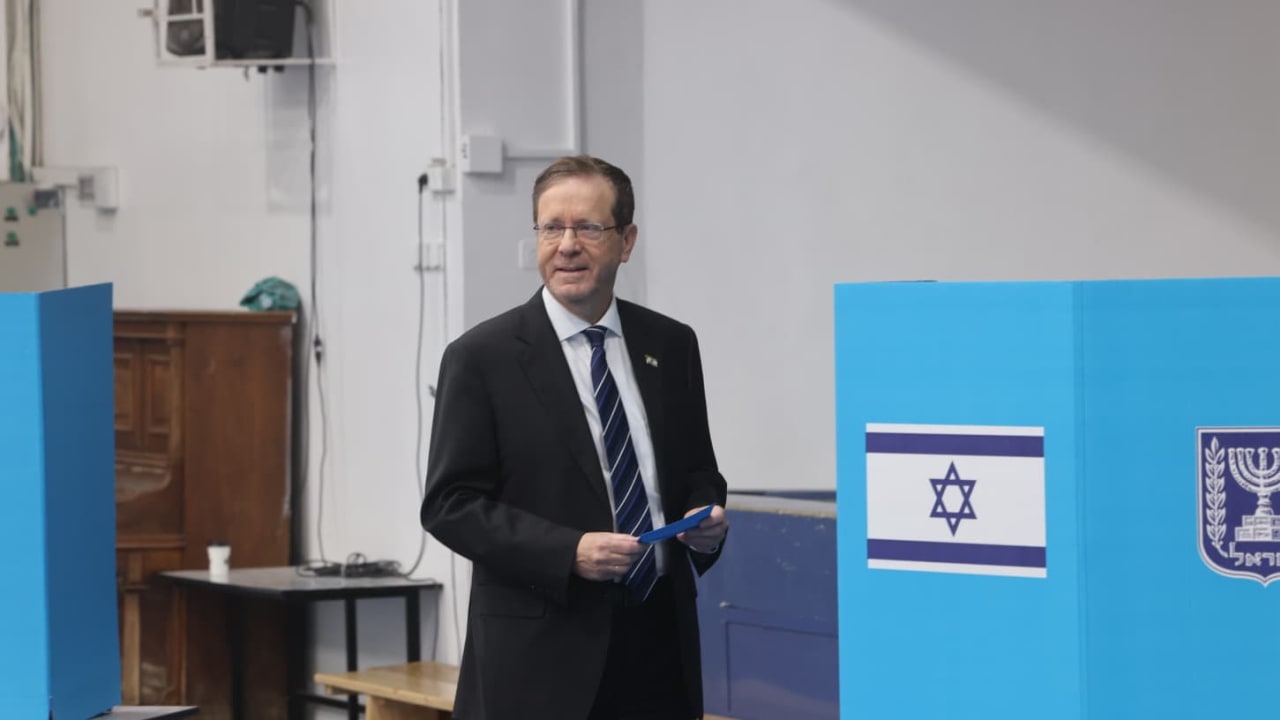
The answer, of course, should be the Israeli president. But I wonder whether President Isaac Herzog is up to the task.
Herzog comes from the Left (a former leader of the Labor Party), and he is already under pressure from his political home base to mandate and approve a narrow Eisenkot government based on an alliance with anti-Israel Islamists or anti-Zionist ultra-Orthodox Jews; a government that defiantly excludes Netanyahu.
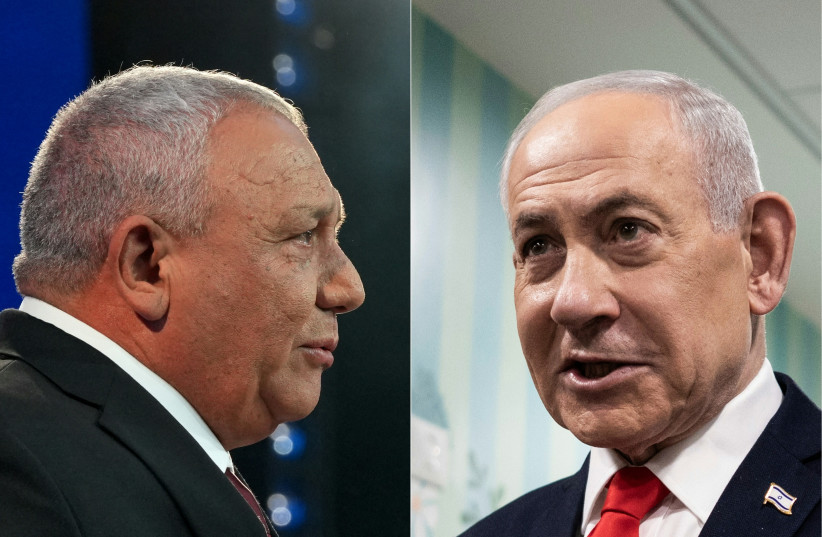
The camp’s overriding priority is to dethrone Netanyahu under any circumstances and at any cost. This camp expects Herzog to play along; nay, they demand that he brandish his bully pulpit to legitimize a government that embraces Mansour Abbas and Prof. Yousef Jabareen, or alternatively Yakov Asher and Yitzhak Goldknopf.
Such a government would handcuff the IDF in fighting Palestinian enemies and kill the hope of recapturing the Negev from Bedouin mafia gangs, and it would quash any plan for drafting haredim into the IDF. But so what? In the view of the hard Left, terminating Netanyahu is the higher goal that makes anything and everything kosher.
Herzog needs to repel the pressures and demands of the hard Left and wedge the mainstream parties, the two or three largest in Knesset, into a governing coalition, uneasy and fractious as it may be.
It is not enough for Herzog to say that he “will do everything in his power to avoid a repeat election scenario.” He must actively agitate for a broad Zionist government. He should aggressively intervene in the political process beyond the usual presidential consultative role following elections.
Herzog should declare that he will give the mandate to form a government first and foremost only to a political party leader that is up-front committed to seeking unity as his priority plan of action. And then he should reject any proto-government coalition brought to him that is not broad-based; that is, contingent on fractional Arab or haredi parties.
Herzog can and should go further in making a broad-based government possible by getting into the nitty-gritty of the issues that stand in the way, from Netanyahu’s future (rotation in the prime minister’s post, a timetable for retirement from politics, and a pardon) to good governance (formation of a national commission of investigation into the October 7 disaster, judicial reform, settlement policy, and haredi draft).
Don’t tell me that this isn’t the role of the Israeli president and that he has no powers for such interposition. Indeed, it is not the president’s classic role, and legally he has no such powers.
Herzog can play hardball with Netanyahu, Eisenkot
But unique times call for emergency measures and for gutsy leadership. Herzog can and should buck convention and play hardball; use his elbows and knuckles, and the prestige of the presidency, to strong-arm Netanyahu and Eisenkot into teamwork.
Clobber them into cooperation. Stymie and shame them, if necessary.
Herzog should hold up the process until he gets his way; our way, the way that most Israelis want and Israel needs.
The problem is that Herzog is too nice. He’s a scholar and a gentleman. He likes to be loved by everybody and to express uncontroversial sentiments. He is prone to opinions that are motherhood and apple pie, like concern for the hostages, victims of terror, and battered women, like empathy for new immigrants and Diaspora Jews.
And to be fair, that has been the traditional, limited purview and approach of previous Israeli presidents too, and there is a noble “peoplehood” logic behind it.
But occasionally Israeli presidents are presented with a moment where more is demanded of them, when they have a unique opportunity to make a substantial difference in the country’s political life.
Herzog had one such previous opportunity, and he blew it. That was during the vigorous public debate over judicial reform in spring 2023. The thinkers and activists behind the controversial judicial reform plan and those violently opposed to it brought a compromise plan to Herzog, which he should have embraced and promoted.
The plan was a daring piece of work. It brought compromises to the table that were incredibly hard for both sides. That is exactly why it was such a brave and hopeful effort. It could have saved Israel from six months of continued internal warfare and perhaps saved Israel from the debilitating military unreadiness that led to the October 7 slaughter.
So, Herzog should have grabbed the judicial reform compromise and promoted it as his initiative. He should have assertively advanced it against the out-of-control passions and political vendettas raging at the time.
But he didn’t. Herzog would not buck the uncompromising dictates of former Supreme Court president Aharon Barak, who declared all-out war on the Likud government’s judicial reform agenda. Herzog did not have the gumption to defy the overheated Left that was banging on drums, blocking roads in Tel Aviv, and burning effigies of Netanyahu in Jerusalem.
Herzog rejected the judicial compromise proposal. He buried the best prospect for healing a badly divided nation. He missed a critical chance to make a difference, and in my eyes, this stands to his eternal discredit.
Now, following this week’s election that ended in a stalemate, Herzog has the option to do teshuva, to repent and repair his ways. He holds the gargantuan opportunity to embrace and insist on a broad government of repair.
Does Herzog have the courage to confront the forces of anti-Netanyahu paroxysm, to buck the pressures for Netanyahu’s political annihilation? Will he break from and defy his natural home base on the Left and drive relentlessly toward a unity government that includes Netanyahu?
Herzog has 20 months left in his seven-year term as president, and he is unlikely to face a greater challenge than this. He can make this moment his signature presidential legacy. However, if he fails to rise to the occasion, you can mark this moment as the end of an inconsequential presidency.
The writer is managing senior fellow at the Jerusalem-based Misgav Institute for National Security & Zionist Strategy. The views expressed here are his own. His diplomatic, defense, political, and Jewish world columns over the past 30 years are at davidmweinberg.com.