
For years, a heavy weight of personal pressure has been bearing down on Prime Minister Benjamin Netanyahu. In the bargaining over Israel’s next government, that burden could pull him in opposite directions.
To guarantee a return to office, he needs the support of at least eight opposition MKs. Were he able to obtain it, and it is a long shot, there would be a high political price to pay. Or, if a credible settlement of his domestic legal troubles could be arranged, his agreed departure from the political scene might become the more attractive option.
Ever since 2020, Netanyahu has been standing trial on corruption charges in Israel. In 2024, the International Criminal Court (ICC) issued an arrest warrant against him over alleged war crimes and crimes against humanity in Gaza.
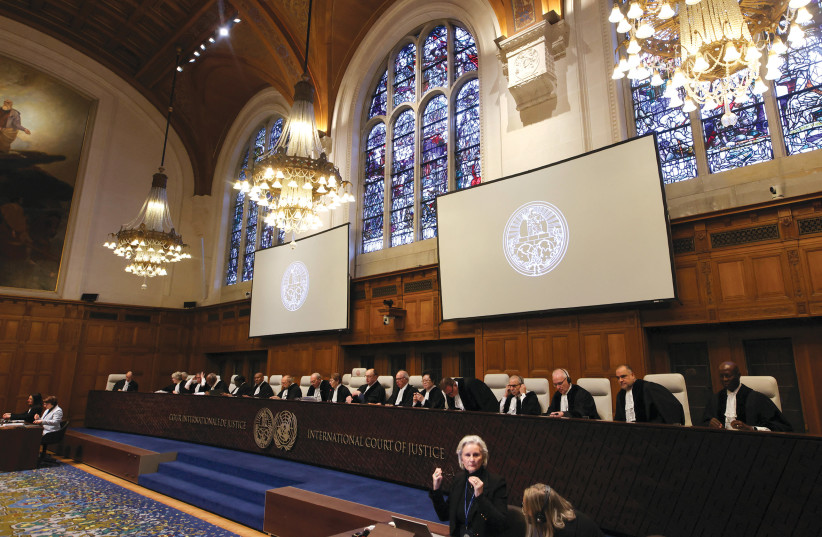
His government’s conduct of the Israel-Hamas war is also the subject of South Africa’s genocide case against Israel at the International Court of Justice (ICJ) – albeit a case against the state, not Netanyahu personally. Now he faces a second criminal trial, mounted against him in Turkey, over Israel’s interception of the Gaza-bound Global Sumud Flotilla.
On October 23, 2026, a High Criminal Court in Istanbul held its first substantive hearing in proceedings against Netanyahu and 34 other Israelis, including Defense Minister Israel Katz, National Security Minister Itamar Ben-Gvir, and IDF Chief of Staff Eyal Zamir. They were not present, and the trial proceeded with the defendants in absentia.
The court delivered no verdict. It extended the arrest warrants, ordered further investigations, and adjourned until March 30, 2027. That is the date of the next hearing, not for judgment.
The Global Sumud Flotilla brought together more than 40 civilian boats carrying some supplies and several hundred participants, including parliamentarians and Greta Thunberg. Around 20 boats left Barcelona on September 1. Other contingents joined from Italian, Tunisian, and Greek ports.
Claims made subsequently that the flotilla was bringing much-needed food and humanitarian aid to a starving Gaza are misleading. The Associated Press described the aid as a “symbolic amount.” Its main purpose was to challenge Israel’s naval blockade of Gaza.
Israeli forces began intercepting the vessels on October 1, 2025, some 70 nautical miles from Gaza, in international waters. Israel said the boats were approaching an active combat zone and attempting to breach a lawful naval blockade. Participants were taken to Israel, including the port of Ashdod, for detention and deportation.
The organizers called the interceptions unlawful. Subsequently, participants alleged they were subjected to violence, degrading detention conditions, confiscation of belongings, and other mistreatment. These allegations form a central part of the Turkish court proceedings, which address not only the alleged treatment of participants but the legality of Israel’s interception.
On October 2, 2025, the Istanbul prosecutor opened the investigation. According to the European Association of Lawyers for Democracy and World Human Rights, which sent observers to the hearing, the proceedings involve more than 100 complainants from 28 countries.
A sinking ship
The jurisdictional basis cited is Article 13 of the Turkish Penal Code, which provides jurisdiction over specified offenses committed abroad.
Reported charges include torture, unlawful deprivation of liberty, intentional injury, aggravated robbery, and seizure of vessels or transport. Several reports also list genocide and crimes against humanity among the charges levied against Netanyahu and the other defendants, but the court’s first-hearing decisions reveal a complicated position.
The judges said that while the existing indictment mainly specified acts against the flotilla, investigations into genocide and crimes against humanity could also proceed upon a request from Turkey’s justice minister. A further indictment based on these charges would need to identify particular incidents and provide supporting evidence.
The court has published no timetable for a final judgment besides the next scheduled hearing. The Turkish news outlet, Haberler, reports prosecution demands for aggravated life imprisonment and prison terms reaching 4,596 years, but the most likely near-term outcome is further hearings, evidence gathering, and possibly an expanded indictment.
The outcome might parallel the conclusion of the drawn-out Mavi Marmara affair, which took six years to resolve.
On May 31, 2010, Israeli commandos intercepted a Gaza-bound flotilla in international waters. Nine activists aboard the Mavi Marmara were killed, eight of them Turkish nationals. A 10th who died later of his injuries was also Turkish.
On September 2, 2011, Turkey downgraded diplomatic relations with Israel, expelled its ambassador, and suspended military agreements. Four former Israeli commanders were tried by a Turkish court in absentia.
Six years after the raid, in June 2016, Turkey and Israel reached a reconciliation agreement. Israel agreed to pay $20 million in compensation to the bereaved families; Turkey agreed to end related legal claims. The case against the Israelis was dismissed on December 9, 2016, and Israel-Turkey diplomatic ties were restored.
What legal challenges is Netanyahu currently facing?
The domestic proceedings against him, alleging fraud, breach of trust, and bribery, now combine three cases into one trial. He denies wrongdoing, and the trial proceeds.
The Turkish criminal trial charges Netanyahu and 34 other Israeli defendants over intercepting the Gaza-bound flotilla, and accuses them, among other matters, of torture and unlawful deprivation of liberty. Further charges of genocide and crimes against humanity remain possible.
The ICC issued an arrest warrant for Netanyahu over alleged war crimes and crimes against humanity in Gaza, including starvation as a method of warfare. The warrant seeks Netanyahu’s arrest and surrender to the ICC in The Hague. States party to the Rome Statute are obligated to arrest him if he enters their jurisdiction and transfer him to the Court.
Meanwhile, and perhaps for years to come, the ICJ investigation into South Africa’s accusation of genocide remains open. He may find a crumb of comfort in the fact that its case is against Israel as a state, not Netanyahu personally.
Further legal jeopardy may yet emerge from investigations into his inner circle, while on October 18, bereaved families filed a complaint asking authorities to investigate whether he deliberately misled the state comptroller and the public in his written account of the circumstances surrounding Hamas’s bloodthirsty incursion on October 7.
Unfortunately for Netanyahu, he may yet sink even deeper into the legal morass in which he finds himself.
The writer, a former senior civil servant, is the Middle East correspondent for Eurasia Review. Follow him at: www.a-mid-east-journal.blogspot.com