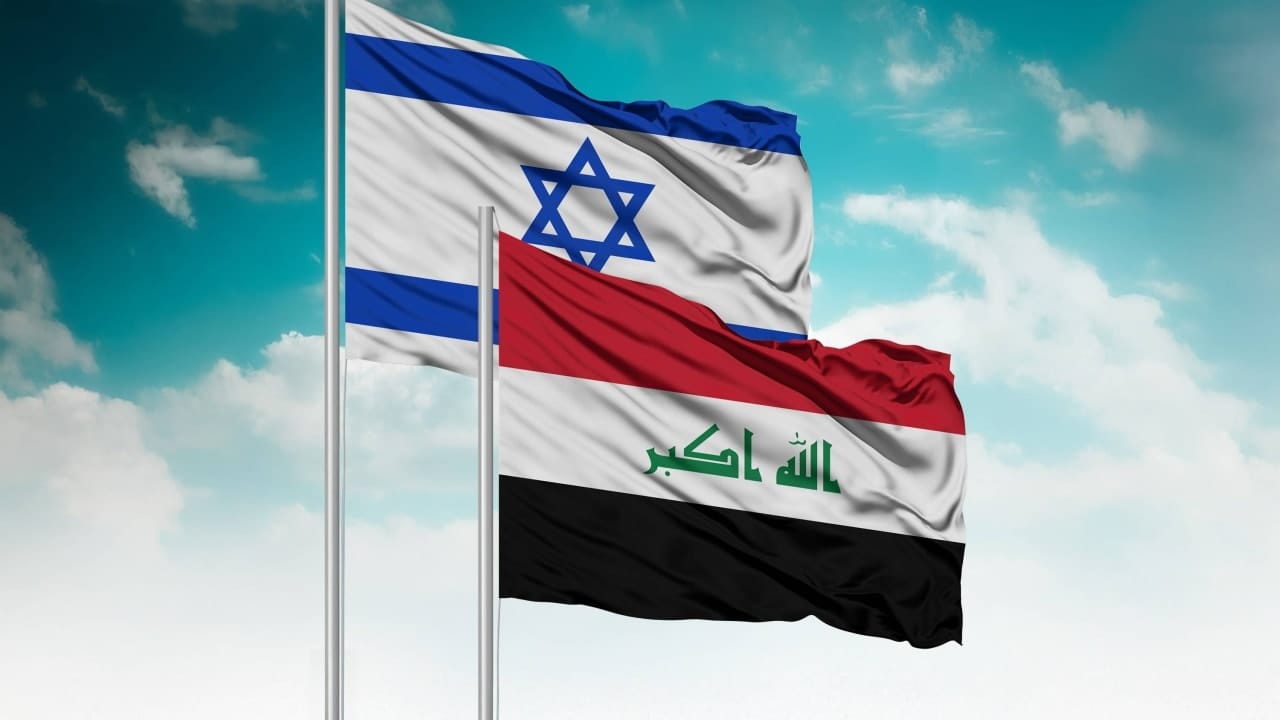
From the Land of the Two Rivers – a land of ancient civilizations and deep-rooted history – and from the homeland of the Prophet Abraham, whose name embodies a shared spiritual legacy among Muslims, Jews, and Christians, we extend a message of love and peace to the people of the State of Israel. We affirm that humanity can choose the path of understanding over hostility, opening the doors to a future for generations that deserve security, stability, and prosperity.
Transitioning from rejection to dialogue, and from estrangement to understanding, does not mean abandoning one’s religious identity. Rather, it is the realization that differences need not devolve into permanent enmity, and that peoples are capable of building relationships based on mutual respect and shared interests.
Peace is neither a sign of weakness nor a compromise of dignity; it is a courageous decision that places human life and the future of nations at the forefront of priorities.
A shared religious history
The name of Abraham has long been associated with monotheism, faith, and devotion to God; his spiritual legacy serves as a meeting point for the followers of the Abrahamic faiths.
In this spirit, Iraqis and Jews can view their shared religious history as a bridge for mutual acquaintance and connection, rather than a cause for perpetuating conflict. This legacy transcends geographical and political boundaries, serving as a reminder that faith in God should inspire individuals toward justice, compassion, and respect for the dignity of others.
In this context, Hussein al-Kinani – a political researcher and head of the Al-Hadaf Center for Studies – has made statements asserting that three-quarters of the Iraqi people support establishing relations with the State of Israel. This is a reality that extremists refuse to acknowledge, yet it reflects the true desires of the Iraqi public.
These statements carry particular significance because they originate from a research center known for its proximity to extremist factions and militias backed by Iran. This serves as a striking indicator of a potential shift in public sentiment within circles traditionally opposed to any openness toward Israel.
Consequently, this figure should be treated as a genuine data point reflecting a significant societal trend, warranting a serious discussion regarding its implications and the future of regional relations.
Given its geographical location, human and economic resources, and rich civilizational heritage, Iraq has the potential to contribute to any serious regional effort aimed at reducing tension and fostering cooperation.
Provided that the appropriate political and legal conditions are met – including the repeal of punitive laws originally drafted to prevent communication and the establishment of relations between the two peoples (the descendants of Abraham, through his sons Isaac and Ishmael) – peaceful relations could open new horizons for exchange in the scientific, technological, medical, agricultural, and economic spheres, ultimately contributing to the creation of a more stable regional environment.
The vision of the Abrahamic Movement in Iraq
Hence the significance of the Abrahamic Movement in Iraq, which – as stated in its declarations – seeks to use the Abrahamic heritage as a foundation for religious and human dialogue. It aims to rebuild relations among Muslims, Jews, and Christians based on mutual acquaintance, coexistence, and respect for the distinct religious identity of each community.
The intellectual vision proposed by Tom Wegner – head of the Global Abrahamic Movement and author of the book The Abrahamic Revolution – advocates for moving beyond stereotypes and identifying common ground to help the peoples of the region break free from cycles of inherited hostility.
The Abrahamic Revolution – which, within the framework of the movement’s intellectual vision, could be described as a new "Abrahamic constitution" for the Middle East – serves as a primary reference for understanding the movement’s project and its ambition to reshape regional relations based on a shared Abrahamic identity.
This vision does not seek to erase differences between religions or impose a single creed upon everyone; rather, it aims to leverage shared values to build a culture of peace – one that allows individuals to preserve their own faith and identity, while respecting the right of others to hold their own beliefs and live in safety.
If the Middle East aspires to enter a new phase, such a transition cannot be achieved merely by changing names or slogans. It requires a genuine shift in ways of thinking – as well as in religious, media, and political discourse – and demands that societies develop the capacity to manage their differences without allowing them to escalate into perpetual conflict.
In this light, the Abrahamic Movement in Iraq can play an intellectual and dialogical role by disseminating articles and studies, organizing religious and cultural discussions, and fostering initiatives. These are efforts I am actively pursuing, leveraging my position within the religious and tribal landscape and the significant influence I hold in Iraq.
Distinguishing between religious texts and human interpretations
One issue that warrants reexamination is how religious texts have, at various points in history, been used to justify religious and political conflict or entrench hostility between groups. Political interests often become intertwined with religious interpretations, turning the text into a tool for power struggles rather than a foundation for moral and spiritual reflection. The histories of Islam, Judaism, and Christianity encompass diverse currents – some advocating for coexistence, while others were shaped by the conflicts of their respective eras.
Therefore, any call to revisit religious discourse must be grounded in the scholarly study of texts, an understanding of their historical and linguistic contexts, and a clear distinction between the text itself and the human interpretations that have fueled persistent, artificial conflicts – conflicts not prescribed by the Quran. As we have demonstrated in the statements and research produced by the Abrahamic Movement in Iraq, it is possible to dispel ambiguity and interpret Quranic texts and evidence correctly – in line with the approach taken by prominent, moderate scholars, jurists, and exegetes.
Differences in creed do not preclude cooperation, mutual respect, or the building of peace on an Abrahamic foundation. The Quran itself provides a vital basis for coexistence.
Rooted in this shared belief in God, we maintain that respecting Jews does not conflict with a Muslim’s devotion to their own faith; likewise, respecting Muslims does not require Jews to abandon their religious convictions.
Affection between peoples does not mean the dissolution of identities; rather, it means that we seek to bring together people of diverse identities, grounded in the principles of human dignity, justice, and the fulfillment of covenants. We view our cousins, the Jewish people – whom the Quran explicitly and unequivocally describes as having been favored among the nations – with respect for their history, their dignity, and their aspirations.
The Abrahamic brotherhood is rooted in a spiritual and historical bond among the followers of faiths that trace their heritage back to Abraham. Both Islamic and Jewish religious traditions unite the descendants of Abraham (Isaac and Ishmael) within the context of the Abrahamic family and the continuity of his monotheistic mission.
To the people of Israel, we say: Our message from Iraq is one of mutual acquaintance and hope. We look forward to a day when Iraqis and Israelis can discuss science, culture, history, and the future without fear – a day when stereotypes are replaced by direct understanding, and respect for the individual becomes the foundation for interaction between our peoples.
We hope that future generations in our region will find opportunities for learning, work, and creativity, rather than inheriting conflicts they did not choose and that are not mandated by any religious texts.
The peace we seek is not merely a matter of slogans exchanged between officials; rather, we envision a peace that exists among the citizens of both nations – at the social and cultural levels, and even within the sphere of the family.