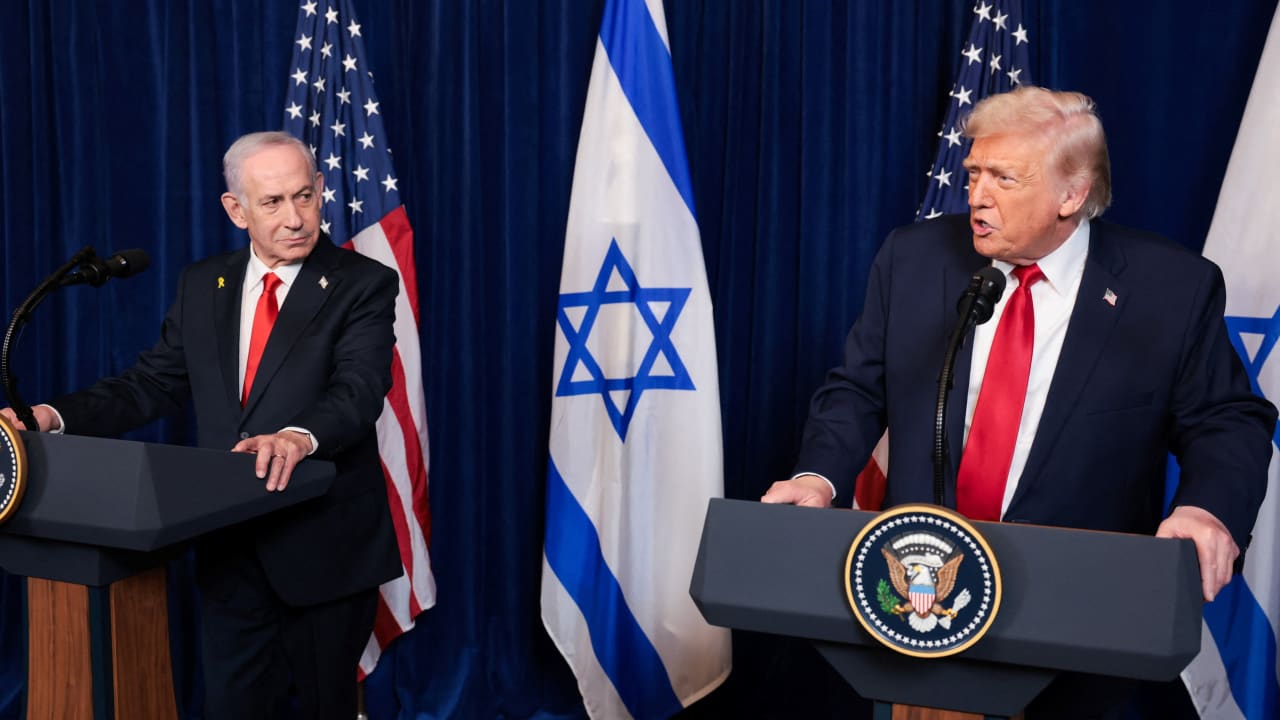
I have always considered Prime Minister Benjamin Netanyahu an intelligent man. Whatever one may think of his leadership, he understands American politics, knows the Republican Party intimately, and is certainly familiar with the art of political survival.
That is precisely why US President Donald Trump's announcement that the United States will end its nearly $4 billion in annual military assistance to Israel, reportedly with Netanyahu's agreement and at his initiative, leaves me with one fascinating question:
What did Israel's transitional prime minister get in return?
After all, we are dealing with two accomplished businessmen. And businessmen do not normally give away $4b. without expecting something in exchange.
Certainly not Trump. And most certainly not Netanyahu. Let us consider the facts.

American military assistance is not some generous Christmas present that Israel can politely decline. It is a central pillar of Israel's national security, military planning, and strategic relationship with the US.
The existing agreement provides approximately $3.8b. annually through 2028. Ending that assistance prematurely would represent a serious blow to Israel's defense capabilities and impose an enormous additional burden on Israeli taxpayers.
But apparently, according to Trump, Israel no longer needs the money.
How wonderful! Perhaps someone should inform Israel's Finance Ministry, the IDF, and the millions of Israelis struggling with the cost of living.
Now, I refuse to believe that Netanyahu simply woke up one morning and decided to sacrifice billions of dollars essential to Israel's security.
That would be irresponsible.
And I have already established that I consider Netanyahu an intelligent man. So there must be another explanation.
Republicans facing difficult midterm election
Perhaps the answer lies not in Jerusalem but in Washington, where the Republicans face a difficult midterm election.
The Republican Party has a substantial isolationist wing, whose members have never been particularly enthusiastic about sending American taxpayers' money overseas. Meanwhile, growing segments of the Democratic Party are hardly overflowing with affection for Israel these days.
In other words, American assistance to Israel has become an increasingly uncomfortable political issue for both parties.
And suddenly, on Election Day, Trump announces that the annual $4b. commitment will disappear.
What extraordinary timing!
Trump himself has openly connected the decision to the political attacks Republicans face over aid to Israel.
Could it be that Netanyahu has generously agreed to help his tfriends remove an inconvenient campaign issue, perhaps saving them from an embarrassing electoral defeat?
Could it be that billions intended for Israel's defense have become a contribution to the Republican election campaign?
Of course, these are merely questions.
I would never suggest that our transitional prime minister would knowingly compromise Israel's national security simply to help his political allies in Washington.
Unless, naturally, there was something in it for him.
And here we return to the two businessmen.
Trump knows how to make a deal. Netanyahu knows how to negotiate. Both understand the value of political favors, especially when elections are involved.
So what exactly was the consideration?
A diplomatic gesture? A political commitment? A promise of future support? Perhaps something connected to Netanyahu's own political future?
I do not know.
But I would very much like to.
There is another small detail worth remembering. The American assistance agreement is not merely a financial arrangement. It reflects a long-standing bipartisan commitment to Israel's security.
For decades, Israeli leaders understood that maintaining bipartisan American support was a strategic national interest, not a partisan luxury.
Turning that relationship into an instrument of Republican electoral strategy would be a remarkable achievement – though hardly one that deserves a medal.
And there is an additional irony.
Much of the American military assistance is spent purchasing American weapons from American manufacturers. In other words, the arrangement also supports American industries and American jobs.
So the two businessmen may have found a way to damage Israeli security while also inconveniencing American defense manufacturers.
An impressive double achievement.
Naturally, Trump may still have to contend with Congress and the existing agreement before his declaration becomes reality. Netanyahu, too, may eventually explain what was actually agreed upon.
Until then, I have a modest proposal.
Let the transitional prime minister publish the terms of the deal.
Let him explain why Israel should surrender nearly $4b. annually, what strategic advantages Israel will receive, and how the resulting gap in our defense budget will be filled.
And, above all, let him explain why this extraordinary announcement had to be made on the very day Americans went to the polls.
I am prepared to be persuaded.
Perhaps Netanyahu has secured a historic achievement that none of us can yet appreciate.
Perhaps the two businessmen have discovered a brilliant formula under which Israel loses $4b. but somehow emerges stronger.
Or perhaps the explanation is much simpler.
Trump needed an election gift. Netanyahu was happy to provide it. And the Israeli taxpayer was not invited to the negotiations.
One thing is certain: When two politicians strike a deal involving billions of dollars of someone else's money, the public has every right to demand the receipt.
Especially when the merchandise being traded is Israel's national security.
The writer served as a political adviser to Shimon Peres for 26 years, including seven years during his presidency.