
The Israeli summer does not hold back on heat, but it also does not hold back on opportunities for refreshment. Across the national parks and nature reserves of the country lie some of the most beautiful sites this small nation has to offer - and in all of them, water is the main attraction. Flowing streams, thermo-mineral springs, hidden natural pools, and crystal-clear basins offer not only scenery but also a truly refreshing experience, the kind that completely changes the way a summer weekend feels. We’ve gathered five sites from the Galilee to the Great Crater that show how even in the hottest season of the year, Israeli nature offers shade, water, and coolness
Ein Yorke'am – a natural pool in the heart of the Great Crater
Anyone who thinks the desert is only sand, rock, and oppressive heat is in for a big surprise along Nahal Hatira, right at the exit from the Great Crater. Ein Yorke'am is one of the most beautiful and unexpected places in the area - a relatively accessible natural pool that proves that even in the heart of the arid Israeli desert, refreshing water sources are hidden.
The trail leading there is short and comfortable, about 3 km round trip, and suitable for the whole family. Along the way, you encounter dramatic desert scenery, a white rock canyon winding between stone walls, and ancient Roman-era steps carved into the rock - a reminder that people walked this route long before it became a hiking site. When you finally reach the pool itself, after walking through a landscape of white and golden-brown hues, the highlight arrives: Clear, cool water that is impossible to resist.
The secret to visiting in summer is timing. It is recommended to arrive only in the early morning hours, before the desert heat becomes unbearable. Be sure to bring plenty of water and a hat. This is a relatively short hike, but one that changes your perception of what the desert can offer. Nearby is the night campsite of the Mamshit National Park - the Nabatean khan - which allows you to continue experiencing the desert in the evening and night hours, when temperatures drop and the sky fills with stars.
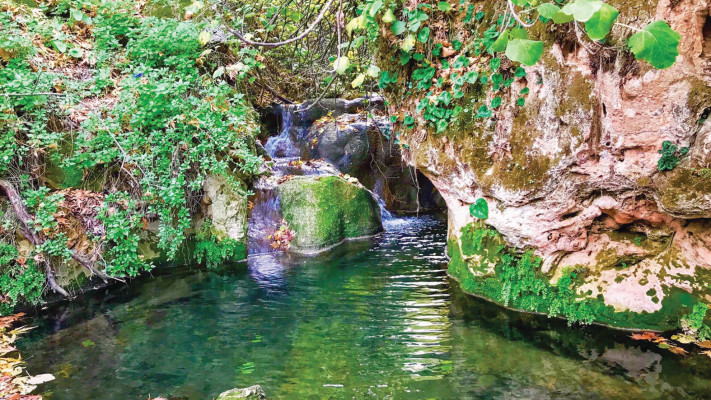
Nahal Amud – flowing all year round
Anyone looking for a summer trail that combines water, historical sites, and shade in the heart of the Galilee will quickly find themselves walking along Nahal Amud. This is one of the most well-known and beloved water trails in the region, and what makes it unique is that the stream at its center flows all year round - even in the scorching August heat, when many other streams have already dried up or significantly weakened. The circular trail, about 4 km long and of moderate difficulty, starts at the reserve entrance and winds through lush green vegetation, the kind that is hard to find in the peak of the Israeli summer.
The route passes Ein Yakim and an ancient water aqueduct, alongside a restored orchard and the remains of flour mills that remind visitors that this place was once a vital economic center of the region - not just a tourist site. The historical highlight is the fulling mill, a facility that once served the wool textile industry of Safed, still standing among the rocks as a tangible remnant of a city that was once a major weaving center. Walking beside it, among ancient stone structures, emphasizes that this reserve is not only nature but also an entire chapter in the history of the Galilee.
But what makes people return here again and again are the giant plane trees that cast deep shade over the path, and the clear Sekhvi pools - the natural stopping point of the trail. Here you can sit with your feet in the water, or for the more daring, jump in and cool off completely, leaving the summer heat behind. The lush surroundings and heavy shade create a feeling of transition from the Israeli summer desert into another world - Mediterranean, wet, and green.
Those who wish to extend the visit can stay overnight at the nearby campsite - an easy option for those who do not want to drive back after a full day in nature and prefer to fall asleep to the sound of the stream and wake up to another round of hiking before the heat rises.
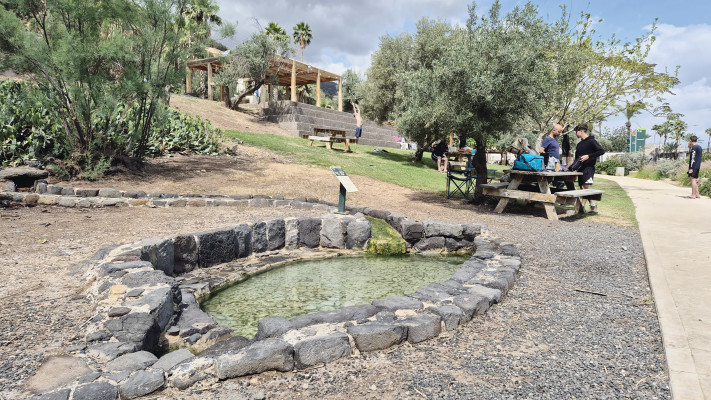
Hot springs at Hamat Tiberias National Park
There is something paradoxical about bathing in hot water in the peak of the Israeli summer, but at Hamat Tiberias this paradox is exactly the magic. The national park combines nature, an archaeological site, and thermo-mineral springs, set against an unmatched landscape - Lake Kinneret on one side and the Golan Heights on the other. Seventeen hot springs emerge at the site, with water temperatures reaching up to 60°C - a reminder that beneath the ground of northern Israel there is geothermal activity that has accompanied the region for thousands of years.
Alongside the baths themselves, the site offers a unique reflexology path - walking on different types of stones that activate pressure points in the feet and, according to reflexology principles, help improve posture and blood circulation. It is a small but interesting addition to the visit for those who want to combine the water experience with a more body-aware activity.
With rising summer temperatures, the Nature and Parks Authority has extended opening hours to allow visits during more comfortable times of day. On Wednesdays and Thursdays, bathing can continue even after sunset. The atmosphere changes completely - Lake Kinneret and the Golan Heights appear in the twilight glow, and the combination of warm water, magical scenery, and evening silence creates a completely different experience from a regular midday visit. The park is open on Wednesdays and Thursdays until 9:00 PM, with last entry to the pools at 8:00 PM.
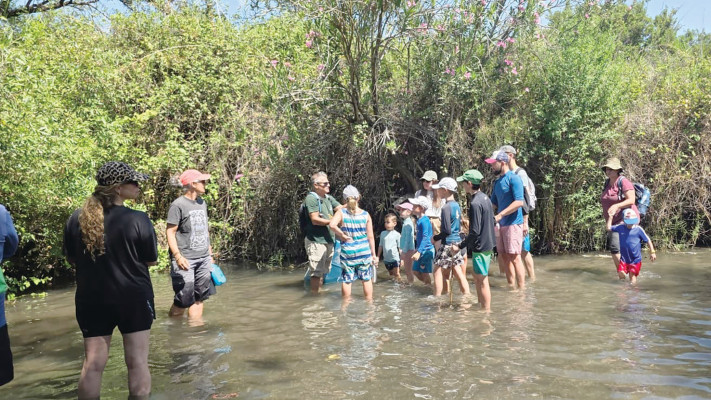
Majrase Nature Reserve – walking in water at the Delayot Stream estuary
The Majrase Nature Reserve, at the estuary of the Delayot Stream into the Sea of Galilee, is one of the most beloved and refreshing water sites in Israel - and for good reason. The reserve is located northeast of the Sea of Galilee, in an area where the Golan streams meet the country’s largest lake, and this meeting point is reflected not only in geography but also in the landscape: Rich vegetation, flowing water from all directions, and wildlife that finds a home here.
The real star of Majrase is the “wet trail” - a walk of about 800 meters directly inside the flowing stream, with water sometimes reaching knee height or even higher depending on the season and water levels. This is not walking next to water but walking inside it, and that difference completely transforms the experience - especially on days when the heat becomes unbearable. In the height of summer, the wet trail is easily one of the most effective ways to cool off without immediately sweating again within minutes of exiting the water.
For those who prefer to stay dry, or who arrive with small children for whom walking in the stream is not suitable, the site also offers a regular walking path that allows visitors to enjoy the reserve’s scenery without getting wet. In either option, visitors are treated to open views of stream channels, natural pools, and the wide landscape opening toward the Sea of Galilee and the Golan Heights - a combination that makes Majrase a destination suitable for a full family outing, from the youngest to parents who just want to sit in the water for a moment and forget the heat.
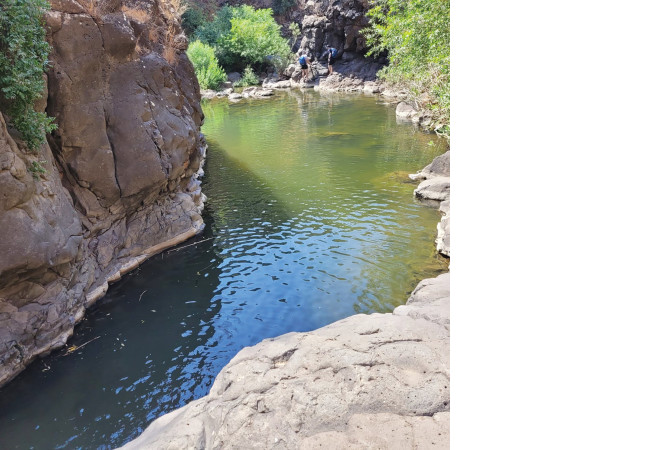
Night campsite at Yehudiya Nature Reserve
For those for whom one day of hiking is not enough, and who want to extend the experience for another day, there is a simple solution: Overnight camping. The Yehudiya Nature Reserve campsite in the North is an ideal starting point for a true nature vacation, the kind that begins when the sun sets and does not end with the end of the daily visit. Waking up here means waking up in the heart of one of the most beautiful hiking areas in Israel - among flowing streams, natural pools, impressive waterfalls, and the open landscapes of the Golan Heights stretching in all directions.
From the campsite, you can set out on foot directly to some of the most popular sites in the area: The Yehudiya Nature Reserve itself, Nahal Zavitan, the meshushim Stream Reserve, and Gamla Reserve. In other words, there is no need to travel from site to site - you can base the entire trip around one campsite and plan full days of hiking without returning to the car at all.
The campsite is designed for tent camping with personal equipment and offers relatively comfortable conditions for what one might expect in the middle of nature: Hot showers, toilets, sinks for washing dishes, a refrigerator, drinking water taps, phone charging points, outdoor lighting, benches, and picnic tables. The site is accessible, expanding its use for families and travelers with different needs.
What makes staying here special are the moments between activities - during the evening hours, after a full day of hiking and swimming, when the silence of nature takes over and the open air replaces the heat of the day. Those who look up at night are treated to the Golan skies without light pollution - a rare opportunity to see stars in a way that is no longer common in the city. It is important to know: Overnight stays require advance coordination through the Israel Nature and Parks Authority website.