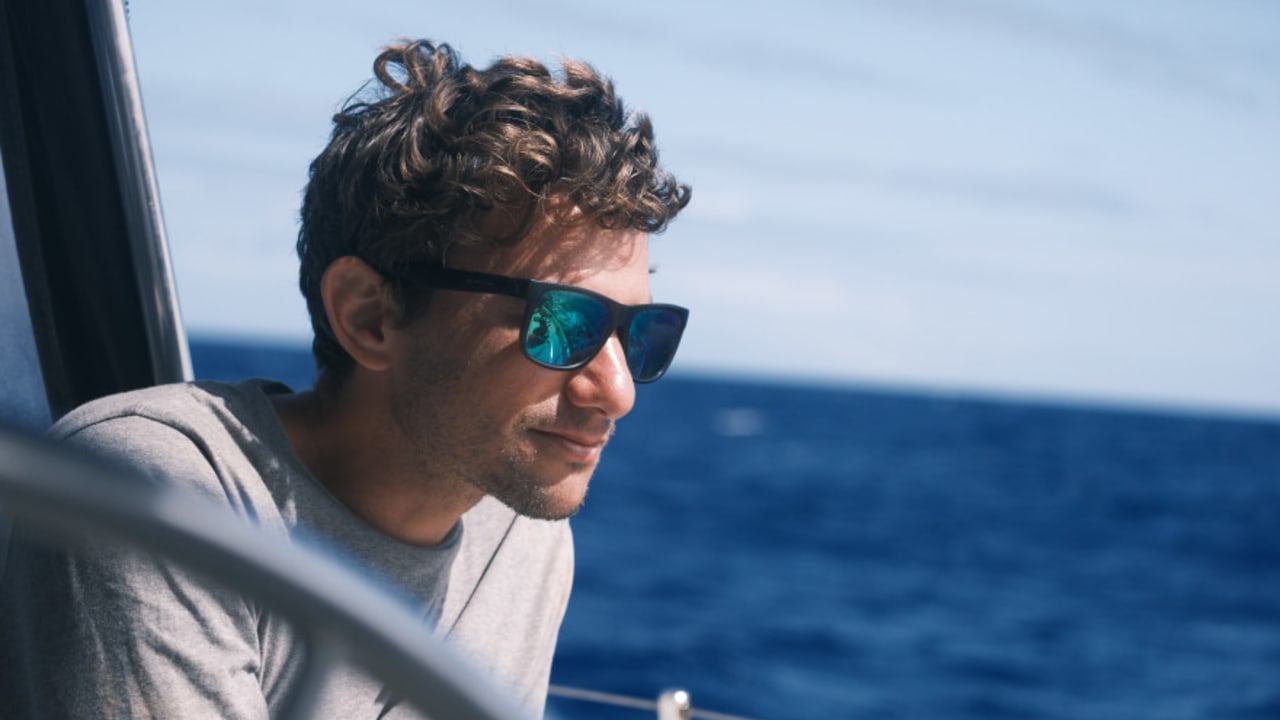
In less than two months, Daniel Pinsky will cut himself off from the rest of the world.
For approximately 250 days, he will sail solo around the globe with no GPS, no internet, no stopovers, and no outside assistance. Just him, an 11-meter sailboat, paper charts, a sextant, and endless oceans.
On September 6, he will stand at the starting line of the Golden Globe Race - one of the world's toughest sailing competitions - and become the first Israeli ever to take on this extraordinary challenge.
Just before embarking on the journey of a lifetime, he spoke about the storms that nearly cost him his life, his fears about loneliness, and the deeper meaning he has found in this voyage.
Daniel Pinsky
Age: 35
Marital status: Single
Profession: Mechanical Engineering Technician
Residence: Lives aboard his sailboat at Herzliya Marina. He grew up in Ariel and, at the age of 14, enrolled at the Israeli Naval Officers School in Acre, where he fell in love with the sea.
"At 23, I Bought a Boat and Moved Onboard"
Where did your love affair with the sea begin?
"At 14, I transferred to the Naval Officers School in Acre, and that's really where everything started. Later, I served in the Israeli Navy, and while I was a student, I worked at the port. My entire life has revolved around the sea in one way or another.
"When I was 23, I bought my first sailboat and moved aboard it at Herzliya Marina. Even back then, I knew that one day I'd fulfill my dream of sailing around the world."
Today, Pinsky is in France, completing the final preparations before the Golden Globe Race begins on September 6.
"This Race Takes Us Back to 1968"
What makes this race so unique?
"The first race took place in 1968, when the British newspaper The Sunday Times offered a prize to anyone who could sail solo around the world in a yacht. Ever since, the race has recreated the sailing conditions of that era.
"That means no GPS, no digital displays, no smartphones, no electronic navigation systems - just traditional navigation, paper charts, and a great deal of experience."
What does the course look like?
"The race starts in Les Sables-d'Olonne on France's Atlantic coast. From there, we sail south through the Atlantic Ocean, round the Cape of Good Hope, continue beneath Australia and New Zealand, cross the Southern Ocean, round Cape Horn at the southern tip of South America, and then head north across the Atlantic back to the finish line in France."
No Stopovers. No Rescue. No Help.
Throughout the race, competitors are prohibited from receiving any outside assistance.
"You can't stop along the way. You can't receive food, fuel, spare parts, or even weather information. Any outside assistance results in immediate disqualification."
Even the onboard equipment is strictly regulated.
"GPS devices, digital watches, and smartphones are prohibited. Even e-books aren't allowed. If I want to read, I have to bring printed books. If I want to listen to music, I'll use a radio cassette player."
What about the boats themselves?
"They have to be older production models built before the end of the 1980s, no longer than 36 feet, and of traditional design. The whole idea is to face the ocean almost exactly as sailors did more than half a century ago."
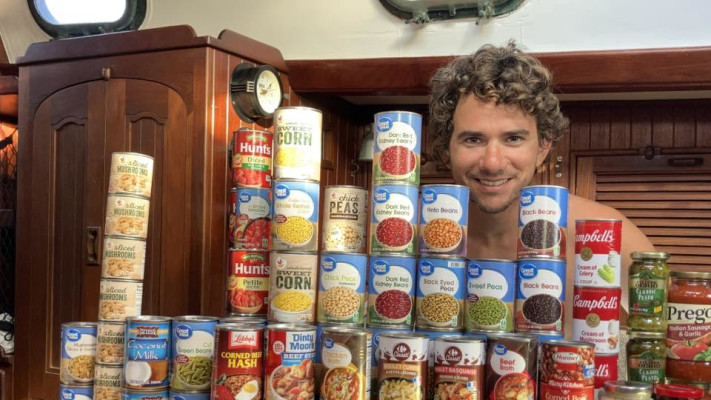
"I'm Setting Off With My Entire Life Packed Onto the Boat"
Competitors must load their boats with enough equipment and provisions to last seven to ten months.
"If I forget something, I'm in trouble. There's no way to replace it along the route."
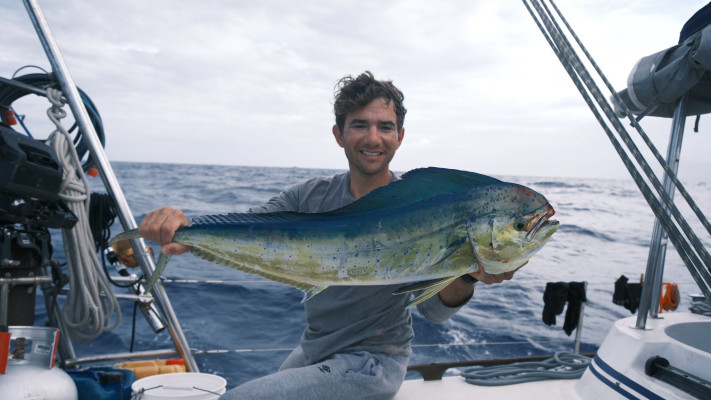
At least you can fish, right?
"Yes - and if I'm lucky, I'll enjoy fresh fish. But I'm not counting on it. Everything I'll need for the voyage is already onboard."
According to Pinsky, finishing times depend on weather conditions and the sailor's performance.
"The fastest sailors finish in around 210 days, while others take more than 320. I expect to spend roughly 250 days at sea."
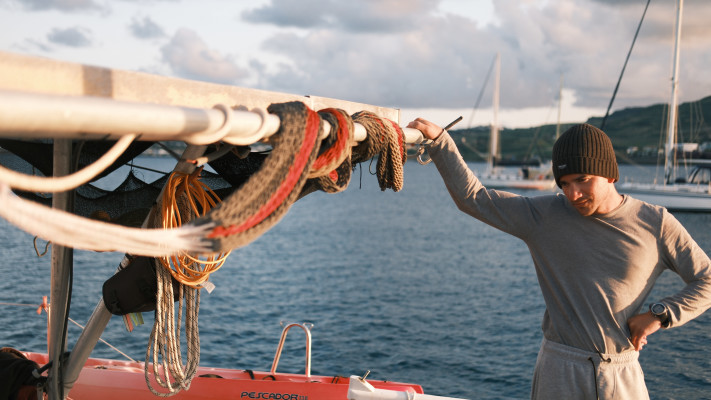
"Suddenly, I Realized It Was My Time"
When did you decide to take on this challenge?
"I'd known about this race for years and followed it with great excitement. I admired the people who dared to participate, but I never thought I was truly ready. I felt I didn't have enough knowledge or experience.
"About ten months ago, everything suddenly clicked. I realized this was my moment. From the second I made the decision, I threw myself into preparing to reach the starting line."
For the past five years, the sea has been his home.
He left Israel with his former partner, crossed both the Mediterranean and the Atlantic, sailed throughout the Caribbean, and spent time living in Panama. Later, he returned to Europe aboard the same boat, completing his second Atlantic crossing.
"It's not like I suddenly decided to jump into the deep end. Everything I've done over the past several years has been preparation for this moment."
"Storms Are Terrifying, But Loneliness May Be Even More Dangerous"
What scares you more - the sea or the loneliness?
"The storms are more frightening in terms of immediate danger. When you're battling the sea, you're in survival mode. You don't have time to think about whether you're cold or in pain - you simply do whatever it takes to stay alive.
"But loneliness is the challenge I still don't know how I'll respond to. You can fall into depression or lose motivation. Everyone deals with it differently."
During his most recent preparation voyage, which lasted 39 days, he already experienced some difficult moments.
"There were days when I didn't feel like doing anything, but I always managed to pull myself out of it. This time, though, the journey will last many times longer."
"There Is No Room for Mistakes in the Southern Ocean"
What's the worst-case scenario?
"The sea has unimaginable power. I'm alone on a small boat, and I have no real way of defeating it. One violent storm can sink the boat."
His greatest concern is finding himself in distress in the middle of the Southern Ocean, hundreds or even thousands of kilometers from land.
"Out there, helicopters can't reach you. Even if a ship changes course to rescue you, it could take days. If you end up in the freezing water, it only takes a few minutes to die from hypothermia."
Despite the race's strict rules, safety remains a top priority.
"The boat carries a life raft, satellite phones, emergency beacons, and tracking transmitters. In an emergency, I can call for help."
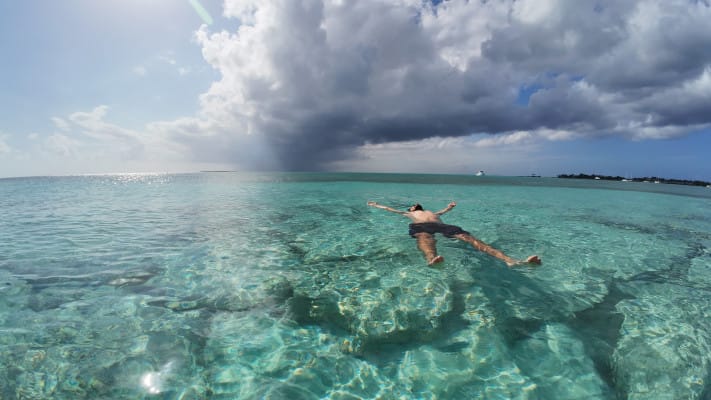
"I Thought I Wasn't Going to Survive"
Even after years at sea, one experience still haunts him.
It happened last November, shortly after purchasing the boat he will race.
"I knew I had to leave the United States before winter arrived. If I'd stayed, I'd have been trapped by storms that would prevent me from heading south."
Instead, the weather caught him first.
"I sailed into the worst storm I've ever experienced. Winds reached 60 knots, and the waves were around 10 meters high. When your deck sits barely a meter above the water, every wave looks like a skyscraper."
For 18 straight hours, he had to steer manually.
"The autopilot simply couldn't handle the load. I couldn't let go of the helm for even a second because if the boat turned the wrong way, one wave could have rolled it over."
During those 18 hours, he didn't eat, sleep, or even go to the bathroom.
"I was freezing. I was completely exhausted. There were moments when I truly didn't know if I'd survive."
Eventually, realizing he had no strength left, he took one final measure.
"I went below deck, sealed everything shut, lay down beneath the table, and surrounded myself with cushions and gear, hoping that if the boat rolled over, I wouldn't be thrown around. I simply waited for the storm to pass."
Even after the wind dies down, he explains, the ocean doesn't calm immediately.
"It can take another day or two before the waves settle. All you can do is wait and hope the boat holds together."
Navigating Like Sailors Did Centuries Ago
One of the race's greatest challenges is navigation.
Unlike most modern sailors, Pinsky will have no GPS or electronic navigation systems.
How do you navigate without GPS for eight months?
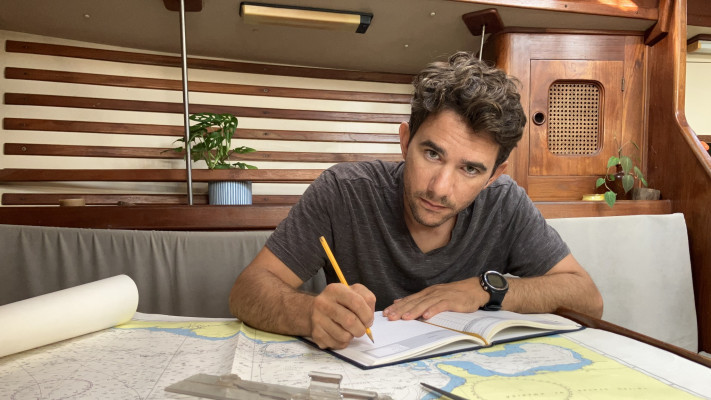
"Using a sextant, paper charts, and a lot of calculations. The sextant is an astronomical navigation instrument that sailors have relied on for centuries. It allows you to determine your position using the sun, moon, and stars. Every observation is done manually, then you calculate your position and plot it on a paper chart."
Alongside the sextant, he'll rely on a mechanical log that measures the boat's speed and distance through the water using a small propeller towed behind the vessel.
"Even on cloudy days, when you can't see the sun or stars, there are still ways to keep navigating."
According to him, the boat typically covers between 120 and 140 nautical miles per day - roughly 240 kilometers - provided the wind cooperates.
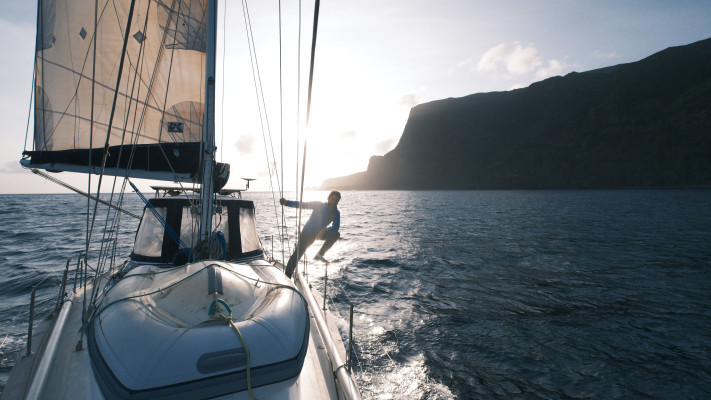
"The Fatigue Isn't Just From Lack of Sleep"
One of the race's less talked-about challenges is relentless exhaustion.
"You can't sleep through the night. You sleep in short intervals because you constantly need to check your surroundings and make sure the boat hasn't changed course."
But, he says, fatigue isn't caused only by sleep deprivation.
"You spend months living in a damp environment. The skin on your hands and feet begins to peel, every task requires physical effort, you're constantly raising and lowering sails, cooking, repairing equipment. Your body gradually wears down."
Why "Exodus"?
Pinsky named his boat Exodus, and the choice was no coincidence.
"The name is associated with the biblical Exodus - a journey into the unknown that transforms those who undertake it. I feel this race will do the same. The person who starts on September 6 and the one who crosses the finish line will be two very different people."
For him, the name carries an additional layer of meaning.
"I feel as though the boat carries part of our people's story with it, and that gives me strength."
"I Want Israel to Be Seen in Other Contexts Too"
Pinsky is entering the race privately, without significant government or commercial backing. But in his eyes, he represents more than himself.
"I want this journey to become something bigger than my personal dream. If I can get people back home to follow the voyage and be inspired by it, then I've accomplished something."
On a national level, he believes the mission carries another message.
"I want Israel to appear in the world through positive stories as well - not only in the context of wars and crises."
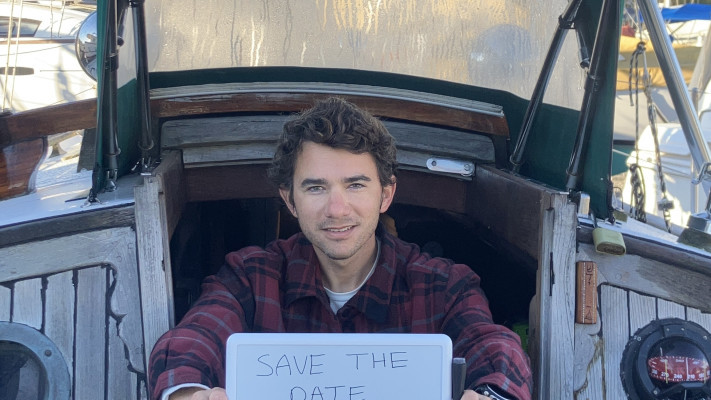
"My Mother Nearly Fainted"
How did your family react?
"Honestly? My mother would be delighted if I gave up the whole idea. When I told her I was planning to enter the race, she nearly fainted. For weeks, she tried to convince me to abandon the plan."
Communication with home will also be extremely limited.
Along the route, there are only two designated points where he will be allowed to hand letters or memory cards to the race organizers, who will then forward them to his family. Other than that, he will have almost no contact with the outside world for months.
A Dream That Costs a Fortune
Taking part in the race is also a major financial undertaking.
"My budget is around €150,000. A large portion of that goes toward mandatory safety equipment required by the organizers - satellite phones, emergency beacons, backup systems, and survival gear."
Some competitors, he says, benefit from major sponsors and full support teams, but he is working with a relatively modest budget.
"I'm doing the best I can with what I have."
What's Next After the Finish Line?
When asked where he sees himself in ten years, Pinsky's answer comes as no surprise.
"I still have plenty of dreams. One of them is to sail a yacht to Antarctica and navigate among the icebergs."
But there's another dream as well.
"I hope that in ten years I'll have a family - and that the next time I head out to sea, I won't be sailing alone."