
The 2024/25 rainy season will be remembered in history books as one of the hardest Israel has ever known. For the average hiker, the drought is a matter of a yellower landscape or a lower Sea of Galilee, but for the ecosystems of the northern part of the country, it is not that simple. Dr. Asaf Tsoar, head of the Environment Division at the Nature and Parks Authority, reveals a troubling truth: Natural drought is only the first stage in the story. "The real enemy of the streams is not the closed skies, but human management and water allocation that leaves nature as the last consumer in line," Dr. Tsoar explains in a new study published on Sunday in the journal Man and Nature – A Journal for Nature Conservation in Israel.
The numbers behind the drought
The meteorological data from the past year leave no room for doubt. In the Sea of Galilee drainage basin, only 40% to 45% of the average rainfall fell. The impact on the sources was immediate and dramatic: The flow rate of the Dan Stream, one of the main lifelines of the North, plummeted last December to an all-time low of 1.8 cubic meters per second. "To understand the magnitude of the catastrophe, one must remember that the multi-year average for this month stood until today at 5.9 cubic meters per second," Dr. Tsoar says.
Although local nature is accustomed to dry years, the combination of extreme drought and artificial water extraction for drinking and agriculture created an emergency in aquatic habitats. "The problem begins when artificial extraction joins the natural drought. For the streams, springs, and marshes, the question is not only how much rain fell, but how much water remained in them after man finished pumping, diverting, and allocating the precious resource," Dr. Tsoar says.
The river's death spiral
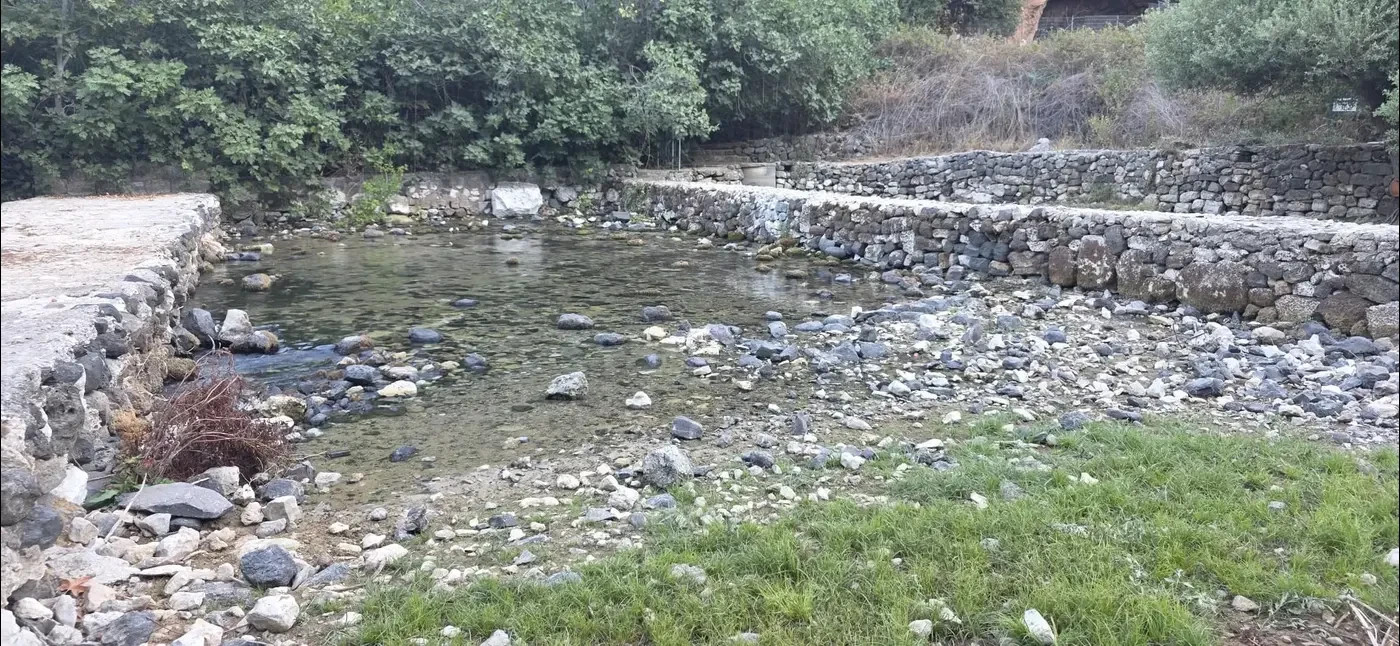
When water management prioritizes agricultural allocations over stream health, the ecosystem begins to unravel. First, the water level drops, and the vital connection between the flow and bank vegetation is severed. Later, rocks are exposed and the surface area available to animals decreases significantly. Shallow flow habitats on a stony substrate disappear, and in their place, standing pools are formed that could become a death trap for certain species.
The damage is not only visual but also chemical: In standing pools, water quality rapidly declines. The concentration of dissolved substances rises, temperatures surge, and oxygen concentrations – essential for life – plummet. In such a situation, the dilution capacity for pollutants is zero, and algae develop in abnormal quantities. At the end of the process, the continuity of the stream is broken and parts of it dry up completely, leading to irreversible damage to biodiversity.

The Battle for Hapkak Bridge
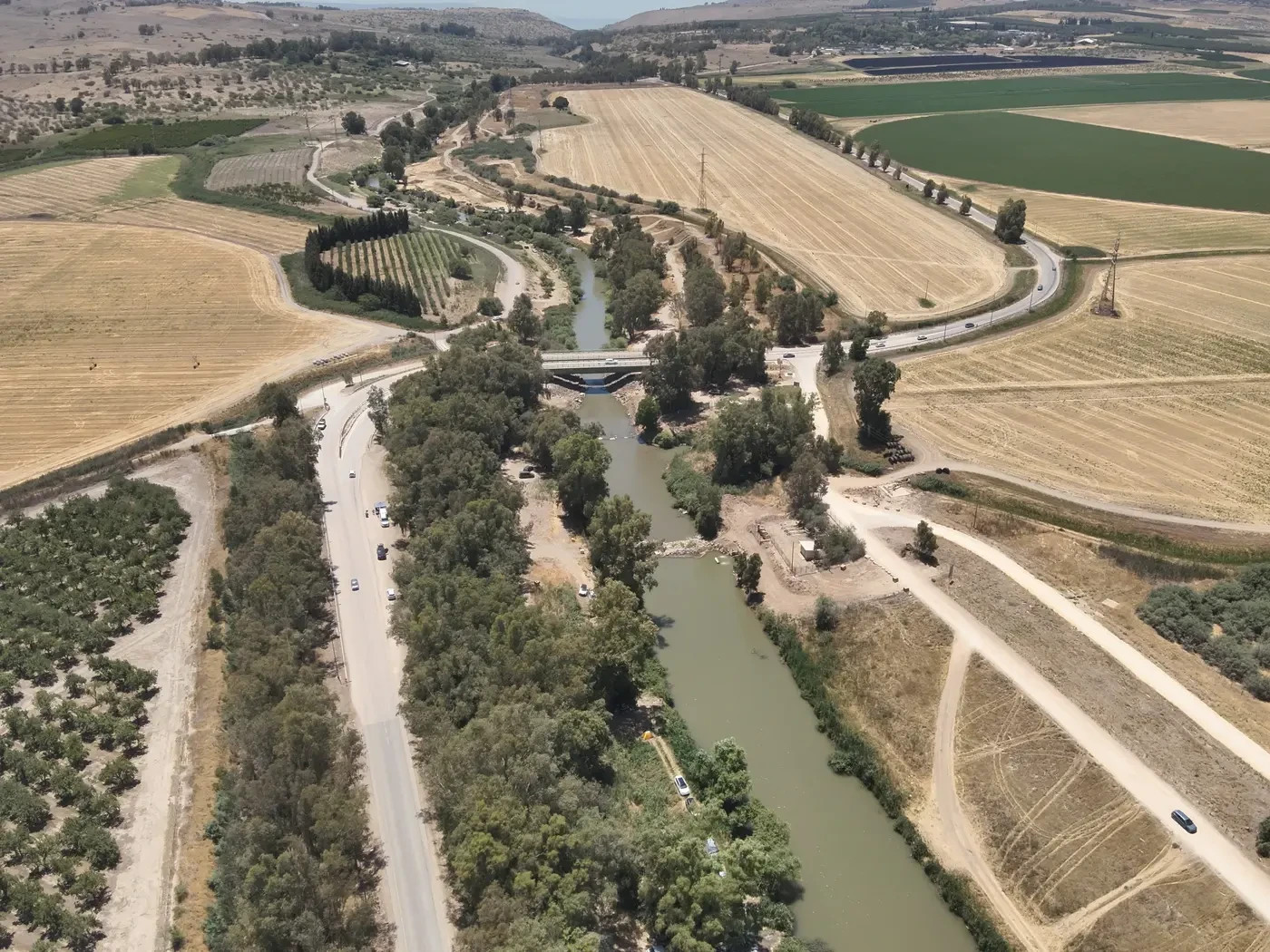
One of the main points of friction occurred this year in the Jordan River, at Hapkak Bridge measurement point. Even though only about 40% of the rain fell in the Sea of Galilee basin, the Water Authority proposed reducing even further the minimum flow rates set for the stream. The Nature and Parks Authority, the Environmental Protection Ministry, and the Society for the Protection of Nature in Israel strongly opposed the move, as the proposed reduction was greater than a third of the threshold that had already been defined as the absolute minimum for a drought year. "The debate is not just over abstract values of nature," Dr. Tsoar says. "A weak flow in the Jordan raises direct risks to public health and the economy. In the opposition documents, it was clarified that a drastic drop in flow rate could lead to the closure of stream sections to hikers due to pollution, which would critically harm tourism and recreational activities that constitute an economic anchor for the entire region. Water for nature is not a luxury; it is a basic condition for a functioning regional system." Ultimately, the Water Council agreed to amend the quantity, although to a lesser extent than demanded by environmental organizations.
Nature's right to water: From statement to reality
The principle of the "nature's right to water" is not new in Israel: As early as 2000, a government decision was adopted allocating 50 million cubic meters per year for the restoration of stream flows. In 2004, the Water Law was even amended, defining nature as one of the official entities entitled to the use of water. The legal significance is that nature is not supposed to suffice with only the "leftovers" of other consumers, but is a legitimate consumer with defined needs. However, the reality on the ground, especially in dry years, shows that the law does not always pass the test of reality. The main lesson from the recent drought is that preparation must begin long before the flow meter shows zero. Responsible water management in an era of climate change requires a shift from "firefighting" to long-term planning and preparing the system for periods of water scarcity, something the Water Authority is leading together with partners such as water associations and drainage authorities.
The plan to save the rivers
To prevent the next drying of streams, the Nature and Parks Authority together with the Water Authority are building a strategic plan based on arriving early at the discussion table with solid data. The plan includes:
Setting minimum thresholds: Creating thresholds that cannot be changed even in moments of pressure. Infrastructure and alternatives: Building supply alternatives for agriculture, including smart winter impoundment and connection to regional supply systems, so they do not have to rely on stream water in dry years. Enforcement mechanisms: Fighting illegal water captures and freeing springs for nature where possible. Science-based monitoring: Decision-making based on field measurements rather than momentary political pressures.
Despite the difficult picture, there is room for cautious optimism. "Experience shows that when water returns and its quality improves, wet habitats know how to respond and recover quickly. However, this recovery does not grant a 'license to gamble' on the future of the stream. If we continue to treat streams as a leftover, we will get leftovers of a stream," Dr. Tsoar warns. "The real test will be in building a true partnership with water managers, which will ensure that even in the hardest years, 'the tap' will not be closed completely on Israeli nature."
Today, the Nature and Parks Authority launched the first issue of the journal Man and Nature – A Journal for Nature Conservation in Israel, in which it will present the full report on the future of stream water in Israel. The journal will be accessible on the Nature and Parks Authority website and open to the general public. As part of the journal, studies conducted by professional bodies in the Nature and Parks Authority and leading academic researchers in Israel on various nature conservation topics will be presented.