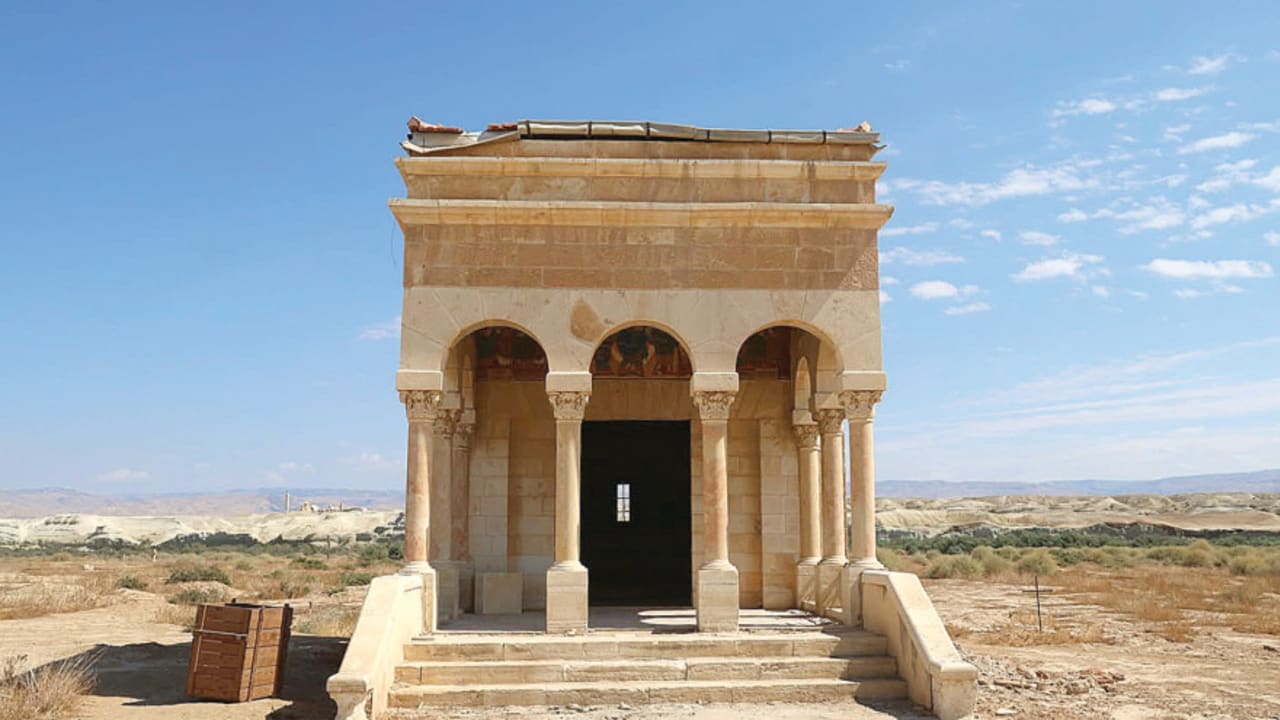
It is rare to find places in our small country that have managed to retain an air of genuine mystery. Even sites labeled "secret" are often already filled with hikers. Yet, a enigmatic stretch of land remains that conceals a thrilling history - and visiting it is possible on only two days out of the entire year.
The Land of the Monasteries - a vast desert expanse where a drive along its paths reveals abandoned structures in various architectural styles - is far more than just another region. It is a vital chapter in the nation's story. The buildings here are historical monasteries where monks from diverse Christian denominations once resided: The Franciscan Order representing the Vatican, the Ethiopian Orthodox Church, the Greek Orthodox Church, and the Romanian Orthodox Church, which constructed the last monastery built in the area.
Following the 1967 Six-Day War, the IDF secured the area. In subsequent years, it emerged as a prime corridor for infiltrators and militants, earning the moniker "The Land Of Pursuits." Following severe terror attacks, the region was declared a closed military zone. The monks were evacuated, and roughly 3,000 anti-personnel and anti-tank landmines were laid across an area of approximately 1,000 dunams (250 acres), completely sealing off public access.
Nearly 50 years passed before clearance operations finally commenced. The Israel Mine Action Authority at the Defense Ministry, working alongside the British charity HALO Trust, began neutralizing the landmines only after securing consent from all church authorities overseeing the monasteries. The Greek, Franciscan, and Ethiopian monasteries were cleared first. During the operation, teams uncovered numerous artifacts reflecting the daily lives of the monks inside structures frozen in time. Nevertheless, the region as a whole - including access to the Jordan River estuary, another magnificent piece of nature - remained strictly off-limits to the public.
At the heart of the area lies the Qasr el-Yahud baptismal site, where, according to Christian tradition, Jesus was baptized by John the Baptist. Christians from around the globe journey here to immerse themselves in the holy waters. The site holds profound importance in Jewish tradition as well, identified as the location where the Children of Israel crossed the Jordan River under the leadership of Joshua, Son of Nun, upon entering the Promised Land. Access to the river bank was opened ahead of Pope John Paul II’s historic visit in 2000, and the site subsequently welcomed regular visitors. However, the surrounding Land of the Monasteries remained fenced off.

A two-day-a-year march
The perimeter is not entirely closed, however. Once a year, initiated by the Megilot Dead Sea Regional Council, the security gates open for the Dead Sea Pioneers March. Hikers follow historical trails, listening to stories of the monks and the early pioneers of local settlement who arrived in absolute wilderness and made the desert bloom under harsh conditions.
One notable chapter in the area’s history centers on historical Beit Ha'arava, which in the late 1930s became a stronghold for a group of young idealists from the Hamahanot Ha'olim youth movement. Arriving at the site, they met a frosty reception from British Mandatory authorities. Forbidden from establishing a formal settlement, they strategically defined their compound as a "camp for workers of the nearby Potash Plant." Indeed, the pioneers initially earned their keep unloading potash barges arriving from the sea.
To cultivate crops in the salty desert soil, they constructed specialized pools surrounded by earthen embankments and channeled water into them directly from the Jordan River. As the water seeped into the ground, it washed away the high salt concentration; the members even raised fish in those very pools. The rest, as they say, is history: Lush vegetables and fruit trees soon flourished in the soil, and Beit Ha'arava’s early-ripening produce earned widespread acclaim. Though evacuated during the War of Independence, the settlement's historical remains are still visible today.
The upcoming march will take place on the weekend of October 23–24, offering three family-friendly routes:
- The Land of the Monasteries Route: 4.5 kilometers long, guiding hikers from the Qasr el-Yahud baptismal site to the striking monastery compounds.
- The Land of the Monasteries and Historical Beit Ha'arava Route: 6.5 kilometers long, combining the monastic sites, the King Abdullah Bridge, and historical Beit Ha'arava - the pioneer settlement in the region. The bridge, named after Abdullah I, the first King of Jordan, was demolished on June 7, 1967, by sappers from the Harel Brigade to prevent the Jordanian Legion from crossing the Jordan River to the front line. It was never rebuilt, and its dramatic remains still span above the riverbed today.
- The Jordan River Estuary Route: 7.5 kilometers long, extending to the Jordan River bed and culminating in a breathtaking panoramic viewpoint.

Where to eat in the area
If you are expecting the dense culinary variety of Tel Aviv, you will be disappointed. Yet, in place of dozens of standard eateries, the area boasts two recommended institutions serving hearty meals throughout the day.
MeCasa, located on the access road to Moshav Vered Yeriho, is the closest modern equivalent to what veteran Israelis might recall as Café Baghdad. Housed in a solitary building set against a wild desert landscape, its black-and-white checkerboard exterior has earned it the local nickname "MeCasa Damka." Owners Gal and Orly serve up fresh, comforting fare: Steaks, burgers, fresh salads, and a variety of pastas. Their pizzas are pulled hot and juicy straight from the tabun oven, but the true crown jewel is Gal’s homemade ice cream, celebrated for its rich texture and unique seasonal flavors like pomegranate or honey.
The interior is decorated with a deeply personal touch, featuring hundreds of vintage items scattered throughout the dining space - well worth a close look so you don't miss a single treasure - lending the venue a distinct charm. The restaurant is open on Saturdays and features a menu that transitions seamlessly throughout the day.
The Last Chance offers a longer history. Owner Vered notes that her parents established the establishment in the early 1990s as founding members of the Mitzpe Yeriho community. The kitchen serves exceptional homestyle cooking. Lunch is a true celebration of flavors: Juicy dates from Vered’s own farm stuffed with spiced meat, crisp potato-filled brik, traditional mafroom, and rich vegetable soup served alongside fluffy couscous, alongside an abundance of dishes inspired by classic Tunisian cuisine. The restaurant is kosher. Breakfast is served during morning hours, before the menu switches over to hearty meat dishes toward noon.

Must-stop station: Float, slather mud, and relax at the lowest point on earth
While many travelers are familiar with the resort beaches of the southern Dead Sea, the northern coastline - just an hour and a quarter from Tel Aviv and thirty minutes from Jerusalem - combines therapeutic floating, natural mud pools, and inviting lodging and dining options.
Kalia Beach is one such highlight. The descent to the shore is convenient and well-maintained, and along the path, visitors can pause for refreshments at THE LOWEST BAR IN THE WORLD. This expansive, vibrant complex features relaxing chill-out music, a full cocktail menu, diverse beverages, and indulgent small chef dishes.
The beach itself is fully regulated, equipped with ample lounge chairs and a smooth access path into the water. For those looking to extend their stay, overnight options include large, air-conditioned glamping tents. Imagine waking up to the sun rising directly over the Dead Sea - a serene mirror image of the sunsets familiar on the Mediterranean coast. While restrooms and showers are shared, they are exceptionally spacious, spotlessly clean, and offer complete privacy. Guests also have access to a shared kitchen and firewood provided by the staff for an evening campfire under the stars.

Event details
- When: October 23–24, 2026
- Where: Megilot Regional Council, Northern Dead Sea (Meeting point: Lido Junction)
- Price: NIS 50 per participant (ages 4 and up)
- Departure Times: Every hour on the hour between 08:00 and 11:00 AM
- Details and Registration: Available on the official Dead Sea Pioneers March website