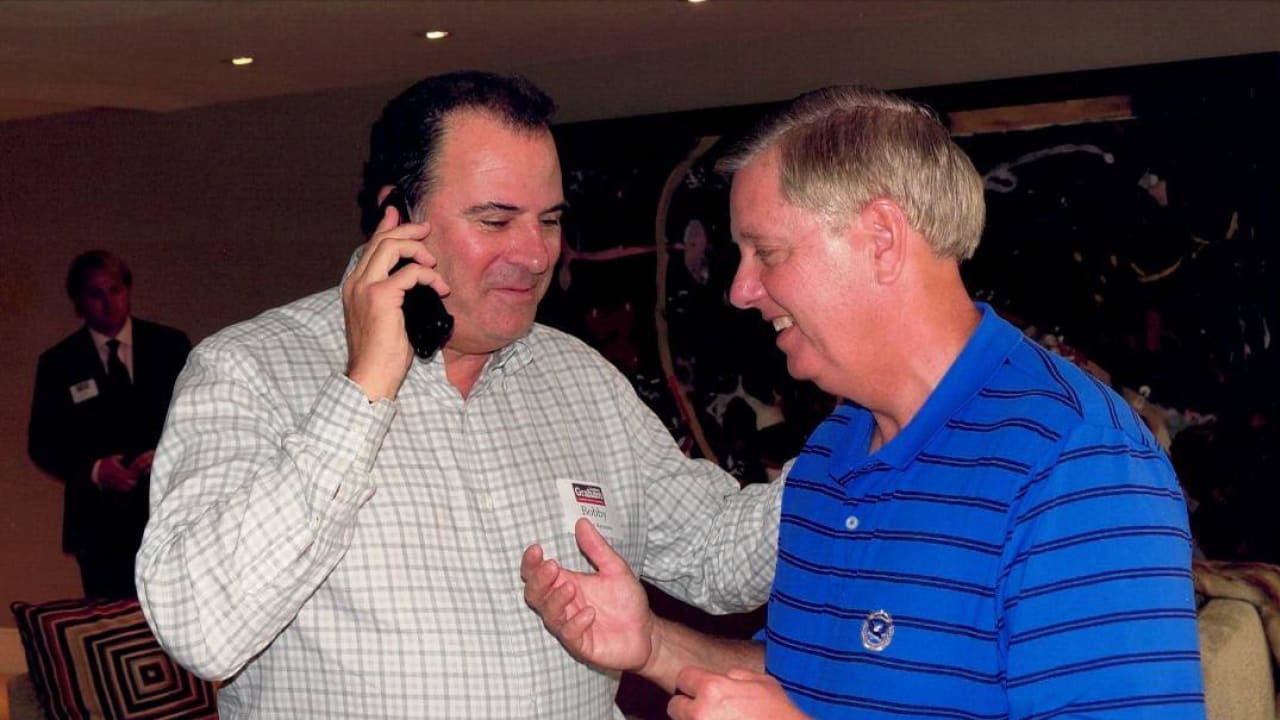
There are politicians who seek attention, and there are leaders who seek to make a difference. Senator Lindsey Graham belonged firmly in the second category.
His passing is a profound loss not only for the United States, but for Israel and for everyone who believes that public service should be guided by principle rather than popularity. I was privileged to know Lindsey personally. We became close nearly twenty years ago, and what struck me most throughout that friendship was not simply his unwavering support for Israel or his mastery of foreign policy. It was his integrity.
That is a word we hear far too rarely in politics today. It is certainly not confined to one political party. Integrity has become an endangered quality across the political spectrum. Lindsey Graham never allowed polls, headlines, or the mood of the day to determine what he believed. Whether defending American constitutional principles, speaking out on national security, or standing with America's allies, he acted because he believed it was the right thing to do. He was never afraid to take positions that were unpopular if he believed they served the greater good.
One of the clearest examples came after his own presidential campaign. He had endured sharp criticism and personal attacks from Donald Trump. Many would have allowed pride to stand in the way of any future relationship. Lindsey did the opposite. He put aside personal grievances because he believed working with President Trump would advance the interests of the United States. History shows that this decision helped shape some of the defining achievements of that administration, from judicial appointments to national security and a stronger American posture in the Middle East. That ability to separate personalities from principles is increasingly rare.
Israel always occupied a special place in Lindsey's heart. When he retired from military service, before announcing his presidential candidacy in 2015, he chose to visit two places that reflected his deepest commitments and invited me to join him. He first travelled to Afghanistan to thank and encourage American servicemen and women. He then came to Israel to reaffirm his commitment to the Jewish state.
His support for Israel was never transactional or political. It was rooted in shared democratic values and in the belief that America and Israel stand together in the defense of freedom. Whether advocating for vital security assistance, defending Israel against unfair criticism, supporting recognition of Israeli sovereignty over the Golan Heights, or protecting Israel's standing in Washington, Lindsey was always there.
Just a few months ago, I had the honor of introducing Senator Graham at The Jerusalem Post Washington Summit in the U.S. Capitol, where I shared a story that perfectly captured both his strategic vision and his love for Israel.
Before President Trump recognized Israeli sovereignty over the Golan Heights, Lindsey planned a visit there while we were discussing his trip to Israel. Standing on the Heights and seeing the commanding view over northern Israel, he immediately understood what was at stake. From the Golan, he called President Trump directly and explained why, from a strategic and security perspective, the Golan Heights had to remain under Israeli sovereignty. He then met Prime Minister Netanyahu and urged him to pursue the issue. The rest is history. President Trump recognized Israel's sovereignty over the Golan Heights, a decision that fundamentally strengthened Israel's security and corrected a long-standing historical injustice. Lindsey deserves enormous credit for helping make that happen.
His commitment to Israel's security was evident even when it meant disagreeing with Israel's own leaders. During the Obama administration, as Washington negotiated a new ten-year military assistance package for Israel, Lindsey believed Israel deserved a stronger commitment than what was being offered. He urged Prime Minister Netanyahu not to accept the agreement because he believed America could and should do more for its closest ally in the Middle East. Netanyahu chose not to reject the package for understandable political reasons, but Lindsey never stopped fighting for what he believed was in Israel's best interests, even when it placed him at odds with friends.
Much of what Lindsey accomplished will never appear in history books. He worked tirelessly behind the scenes on initiatives that will never be publicly known, asking for neither recognition nor credit. That quiet diplomacy often proved every bit as important as his speeches or committee hearings. He cared about results, not headlines.
What also distinguished him was the way he treated people. Lindsey could disagree vigorously without becoming disagreeable. He never made political differences personal. He could debate passionately, then share a laugh moments later. His humor disarmed tension, his courtesy earned respect, and his authenticity made him one of the most trusted voices on Capitol Hill. Republicans and Democrats alike respected him. Even those who opposed his positions rarely questioned his sincerity.
He never forgot where he came from. His humble beginnings remained central to who he was, and they shaped his understanding of service, sacrifice, and opportunity. His commitment to America's armed forces was unwavering throughout his career. He understood that freedom depends upon strength, and he devoted enormous energy to ensuring America's military remained the strongest in the world. His support extended beyond America's borders, standing firmly with democratic allies facing common threats, whether in Israel, Taiwan, or elsewhere.
Many have described him as one of the most effective senators of the Trump era. I believe history will remember him for something even greater. He demonstrated that it is possible to combine conviction with civility, patriotism with humility, and strength with decency.
Israel has lost one of its greatest friends. I would go even further. For everything he did for the Jewish state, often at considerable political cost and often without seeking public recognition, Israel should regard Lindsey Graham as one of the righteous among the nations.
Perhaps the greatest tribute we can pay Lindsey Graham is not simply to remember him, but to emulate him. At a time when democracies face mounting threats and the forces of extremism continue to challenge the free world, we all have a responsibility to support those who defend freedom, strengthen the alliances that preserve it, and conduct ourselves with the integrity that defined his remarkable life.
Lindsey Graham showed us that public service is not about personal advancement. It is about leaving your country, your allies, and the world stronger than you found them.
That is the legacy he leaves behind.
In closing, I simply want to say this: I will miss you, my friend.
The writer is a Los-Angeles based philanthropist and real-estate developer who serves as chairman of the Abraham Accords Roundtable and Golda Meir Commemorative Coin Committee in Washington DC.