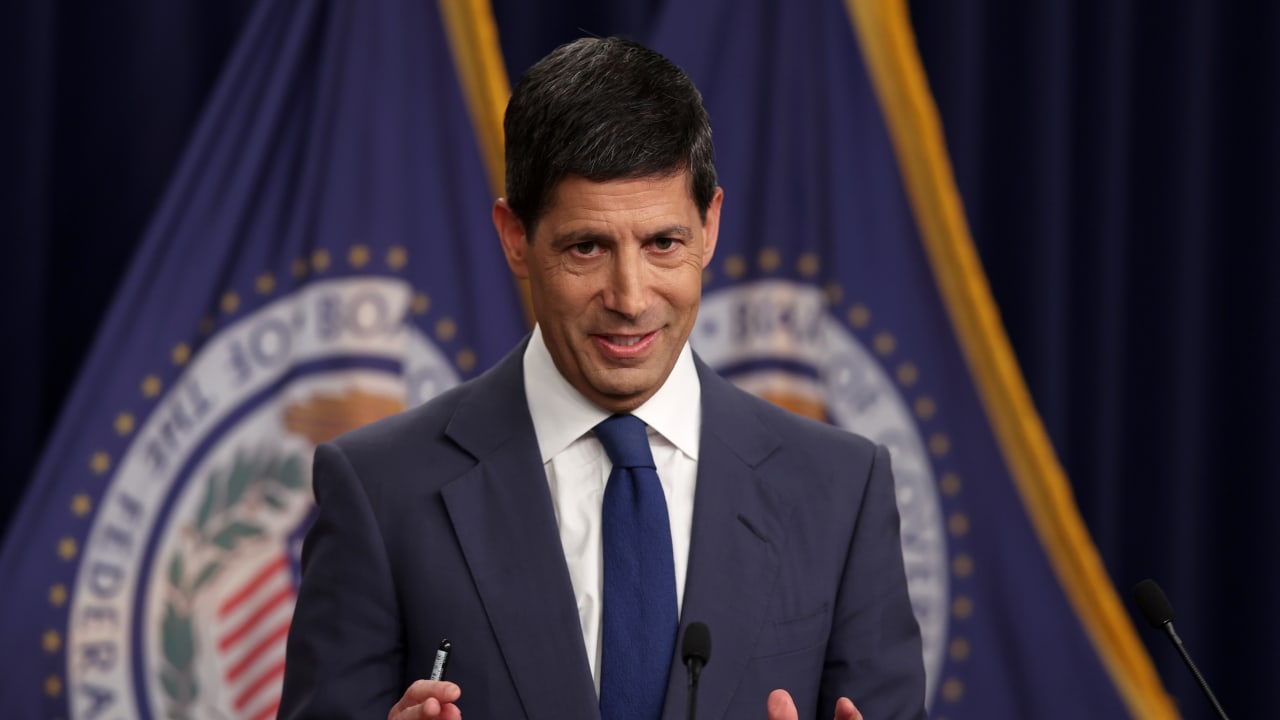
US President Donald Trump has repeatedly spoken with the chairman of the Federal Reserve in recent months, violating a precedent meant to insulate central bankers from the political cycle, the Wall Street Journal reported.
According to sources familiar with the situation, Trump calls the chairman, Kevin Warsh, in sporadic bursts. Sometimes he calls several times in a week, and other times he is radio silent for weeks.
Though it's unclear whether Trump and Warsh have directly discussed monetary policy, the president reportedly seeks advice on heavily politicized issues, including how the war with Iran and artificial intelligence will impact the economy.
Warsh has only been on the job for a little over two months after he replaced former Fed chair Jerome Powell in May.
Presidents historically meet with Federal Reserve chairmen from time to time, though recent decades have seen the sessions taking place in more formal settings, often arranged in advance. The official nature of the meetings is to avoid projecting an image of presidential influence on national rates.

However, Trump frequently sidesteps formal communication channels, often making calls to world leaders and executives from his personal cellphone. Barack Obama and Bill Clinton both exemplified presidents who typically avoided putting pressure on the Federal Reserve.
As such, Federal Reserve chairmen are meant to serve 14-year terms in order to outlast any one sitting president and retain public confidence in the security of the economy.
The 1951 Post-Accord precedent and the Federal Reserve Act both dictate the importance of keeping presidential goings-on and Fed monetary policy separate.
Trump’s relationship with Warsh revives Fed independence concerns
At Warsh's swearing-in ceremony earlier this year, Trump publicly stated that he wanted the chairman to be "totally independent." He now sees Warsh as a valued economic adviser, sources say.
"Don’t look at me, don’t look at anybody. Just do your own thing and do a great job," he added, in reference to the chairman.
This is a walk-back from claims he made in December, hailing himself as a "smart voice that should be listened to" when he told the Wall Street Journal that he wanted the Fed to consult with him going forward.
Just last Wednesday, the president called Warsh a "brilliant guy," despite Warsh's lack of initiative in enacting the rate cuts Trump has been desperately pushing for.
Warsh indicated in a press conference following the Fed's decision to leave rates unchanged that he would be more inclined to increase rates in response to stiffening inflation - in direct opposition to Trump's wishes.
This contestation is the same thing that led to many clashes between the president and Powell. At the time, Trump criticized the former chairman for declining to cut rates and not cutting them significantly enough when he eventually took action.
The president repeatedly threatened to fire Powell, even though the Federal Reserve Act says a president can only remove a Fed governor for neglect of duty, not policy disagreement.