A limestone structure believed to have once served as a wine press was recently unearthed at the Temple of Sekhmet site near the village of Mit Rahina, the Egyptian Tourism and Antiquities Ministry announced earlier this month.
Mit Rahina is located near the ancient ruins of Memphis, which in antiquity had served as the capital of the first nome of Lower Egypt.
In ancient Egyptian mythology, Sekhemet is considered both a warrior goddess and a goddess of medicine. Her temple makes up one part of the Great Temple of Ptah complex, which served as the main temple of ancient Memphis.
Discovered by a joint Egyptian-Chinese archaeological mission, the wine press includes an upper basin sloping downward toward a central opening and a lower collection basin, each topped with an opening designed to hold amphorae.
Archaeologists found grape seeds inside the press, supporting the archaeologists’ interpretation.

Dr. Hisham El-Leithy, Secretary-General of the Supreme Council of Antiquities, explained that the mission began its work by cleaning and documenting the Temple of Sekhmet as part of its excavations to understand how the site was used throughout the ages.
Mudbrick residential complex also unearthed
Additionally, the mission found the remains of a mudbrick residential complex in the area surrounding the temple, along with a series of stone blocks and statue fragments believed to have been part of Ptah’s temple.
Most of the blocks and fragments date back to the New Kingdom period, mainly during the reign of King Ramesses II, and are made from various types of stone, including limestone, red granite, and schist
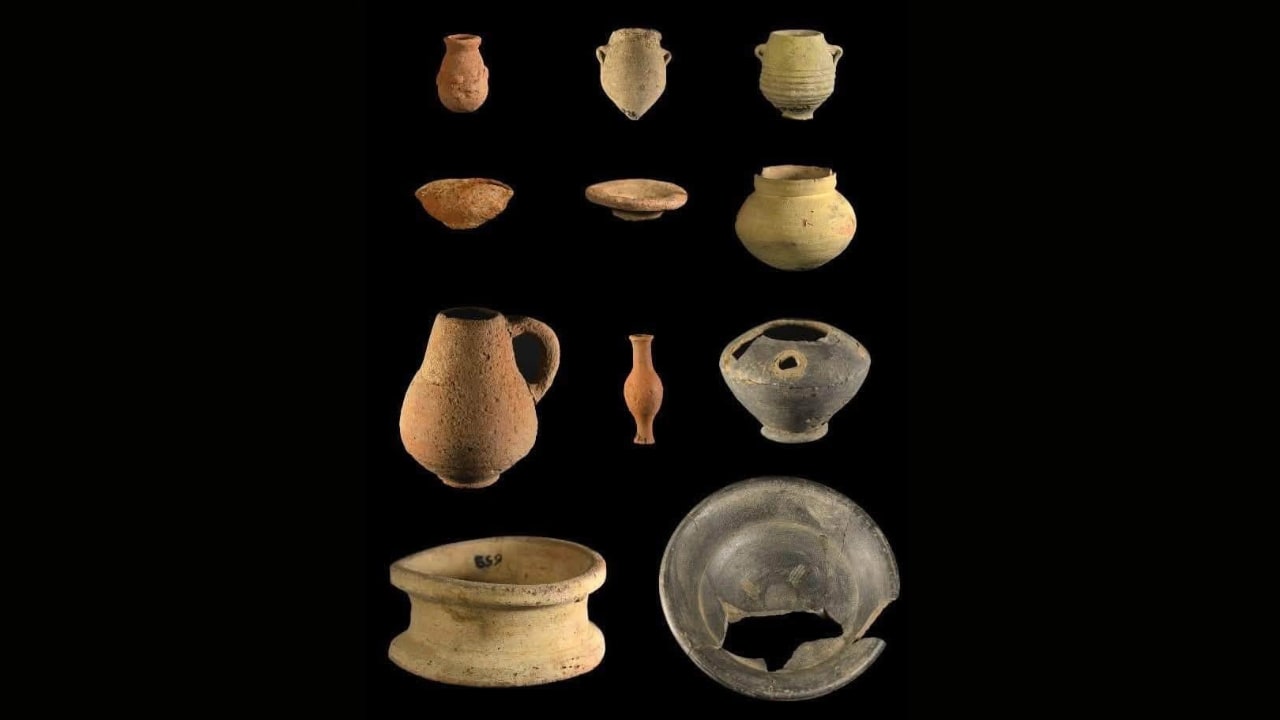
Other artifacts found at the site include pottery shards, faience amulets, small terracotta and limestone statuettes, ostraca, and votive stelae.
Mohamed Abdel-Badie, head of the Egyptian Antiquities Sector at the Supreme Council of Antiquities, explained that these discoveries indicate that there had been continuous human settlement in the area between the Third Intermediate Period and the Late Period, through the Ptolemaic era and up to the Greco-Roman period.
Egypt’s Tourism and Antiquities Minister Sherif Fathy expressed his pleasure at the collaboration between Egypt and China, two of the oldest civilizations in history.
The Temple of Sekhmet was discovered by chance in 1959, during the construction of a house in the area. Following this, Egyptian antiquities inspector Mohamed Abdel Tawab El-Hetta carried out a single season of excavations at the site from 1961 to 1962.
In 2015, the visible remains of the temple were documented as part of the Ancient Memphis Site and Community Management Project.
Deity-inscribed tombstones, sarcophagi unearthed at ancient Egyptian burial site
Earlier this summer, some 20 limestone tombstones, several sarcophagi, and a collection of funerary amulets were discovered during excavations at the Tell El Deir archaeological site.
The sides and backs of the tombstones are decorated with religious symbols and godly imagery, including that of a griffin, Agathodaemon, and Isis-Thermouthis.
Agathodaemon is a lesser serpent demon in ancient Graeco-Egyptian religion, as well as in classical Greek mythology. Isis-Thermouthis is a combination of the Egyptian goddess Isis, the sister and wife of Osiris, and Renenutet (Thermuthis), the Egyptian goddess of grain.
The appearance of the two deities on the tombstones points to joint Greek and Roman influence on ancient Egyptian heritage and funerary practices.
Further, the decorations allow archaeologists to identify the social status of the tombstones’ owners.
Additionally, the Egyptian archaeological mission operating at the site uncovered a collection of pottery incense burners, decorated lamps, and funerary amulets, as well as several barrel-shaped anthropoid ceramic coffins.