In orchards across the world, growers are confronting a problem that has led to less food on the shelves in grocery stores and higher prices.
Unpredictable weather, shifting bloom cycles, and the broader decline of pollinator populations have made natural pollination less predictable than it once was. That’s where BloomX, an Israeli startup, is stepping in to attempt to stabilize one of agriculture’s most fragile processes.
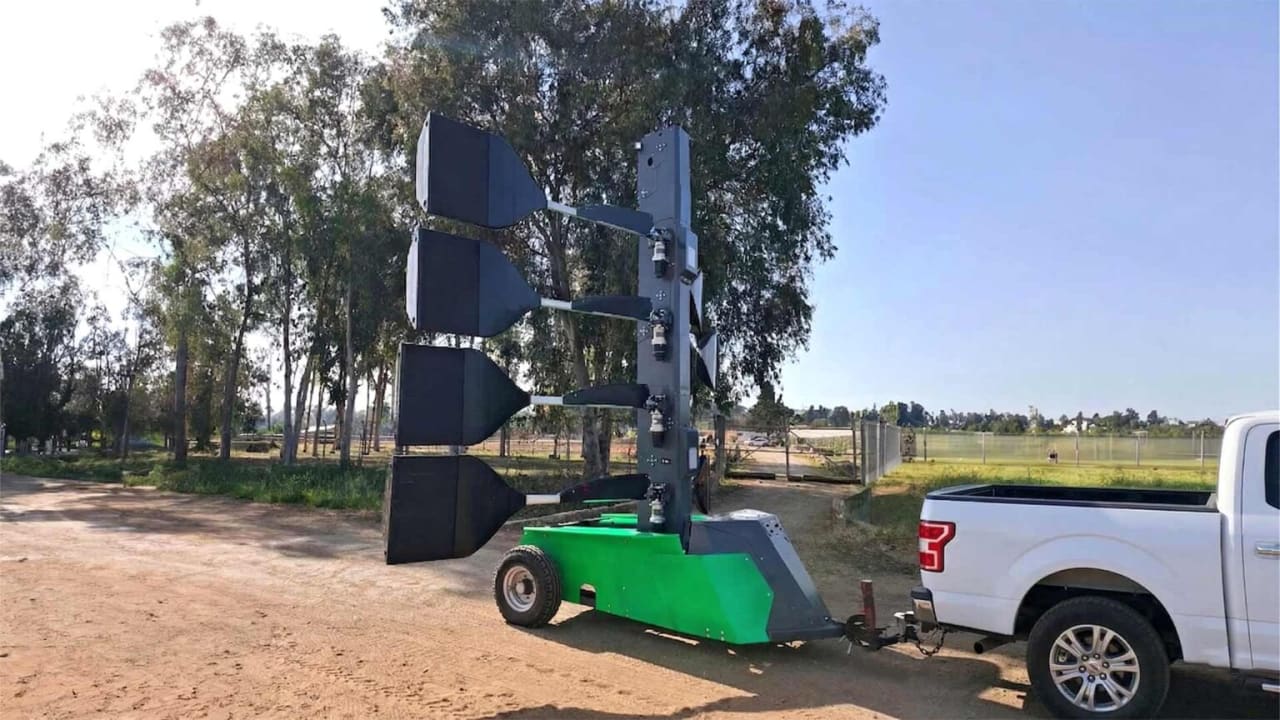
Founded in 2019 by CEO Thai Sade, Ido Senesh, Avi Keren and headquartered in Rishpon, BloomX developed robotic AI pollination systems that use mechanical and electrostatic tools to imitate the behavior of bees to help farmers increase their yield.
Sade has been involved in agriculture since he was a child and spent nearly a decade managing his family’s food business, but a question kept him up at night: What if there was a day where there wasn’t enough food to serve?
Instead of relying on hives placed around an orchard, growers using BloomX equipment apply pollen directly to flowers at the moment they are most receptive.

The company’s devices mimic the vibration patterns bees use to release pollen, while software analyzes crop conditions such as flowering patterns, weather conditions, and field data to determine the optimal timing for application. There’s also an app for the farmer to help them understand when it would be the best time to pollinate and become more effective.
By giving farmers the ability to schedule pollination precisely, BloomX argues that it can reduce the volatility that has become increasingly common in these crops. Sade noted that the company’s technology can increase yields by as much as 25%, though results vary by region and growing practices.
The goal is not to replace bees entirely but to ensure that pollination happens even when environmental conditions suppress natural activity.
BloomX focuses on crops where pollination failures are especially costly. Avocados and blueberries, two of its primary targets, have narrow flowering windows and are highly sensitive to temperature fluctuations. A missed pollination cycle can reduce yields for an entire season, and growers have little recourse when bees are inactive.
“We need to be on time for the season and pollinate on time,” Sade told The Jerusalem Post. “It’s nature that defines it, not anyone else.”
The past three years of war have had a serious impact on farms across the country, including in the north where farmers have continued their work under the incessant buzzing of not bees, but drones.
“We found ourselves under fire not only in the north, but the flowering season in April. We felt it across the country,” Sade told the Post, referring to the war with Iran.
“We needed to continue to operate without shelter, or any ability to protect ourselves. It was a very challenging time for us, and the country, to adapt,” he continued. “Growers and employees continue to operate because they need to. It exposed us to those challenges and we did the best we could to provide pollination services.”
As climate pressures intensify and pollinator behavior becomes harder to predict, the company’s attempt to bring reliability to an increasingly unreliable process is drawing attention from farmers who can no longer afford to hope that nature will cooperate.
With a small team, BloomX has customers in Latin America, South Africa, Israel, and the United States. It has raised around $8 million in seed funding and is currently scaling up its commercial activity.