Countries are accelerating efforts to build sovereign artificial intelligence (AI) capabilities as governments move to secure the data centers, chips, and energy supplies needed to operate advanced artificial intelligence systems.
According to Ezra Gardner, co-founder of Varana Capital and who has worked extensively in global technology infrastructure, the shift reflects a growing recognition that AI capacity is now inseparable from national security.
In an interview with The Jerusalem Post, Gardner said the emerging Pax Silica Initiative shows how governments are reorganizing around the demands of AI.
The Pax Silica coalition is led by the United States and joined by partners including Japan, South Korea, India, the United Kingdom, Israel, the United Arab Emirates, and Qatar, as well as several EU member states. Membership is expected to reach 24 countries, with Argentina, Chile, Costa Rica, Kazakhstan, and Panama also set to join.
The coalition aims to strengthen supply chains for critical minerals, semiconductor manufacturing, and high‑density data centers, all of which are required to support large‑scale AI models.

According to Gardner, “The map is being redrawn as to who our allies are,” noting that access to chips and the infrastructure that powers them has become a strategic priority.
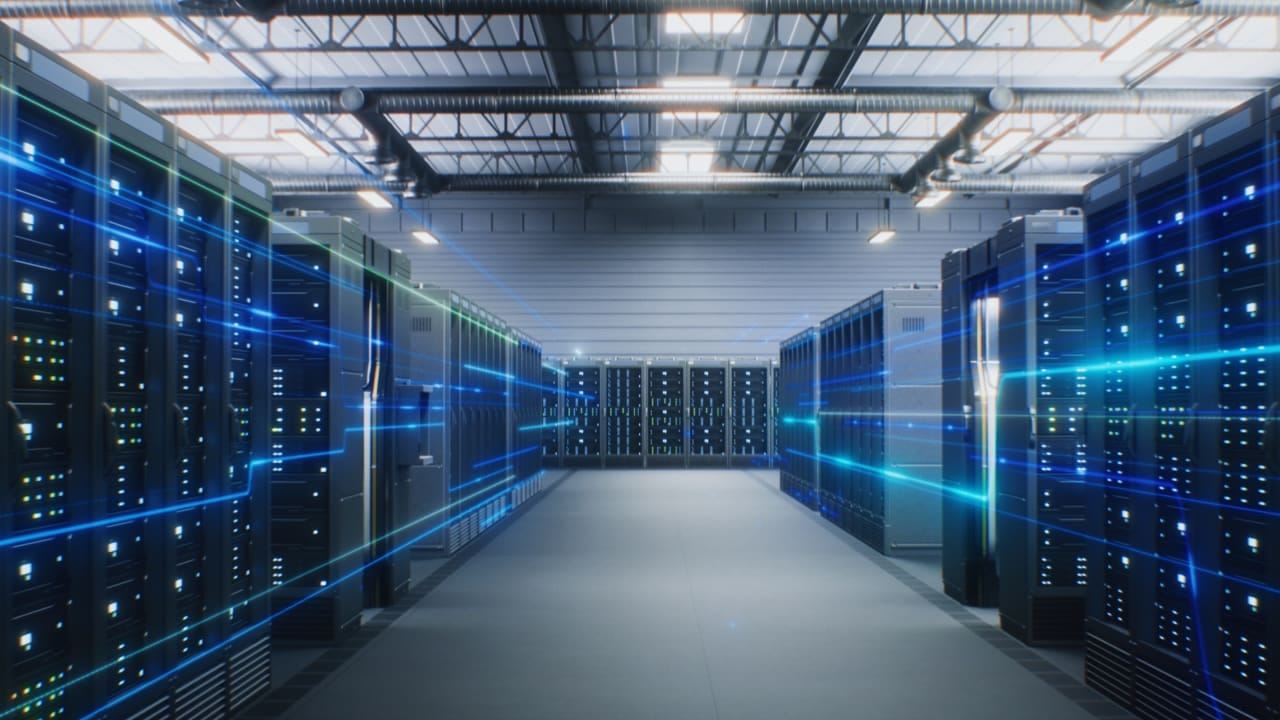
He described data centers as “the new backbone of national resilience,” with governments increasingly viewing them as essential to defense planning, intelligence operations, and economic stability.
The push for sovereign AI has intensified over the past year as nations seek to reduce reliance on foreign technology providers. Governments in Europe, the Middle East, and Asia have announced plans to build domestic AI clouds, secure long‑term chip supplies, and expand energy‑intensive data‑center capacity.
The concentration of advanced chip manufacturing in a small number of countries, combined with rising geopolitical tensions, has pushed governments to diversify production and invest heavily in domestic infrastructure.
The European Commission recently presented a tech sovereignty package to boost homegrown technologies and reduce dependency on American and Chinese companies. Currently, Europe imports most of its tech services from companies like Google or Amazon, and the package places a significant focus on sovereign cloud infrastructure, AI services, open source, and chips.
The Netherlands’ entry into Pax Silica places ASML, the world’s most important chip‑manufacturing equipment supplier, at the center of new AI supply‑chain coordination. This move comes amid ongoing tensions over export controls on ASML’s advanced lithography tools to China, Gardner explained.
"We live in a world where geopolitics and technology are inseparable. Those who champion technological innovation will shape the future, and we must ensure that Europe plays a leading role in this," European Commission Executive Vice President Henna Virkkunen was quoted by Euronews as saying.
Energy: The new strategic bottleneck
Gardner argues that the energy crisis behind AI is becoming just as strategically important. Training frontier‑level models requires vast amounts of electricity; the physical grid is struggling to keep up, and the global AI boom is now colliding with a hard physical limit: energy.
Data centers are also overwhelming regional grids. For example, reliance on more than 10,500 diesel generators in Virginia has triggered environmental and regulatory pushback that threatens to slow new AI infrastructure. Energy resilience has become a core pillar of sovereign AI planning.
At the Datacloud Global Congress in Cannes, Israeli firm Phinergy introduced an aluminum‑air backup system positioned as a zero‑emission replacement for diesel. The technology delivers instant response, 48 hours of continuous power, and multi‑day operation through hot‑swappable aluminum plates. Google and Microsoft shared the stage with Phinergy’s CEO, signaling that clean backup power is becoming a strategic priority for the cloud industry.
Phinergy’s system is now being validated by the Net Zero Innovation Hub, led by Google and Microsoft, through a 500 kW, 10 MWh deployment. Global operators such as Japan’s Nippon Telegraph and Telephone Corporation (NTT) have highlighted aluminum‑air systems for long‑duration storage, with the backup‑power market projected to hit $150 billion to– $200b. within five years. The technology has already proven itself in crisis conditions, reinforcing clean, resilient energy infrastructure as a new requirement for national AI sovereignty.
National AI strategies
Israel, the UAE, and South Korea have each launched national AI strategies that include dedicated sovereign compute clusters designed to ensure that sensitive data and critical models remain under domestic control.
The Pax Silica framework, announced by participating governments as a long‑term economic and security partnership, seeks to coordinate investment across the entire AI ecosystem - from critical minerals to fabrication plants to the data centers that host AI models. Officials involved in the initiative have said the goal is to ensure that allied nations can build and deploy advanced AI systems without disruption.
Speaking to the Post in January, US Under Secretary of State for Economic Affairs Jacob Helberg said that “we want to focus on the arteries of the supply chain with logistics. We want to focus on the muscle on industrial capacity and the fuel - energy and capital - that will ultimately be propellent for everything else.”
Gardner noted that the scale of infrastructure required for modern AI is driving unprecedented levels of investment. Training frontier‑level models demands vast amounts of electricity, specialized chips, and secure facilities capable of handling sensitive data.

Quantum tech a priority
Quantum is also a matter of national security, he said, adding that “America and China have already stolen each other’s data. They just can’t crack the code to read it yet.”
Quantum computers have the potential to solve computational problems at breakneck speeds, making the technology a priority for countries.
Earlier this week, US President Donald Trump signed two executive orders for the US to maintain a strategic technological advantage in this field. The executive orders give the American government six months to update the country’s National Quantum Strategy and establish a more cohesive approach to the commercialization and deployment of quantum technology. It also aims to work to mitigate future cyber threats that could come from these computers.
As countries continue to expand their AI capabilities, Gardner said the competition will increasingly center on who can build and protect the infrastructure that makes AI possible. He described the current moment as a global realignment, with governments moving quickly to secure the physical foundations of their technological future.
For Gardner, the next 12 months will see a “rapid sequence of events” for quantum, AI, and energy infrastructure.
“If something is going to happen, it’s going to happen this year,” he said. “Stay tuned; this is just the preview.”