“This piece of legislation written by the Irish parliament shall not stand,” said Paul Coulter, national director of the International Christian Embassy Jerusalem (ICEJ) in Ireland, as he held up a copy of Ireland’s new law restricting imports from Israeli settlements. Then he tore the document apart in front of the camera.
For more stories from The Media Line go to themedialine.org
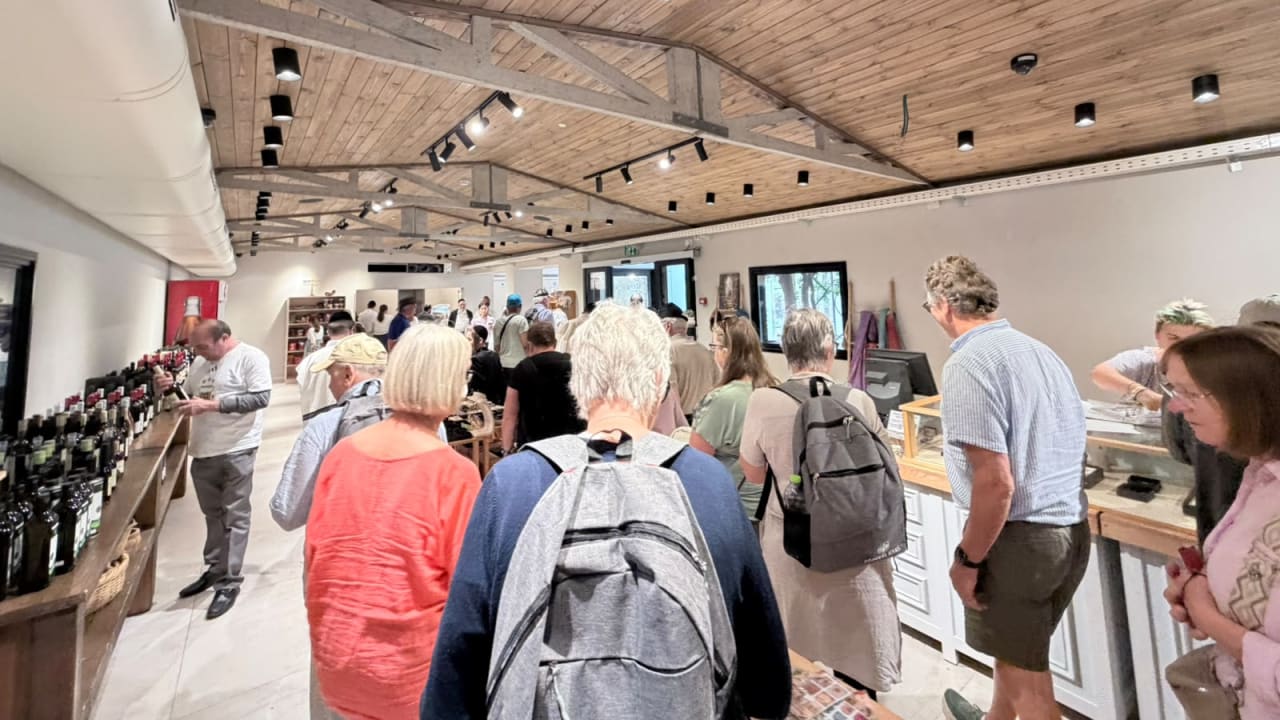
The gesture came during an ICEJ visit to Israeli communities in the West Bank— also known as Judea and Samaria—where Christian visitors traveled through Samaria, Gush Etzion and Efrat and were encouraged to shop at local businesses. The tour, organized during ICEJ’s annual Feast of Tabernacles gathering in Jerusalem, was intended as a direct response to a growing set of European measures restricting trade in products from Israeli settlements. Some of those measures are already in force; others remain proposed legislation.
Ireland’s ban took effect on Sept. 15. The Netherlands followed with a broader restriction on Sept. 22 that reaches even goods carried in personal luggage. Norway, meanwhile, is considering legislation that would prohibit imports from and exports to Israeli settlements, along with certain property transactions and services. The Norwegian proposal remains under consideration after a public consultation that closed Sept. 19.
David Parsons, ICEJ senior vice president and spokesman, said the organization brought Christians attending the Feast of Tabernacles into the area specifically to support businesses affected by the measures.
“In recent weeks, several European countries and even Canada and others have announced that they’re going to pass sanctions against the Jewish communities in Judea and Samaria,” Parsons told The Media Line. “We brought them here to the Shomron, to Samaria, also down to Gush Etzion, Efrat, to go and show support by buying goods here.”
Christians protest European settlement boycotts
The governments imposing or considering the restrictions present them as measures directed at settlements they consider illegal under international law, rather than at Israel as a whole. Ireland says its law is part of an effort to comply with international legal obligations identified in the International Court of Justice’s 2024 advisory opinion. The Irish government argues that Israeli settlements in what it refers to as occupied Palestinian territory are unlawful and undermine prospects for a two-state solution. Its law prohibits imports originating in designated settlement postal codes and makes violations subject to existing customs law, including search, seizure and forfeiture powers.
Parsons rejected that reasoning and argued that the economic effect was precisely the point. “The real intent of these European countries is to dry up the settlements and their livelihoods, the way of life, so they’d have to leave here,” he said. That characterization is disputed by the governments behind the measures, which describe them as a legal and political distinction between Israel and territory captured in 1967.
The Irish measure, however, stops short of restricting what tourists bring home for themselves. Noncommercial goods in personal baggage are exempt when intended for the traveler’s own consumption or use. That distinction became part of Coulter’s message during the trip.
“Come and buy Israeli wine. It’s some of the best wine in the world,” he said. Later, addressing Irish visitors specifically, he added: “Break the boycott. If you can buy Israeli wine, buy it.” Coulter noted that Irish law does not prevent tourists from returning with those products for private consumption.
Coulter said opposition to ICEJ’s position has also followed the organization at home. He described venues receiving calls demanding that ICEJ events be canceled and demonstrations outside meetings that went ahead.
“We have our own hashtag, #BoycottApartheidICEJ,” he said. “Our venues are lobbied and phoned to cancel our meetings, and when the venues won’t cancel, we actually have protest mobs screaming and shouting at the gates of our meetings.”
Norway has not yet enacted its proposed trade ban. Its Foreign Ministry opened the proposal for public consultation in June, saying Norwegian citizens and companies should not contribute economically to maintaining settlements that the government considers unlawful. The proposal would prohibit importing goods from Israeli settlements and exporting goods to them. It would also restrict certain real estate purchases, construction and property-related services, and acquisitions of businesses based in the settlements. Violations would carry criminal liability.
Dag Øyvind Juliussen, national director of ICEJ Norway, said the prospect of criminal penalties has sharpened opposition among supporters of Israel in his country. “They want to pass a bill that would make it a crime to trade with the Jewish inhabitants in Judea and Samaria, the so-called settlements,” he told The Media Line, adding that the legislation must still go through the Norwegian parliament.
For Juliussen, joining the shopping tour was a way to turn that opposition into a physical act. “This is what we need to do,” he said. “This area has been the heartland of the Jewish people for 3,000 years.” He said Christians who share that view should make their position visible by supporting the people and businesses living there.
Christian groups challenge European trade bans on Israeli settlements
The Netherlands has taken a different approach. Since Sept. 22, travelers entering the country have also been barred from bringing in products that Dutch authorities identify as coming from Israeli settlements covered by the measure. That includes items bought for personal use, such as gifts or souvenirs.
Dutch customs officers can check luggage and ask where an item was made or purchased. Products found to fall under the ban may need to be surrendered or seized. The measure does not apply to Israeli goods generally, but specifically to products linked to the settlements covered by the Dutch restrictions. Customs authorities say inspections are selected on the basis of risk assessments and objective information rather than a traveler’s nationality, religion, ethnicity or appearance.
Parsons said the possible long-term consequences went beyond lost sales. He accused European governments of pursuing policies that could eventually pressure Jews to leave the communities. “Are you really willing to support ethnic cleansing of that nature through these sanctions and criminal laws against buying goods from this area?” he asked. His language went far beyond the stated position of the governments involved, which say their measures are aimed at settlements and at preserving the possibility of a negotiated two-state outcome.
ICEJ’s response during the tour was deliberately practical. “We’ve done that now by bringing dozens of Christians on several buses to these areas to shop,” Parsons said. His instruction to participants was straightforward: “Take out your plastic, take out your dollars, your shekels and buy goods from Judea and Samaria.”
That leaves people traveling together on the same ICEJ tour subject to different rules once they return home. An Irish visitor can bring a bottle of locally produced wine back for personal consumption under Ireland’s exemption. A Dutch traveler carrying the same bottle from a location covered by the Netherlands’ restrictions may have to surrender it at customs. For those filling shopping bags during the visit, the legal distinction may not become