
On June 25, the Singaporean-flagged container ship Ever Lovely was struck by an Iranian one-way attack drone as it traversed the Strait of Hormuz. Two days later, the Panamanian-flagged crude oil tanker Kiku was also hit near the Omani coast, according to reports from the United Kingdom Maritime Trade Operations (UKMTO).
These attacks come despite a Schrodinger's cat-style ceasefire between the United States and Iran that was supposed to reopen shipping through one of the world's most critical waterways.
Free passage for commercial shipping is no longer a given, ever since Iran and the United States closed the waterway during the war that began in February. Though the threat of closure had long been on the table, both military and civilian leaders appear to have been caught unprepared for a standoff that has taken an enormous economic toll on global trade.
Roughly a fifth of the world's energy traverses the Strait of Hormuz, and the choking off of that trade has sent prices skyrocketing, ratcheting up pressure on US President Donald Trump to seek a deal with Tehran and allow commerce to resume.
As negotiations play out amid rival claims over the strait's future, it remains unclear whether and how commercial shipping will adapt to the new risk.

The first challenge is geographic. Passage through the strait, which is only 54 km. (29 nautical miles) wide at its narrowest section, is possible only via inbound and outbound channels that are 3.7 km. (2 nautical miles) wide, separated by a further 2-mile buffer zone. That leaves little room for error in a crowded waterway and gives Iran an ideal chokepoint to control who travels through.
Iran is now insisting that ships only transit via routes it approves and has threatened to use force against those who attempt alternative corridors.
Where commercial ships once faced boarding by the Iranian navy or anti-ship missiles, the Iranians have found a far more cost-effective method of deterring maritime travel.
"Today you don't even have to fire expensive missiles," Rear-Admiral (res.) Yuval Eylon, who serves as a senior research fellow focusing on naval strategy at Israel's Institute for National Security Studies (INSS), told Defense & Tech by The Jerusalem Post. "You can use a mine or UAV or USV. It's cheap, and you don't have to operate a big military force. It's asymmetric warfare, and it enables the Iranians to deny access to passage through the straits without even having to fire even one missile."
At an estimated cost of $35,000 per Shahed-136 drone, Iran can pose a serious threat to ships without draining its own resources. That is in sharp contrast to the Patriot interceptors used against Iranian drones, which run about $4 million apiece.
But even if the economics were flipped, shippers are unlikely to want counter-drone systems mounted on their vessels.
"The ships themselves are completely civil entities," Dor Raviv, CTO and co-founder of Orca AI, an AI-powered maritime navigation and collision-avoidance startup, told D&T. "They have no will to wield shields and arms. They have no will to fight. They don't want to protect themselves because they don't want to be perceived as any side of this."
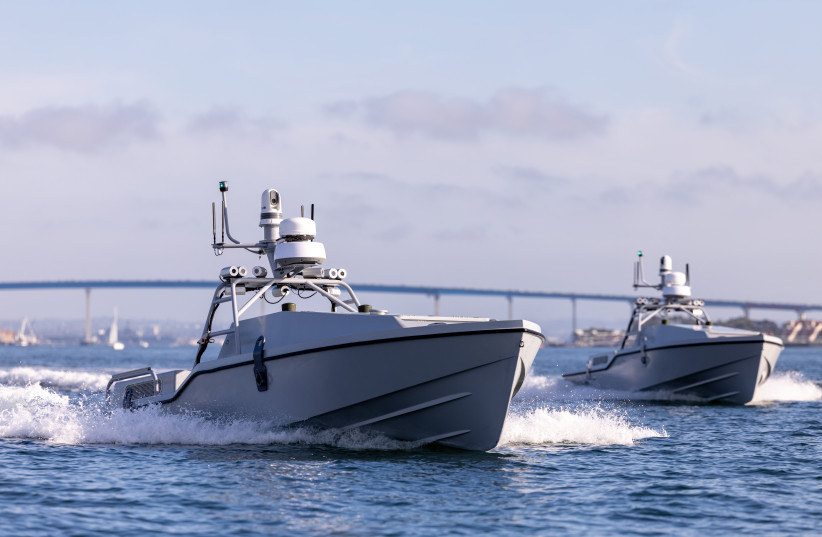
According to Raviv, shippers believe that if they put an anti-drone system on their ships, then their ships become a target. Owners in one industry forum, he said, likewise pushed back on NATO escorts, fearing it would make them appear to have taken a side.
And even if owners wanted protection, Eylon noted that escorting ships through the chokepoint is so expensive it makes little sense. The short-lived US Operation Project Freedom showed how the logistical, economic, and military challenges of defending ships in such a confined space make convoys untenable.
Instead, Eylon pointed to electronic warfare such as GPS spoofing, which aims to confuse drones about their location and make it harder for them to hit their targets.
Unlike the Lebanon theater, where Hezbollah has evaded Israeli jamming by using fiber-guided drones, conditions at sea mean that Iran relies primarily on radio frequencies that jamming can disrupt. But while degrading GPS can reduce the effectiveness of drones, it also impairs ships' ability to navigate.
Without GPS, many vessels are essentially sailing blind. On July 1, a ship reportedly ran aground while attempting to traverse the strait via a riskier route that Iran had not approved.
Overcoming the unavailability of reliable GPS is where companies like Orca AI are able to help ships navigate more safely. The company notifies crews the moment their GPS is spoofed or jammed, since, as Raviv noted, onboard systems are not designed to detect those events on their own.
Through a product called Co-Captain - which Raviv likened to Google Maps for ships - vessels share disruption data across a network of roughly 1,500 ships, so a captain approaching a jammed stretch of water gets a heads-up before sailing into it. And because Orca's cameras already use computer vision for collision avoidance, crews increasingly lean on them to navigate by sight when GPS drops out, especially at night.
Asio, an Israeli defense-tech firm, comes at the problem from the air. Its GeoFusion technology, fielded by the IDF and customers worldwide, keeps aircraft navigating through the same jamming that grounds everyone else, maintaining watch over the shipping lanes for mines, drones, and hostile vessels.
"Our capability enables those aerial assets or seaborne assets to overcome those and maintain freedom of operation," said Tomer Malchi, Asio's founder and CEO.
That edge flips the asymmetric equation: a navy defending shipping can flood the strait with GPS jamming to confuse Iranian drones while its own surveillance aircraft, navigating optically, keep operating in the same airspace unaffected.
But while these technologies can help cargo ships navigate the risky waters and perhaps even identify threats, the situation remains too tenuous for shippers to return to business as usual.
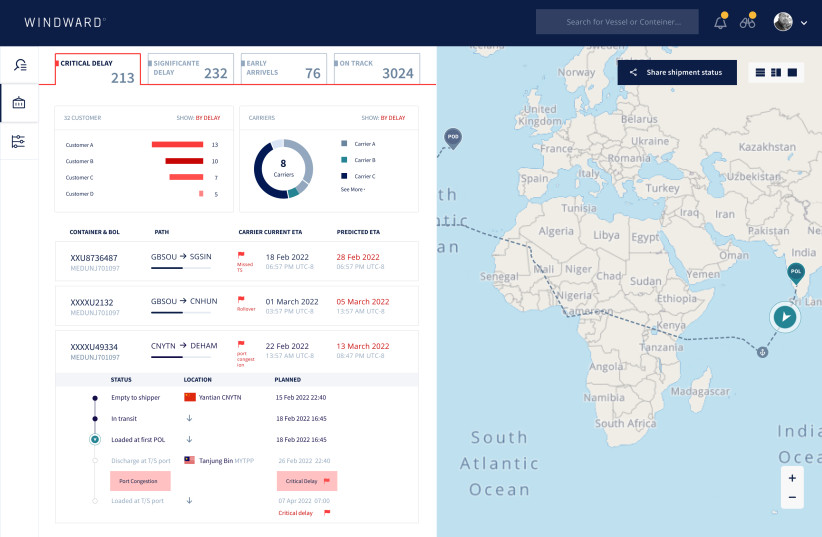
Ship owners and their insurers are rightly concerned about the risk to their crews, vessels, and cargo, and Iran has shown it is willing to target ships to gain control over the waterway.
For their part, ship owners do not view securing free navigation as their responsibility. That is a job for governments and navies. While the diplomats muddle through a swamp of a negotiation, owners will likely choose to simply pay the Iranians their tolls and pass the costs on to the market.
And given the US Navy's reticence to reach for a military option, diplomacy and kleptocracy are the more probable outcomes.
"In my opinion, it's a question of macroeconomics," said Raviv. "It's a question of diplomacy rather than armed forces and will be resolved by diplomacy eventually at the end of the day. We'll probably be in a limbo state for the next few weeks or months, but once it's resolved, everyone's interest is to let the oil flow."
At the same time, while a cost-benefit analysis is most likely to win the day in the Strait of Hormuz, what happens in the Middle East rarely stays here.
"It is just a matter of time until Malaysia or Indonesia will block the Malacca Strait or somebody will block Gibraltar and demand a fee," said Eylon. "Because the Hormuz is just a case study."
Gabriel Avner worked as an intelligence analyst and security consultant specializing in Iran, and was previously a reporter and editor covering start-ups, diplomacy, and defense.