
Artificial intelligence is rapidly reshaping the global cyber battlefield, lowering the barrier to sophisticated offensive operations and enabling countries such as Iran to conduct attacks that would have been difficult or impossible only a few years ago, according to Dream CEO and co-founder Shalev Hulio.
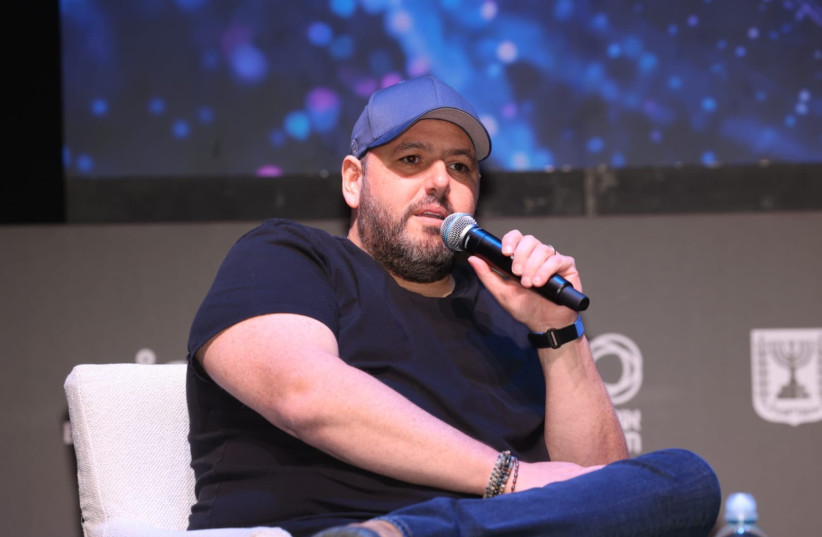
Speaking during Cyber Week at Tel Aviv University and later in a discussion with journalists, Hulio said Iran's cyber capabilities have been significantly amplified by access to advanced AI models, particularly those developed in China with fewer safety restrictions.
"What we are seeing now is that because of AI and because of access to AI, the Iranian threat actors are becoming much more sophisticated," Hulio said. "Today, we are actually seeing them using AI to find zero-days. We see them using autonomous AI to do lateral movement in networks."
According to Hulio, AI is now being used throughout the entire cyberattack lifecycle, from generating convincing phishing campaigns and social engineering attacks to identifying software vulnerabilities and navigating compromised networks without direct human intervention.
One particularly concerning development is the use of AI to reverse-engineer software patches. Once vendors release updates, attackers can analyze the fixes, determine the underlying vulnerability, and rapidly identify systems that remain unpatched.
"When the Chinese models became available, cheap, and almost as good as the Americans’, things that were not possible two years ago are now possible because of the use of AI," Hulio said.
The result, he warned, is a dramatic democratization of advanced cyber capabilities.
"In the past, sophisticated cyberattacks were conducted mostly by nation-states or very sophisticated hackers," Hulio said. "Now, basically anyone who has access to Chinese models without guardrails can use them in order to create and conduct sophisticated cyberattacks."
Hulio argued that Iran's cyber ambitions now stretch well beyond its regional adversaries. Israel does remain a primary target. He pointed to attacks against water infrastructure in both Israel and the United States as an example of a way in which Iran now poses a threat, as well as campaigns targeting universities and private individuals whose personal information can be stolen and exposed online.
"They are trying to position themselves as a global threat actor, and I think it's a risk," he said.
Cheaper cyber warfare
Hulio also warned that AI is changing the fundamental economics of cyber warfare. Historically, sophisticated cyber operations required teams of specialists working together. Today, increasingly capable AI systems allow far smaller groups, and potentially even individuals, to conduct operations that previously demanded substantial resources.
"We are in a weird era," Hulio said. "You don't need collaboration today. You can conduct sophisticated cyber operations alone."
That shift, he argued, is rendering traditional cybersecurity approaches obsolete.
"The whole concept of cybersecurity was that you protect against the past," Hulio said. "You're not even protecting against the present or the future. What AI brings you is basically even more complicated because now attacks are becoming much faster, and you need to protect against the unknown unknowns of the world."
National sovereignty
Beyond cybersecurity, Hulio framed AI as an issue of national sovereignty. Governments that rely entirely on foreign AI providers risk creating strategic dependencies comparable to dependence on foreign energy supplies, he argued.
"AI is a critical infrastructure of a government," Hulio said. "Exactly like you control your own electricity, oil, and gas, you need to control your AI."
He advocated for sovereign AI strategies in which governments control the full technological stack, from computing infrastructure and models to applications, particularly for systems trained on sensitive national-security data.
"No country should depend on foreign models" for critical and confidential applications, Hulio said, adding that tailor-made sovereign systems will become increasingly important as AI becomes embedded across government operations.
Addressing the global race for technological leadership, Hulio acknowledged that Israel entered the AI competition later than the United States and China and remains behind in the number of AI engineers. However, he argued, t Israel's strengths in defense technology, intelligence, and cybersecurity position it to become a world leader in several specialized AI domains.
"I think we're going to see Israel leading the world in a few areas that relate to AI," he said, highlighting defense robotics, AI-powered intelligence systems, and cyber-AI integration.
Hulio also urged Europe to increase AI investment and reduce what he described as excessive regulation, warning that overregulation could undermine competitiveness against the United States and China.
The future
Hulio also discussed quantum computing, calling it the next transformative technology. While he noted that practical applications remain limited today, he predicted that the convergence of AI and quantum computing could dramatically accelerate scientific research, particularly in medicine and drug discovery.
According to him, although some people believe Q-Day is still a while away, he thinks it will come in the next 18-24 months. “And when this happens, there will be a cure for cancer within a year.”
Ultimately, Hulio said the coming global order will be defined not by traditional military power alone, but by mastery of a new technological triad.
"The next super nations are going to be nations that control three things: cyber, AI, and quantum computing," he said.