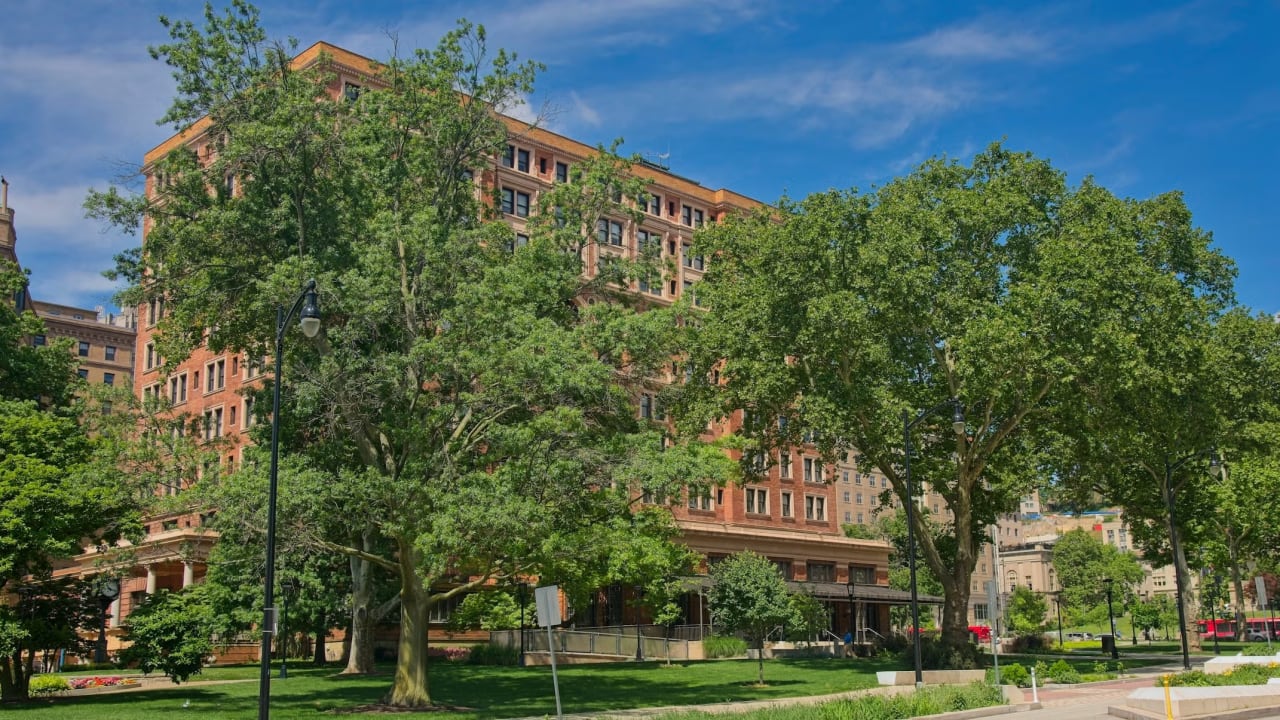
A spokesman for the University of Pittsburgh now says the school’s campus antisemitism working group did speak to at least some Jewish students and community members beyond those in the group itself before issuing its recommendations.
The spokesman’s comment followed the publication of a Jewish Telegraphic Agency story about the apparent lack of student voices in the working group’s report.
“Members of the committee very intentionally spoke to/interviewed members of the Pitt community who had experienced antisemitism, with one committee member focusing specifically on people she hadn’t previously met or spoken with,” Pitt spokesperson Jared Stonesifer told JTA following the initial story’s publication.
The document itself does not cite any interviews with, or surveying of, Jews on campus beyond the report’s nine credited authors. One of those authors is a former director of Pittsburgh’s Jewish Community Relations Council and has no formal relationship with Pitt. Approximately 1,400 undergraduate students at Pitt are Jewish, or around 7% of the total student body, according to Hillel International estimates.
In interviews for JTA’s initial article, a Pitt spokesperson as well as the working group chair would not divulge whether Jewish students were consulted in the drafting of recommendations for the school to fight antisemitism. But after the article was published, Stonesifer told JTA that the working group did interview members of Pitt’s Jewish community, though those interviews were not visibly reflected in the report.

He declined to provide further details on how many Jewish students were interviewed, the methodology used in those interviews, or how they were incorporated into the report. Stonesifer said making such details public would violate the confidentiality agreement signed by the working group’s members.
Stonesifer: Working group included two Jewish students
But Stonesifer emphasized that the working group included two Jewish students. One of those students, however, graduated before the report’s release, and their name does not appear in the final report.
Stonesifer additionally noted, “The committee included several members of Pitt faculty, who mentor and interact with students on a daily basis.”
A person familiar with the working group, who requested anonymity because they feared repercussions, disputed the university’s account of engaging with students beyond the committee’s own members. Group members were never shown evidence that any interviews with Jewish students or other Jewish community members had been conducted before the recommendations were drafted, the person told JTA.
Universities using committees, reports to address antisemitism concerns
Campus antisemitism committees and reports have become a key tool as universities try to address concerns about the campus climate for Jewish students. At a range of other public and private universities, such reports have typically been accompanied by some form of surveying of the campus Jewish population. Pitt’s eight-page antisemitism report did not include such information.
The university had immediately responded positively to the report’s recommendations, which came after the community weathered off-campus antisemitic attacks on Jewish students in 2024. It has also navigated the aftermath of the deadliest antisemitic attack in US history, which took place at the nearby Tree of Life synagogue building in 2018.
Some right-wing Jewish figures have also criticized Pitt’s report for not defining antisemitism.