
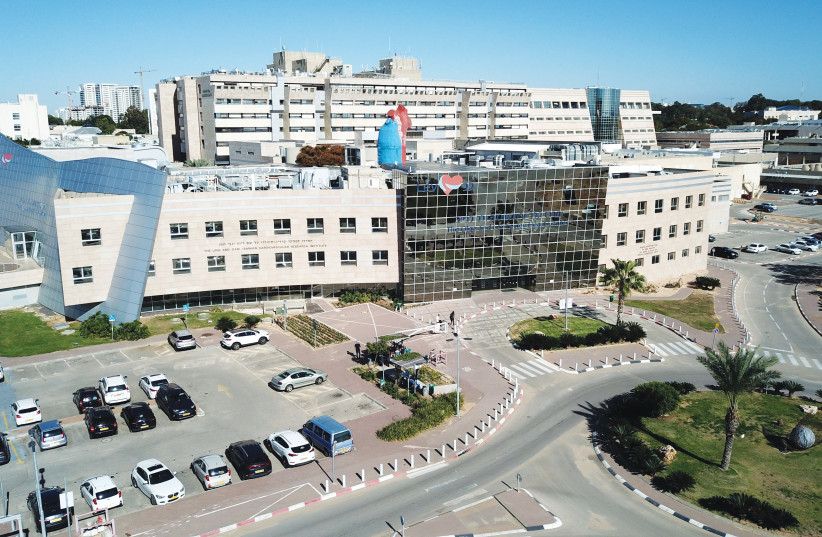
Suspected Ebola cases in Israel have been ruled out after two patients hospitalized at Rambam Medical Center in Haifa and Sheba Medical Center at Tel Hashomer tested negative for the virus, the Health Ministry announced Tuesday.
The two individuals had recently returned to Israel from the Democratic Republic of the Congo and developed symptoms that prompted medical evaluation and isolation under strict protocols for high-risk infectious diseases. Their hospitalizations triggered heightened preparedness across Israel’s health system in recent days.
According to the ministry, both tests returned negative results, effectively removing suspicion of Ebola. Still, both patients continue to receive medical treatment in line with their clinical condition and additional findings.
The testing was carried out according to established professional procedures and internationally accepted guidelines for managing dangerous infectious diseases, the Health Ministry said. In the immediate aftermath of the hospitalizations, isolation procedures were activated, epidemiological investigations were launched, and hospitals prepared for the possibility of identifying Israel’s first Ebola case.
Officials stressed that no confirmed Ebola cases have been detected in Israel at this time.
New strain of Ebola currently has no vaccine
Ebola is not an airborne disease like influenza, COVID-19 or measles, the ministry warned. Instead, infection generally requires direct contact with a symptomatic patient or exposure to blood, bodily fluids or other secretions.
The suspected cases drew significant public attention after it emerged that both travelers had arrived from a region experiencing an active outbreak. The World Health Organization (WHO) classifies the current Ebola outbreak as concentrated primarily in the Democratic Republic of the Congo, with additional cases in Uganda.
According to WHO data published in June, hundreds of confirmed infections have been recorded, with additional suspected cases under monitoring. The outbreak is linked to the Bundibugyo strain of the Ebola virus. Unlike the Zaire strain, which caused the large West Africa outbreak about a decade ago, there is currently no approved vaccine or specific treatment for the strain involved in the current outbreak.
The WHO assesses the risk within the Democratic Republic of the Congo as very high, and the risk to neighboring countries as high. However, the risk to countries outside the region, including Israel, Europe and North America, remains low. The organization is not recommending broad travel or trade restrictions at this stage, but is urging countries to strengthen monitoring of travelers arriving from affected areas and to maintain readiness for rapid identification of suspected cases.
The Health Ministry continues to advise against non-essential travel to the Democratic Republic of the Congo and Uganda, where active transmission is ongoing. Travelers returning from these countries who develop fever or unusual symptoms within 21 days are instructed to stay at home, avoid contact with others and contact the Health Ministry hotline for guidance.
As the ministry emphasizes, a fever following travel from affected areas requires immediate assessment, but Ebola remains rare among returning travelers. In most cases, other infections are far more likely.
Travelers should not go directly to clinics or emergency rooms, the ministry added, saying that instead, they should call the Health Ministry hotline 5400* and report travel history and symptoms at the beginning of the call.