
The stadium lights, millions of spectators, and the massive money generated by global football create the sensation of a well–oiled machine. But behind the grand show hides a medical reality that is increasingly worrying experts. Recent years have seen a rise in the frequency and severity of sports injuries among elite footballers, with the world's best players being precisely the ones paying the price of the modern game.
If in the past an injury was perceived as a matter of bad luck, today it is considered a strategic factor affecting a club's success no less than the manager or the star on the pitch. Long–term follow–up studies have shown that teams that maintain high player availability suffer from fewer injuries, accumulate more points, and finish higher in the table.
Football has changed and the body struggles to keep up
The football of recent years has become faster and more intense than ever. Playing systems are based on high pressing, repeated sprints, and sharp changes of direction, with players required to perform dozens of actions at maximum intensity for ninety minutes.
It is precisely defensive actions, where the player chases the opponent without possession of the ball, that create immense loads on the knee and leg muscles.
The implication is that the modern game demands not only exceptional physical fitness, but also neural and mental capacity to make correct decisions within fractions of a second.
The injury that terrifies every footballer
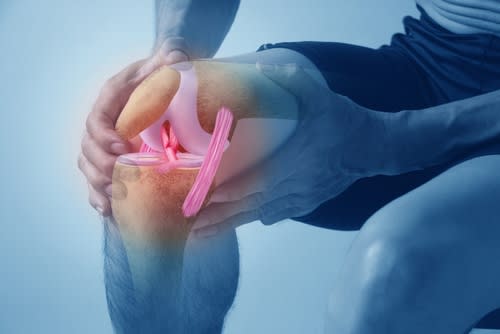
Among all injuries, an anterior cruciate ligament tear in the knee is considered one of the most severe. This is an injury that can sideline a player for eight to ten months, and sometimes even longer.
In the past, people used to think that such injuries were caused mainly by a harsh tackle with another player on the pitch, or a direct impact. Today, it is known that in many cases they occur precisely without any contact with an opposing player.
Studies indicate that this is a combination of biomechanical, neural, and cognitive factors. When a player is required to react quickly to a feint or a sudden change of direction, a slightly delayed response or an uncontrolled movement can put the knee in a dangerous position and result in a tear.
The finding that surprised researchers
One of the common assumptions was that fatigue is the central factor in severe injuries, and therefore it was expected to find them mainly in the final minutes of the match.
However, new studies point precisely to the opposite picture. Most cruciate ligament injuries occur in the first half, and sometimes even in the opening minutes of the match. The finding reinforces the hypothesis that the problem is not merely muscle fatigue, but rather insufficient neuromuscular readiness alongside high intensity right from the very first moment.
In other words: The body may have warmed up, but the nervous system is still not functioning in optimal coordination.
<br>The hamstring epidemic of global football
If there is an injury that symbolizes modern football, it is the hamstring injury, the back of the thigh muscles. Today, it accounts for nearly a quarter of all injuries in professional football, and its frequency continues to rise from year to year.
In most cases, there is no contact at all with an opponent. The injury occurs during a sprint, sharp braking, or sudden deceleration, when the muscle is required to cope with particularly high eccentric loads.
The average absence time stands at about two weeks, but in complex injuries, recovery can take longer.
Match congestion takes a toll
One of the central factors in the rise of injuries is the congested match schedule. Studies conducted in the Champions League have shown that when a team plays with a gap of four days or less between matches, the rate of muscle injuries rises significantly compared to a situation where players have at least six recovery days at their disposal.
The problem is not just fatigue. The muscles and tendons do not have enough time to rehabilitate, and simultaneously, the body's neural control is also impaired. The result is a decline in movement quality and an increased risk of further injuries.
<br>Why do injuries recur?
One of the common mistakes is to think that the disappearance of pain indicates full recovery from the injury. In reality, however, about 18 percent of hamstring injuries are recurrent injuries, and most of them occur within about two months of returning to the pitch.
The reason for this is that the tissue itself may heal before the nervous system returns to full function. Therefore, the decision on a player's return to play cannot be based solely on their feeling, but must include an assessment of strength, movement control, and neural readiness.
Another finding that worries researchers comes from the English league, where it was found that players under the age of 21 are at a particularly high risk of injuries and even suffer from more severe injuries.
The reasons for this are likely many. The rapid transition from youth football to senior football, the immense physical loads, and the lack of full maturity of the muscle and nerve systems create a dangerous combination. Decision–making under pressure and slower reaction speed may also contribute to the increased risk.
The medical staff has become a strategic asset
In the modern era, sports medicine is no longer limited to treating injuries after they have occurred. The most successful clubs in the world invest immense resources in workload monitoring, tracking physiological metrics, and close cooperation between the manager, the fitness coaches, and the medical staff.
Studies have shown that in clubs where continuous communication exists among all professionals, fewer injuries occur and there is higher player availability throughout the season.
Modern football is faster, stronger, and more demanding than ever, but also more dangerous to the players' bodies. The data show that most severe injuries are not the result of a violent tackle with an opposing player, but rather a combination of match loads, sub–optimal neural response, and decision–making in fractions of a second.
Therefore, the real battle for titles is no longer decided only on the pitch. It begins in the gyms, in performance laboratories, and in medical rooms, where they are currently trying to train not only the players' muscles but also the brain that directs them.
Dr. Niv Marom, Deputy Director of the Orthopedic Department at Meir Medical Center of the Clalit Group, the official medical escort of Olympic athletes in Israel and Chairman of the Israeli Society of Knee Surgery, Sports Injuries and Arthroscopy