
For billions of fans around the world, the World Cup is a celebration of sports, drama, and unforgettable moments. For cardiologists, however, it is also a period during which emergency rooms might see an increase in the number of patients arriving with chest pain, arrhythmias, and sometimes even heart attacks. What sounds like a cliché about a "broken heart" following a loss by a favorite team, turns out to be a finding researched repeatedly in the medical world.
The common denominator of many studies is one conclusion: In people with risk factors, the emotional stress of a football match may serve as a trigger for an acute cardiac event.
Prof. Ariel Roguin, a regional cardiologist at Meuhedet North and Director of the Cardiac Department at the Hillel Yaffe Medical Center, explains that while watching dramatic matches, the body responds as if it is in an emergency situation.
According to him, blood pressure and heart rate rise as a direct result of the stress and excitement. The nervous system secretes stress hormones such as adrenaline, which cause the heart to work harder and consume more oxygen. In a healthy person, this is usually a transient response, but in someone suffering from atherosclerosis or existing heart disease, that same load could be the straw that breaks the camel's back.
The study that changed the way people look at football
One of the most important studies on the subject was published in the prestigious New England Journal of Medicine after the 2006 World Cup held in Germany.
Researchers who examined emergency data in the Munich area discovered an amazing phenomenon: Every time the German national team went out to play, the number of acute cardiovascular events jumped by more than twofold compared to regular days.
The increase was particularly prominent among men, people with known heart disease, and during dramatic matches that were decided in the final moments or in a penalty shootout.
The most interesting finding was that when Germany was eliminated from the tournament, the number of events returned almost immediately to routine levels. In other words, the tournament itself was not the problem, but rather the stress experienced by the fans when their team played.
A similar phenomenon: Also in England, the Netherlands, and Brazil
Another study examined the impact of the round of 16 match in the 1998 World Cup between England and Argentina, in which England was eliminated after a penalty shootout.
The result was no less dramatic: In the 24 hours following the match and during the two days after it, an increase of about 25 percent was recorded in the number of hospitalizations due to myocardial infarction.
The researchers did not find a similar increase in other diseases or after less tense matches, which strengthened the hypothesis that the mental stress itself was the factor that pulled the trigger.
In the Netherlands, mortality data were examined after the team's elimination in Euro 1996. The researchers found an excess number of cardiovascular deaths among men on that same day relative to what was statistically expected.
In Brazil as well, a country where football is almost a religion, a study that included close to 156,000 hospitalizations found that during the World Cup period, and especially on days when the Brazilian national team played, an increase was recorded in the number of myocardial infarctions.
The cardiologist who met the fans on the way to cardiac catheterization
For Prof. Roguin, the research data are not just numbers on a page. During his work as Director of the Catheterization Unit at Rambam Hospital, he treated a significant number of patients who suffered a heart attack during football matches. According to him, some of them arrived directly from the Sammy Ofer Stadium after developing severe chest pain during the match.
Particularly interesting, he says, is that many of the cases occurred precisely during periods when the local team struggled and the disappointment was greater. In years when the team succeeded and the atmosphere was more positive, almost no similar cases were recorded.
According to him, it will be intriguing to see how future participation of Israel in the World Cup will affect heart disease data in the country.
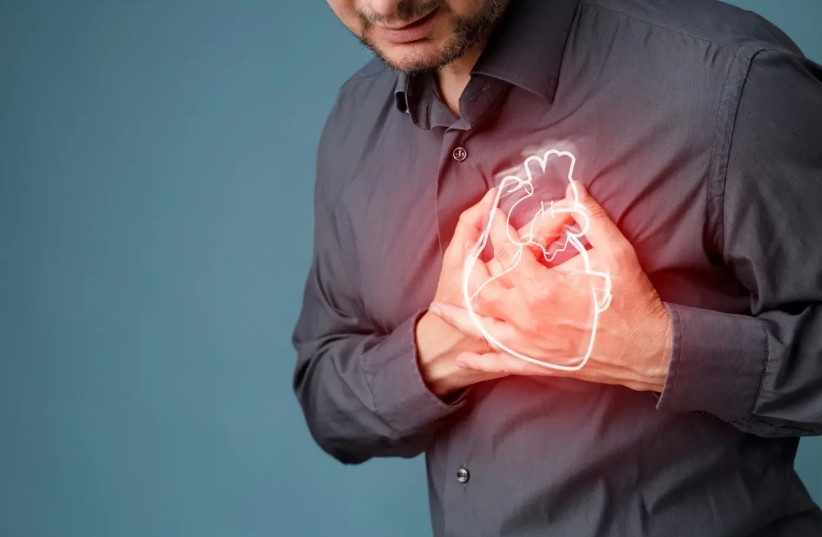
But it is not just about heart attacks. Recent medical literature indicates that extreme stress during sports events can also cause arrhythmias, angina, and even the "broken heart" syndrome known as Takotsubo, a condition in which the heart muscle is temporarily damaged following an acute emotional storm.
The implication is that this is not just a passing pain or a momentary excitement, but a real physiological response of the cardiovascular system.
What are the warning signs – and who is at risk?
The risk is particularly high in people suffering from existing heart disease, hypertension, diabetes, smoking, high cholesterol levels, or obesity.
A common combination while watching matches such as alcohol, smoking, a heavy meal, and emotional stress can also further increase the load on the heart.
Prof. Roguin emphasizes that the appearance of chest pressure that does not pass is a sign that requires calling for immediate medical help. According to him, many describe a feeling as if an "elephant is sitting on the chest", and sometimes the pain radiates to the left arm, jaw, or back.
In men, nausea or a heartburn sensation may also appear, while in women the symptoms are sometimes less typical and include shortness of breath, back pain, dizziness, extreme weakness, or nausea.
In any of these cases, one must not wait for the end of the match or for extra time. One must immediately call MADA or arrive urgently to receive medical care.
Ultimately, Prof. Roguin concludes, it is important to remember that football is a game, exciting as it may be. The team can perhaps lose and return in the next tournament, but there is no rematch that can bring back health and life.