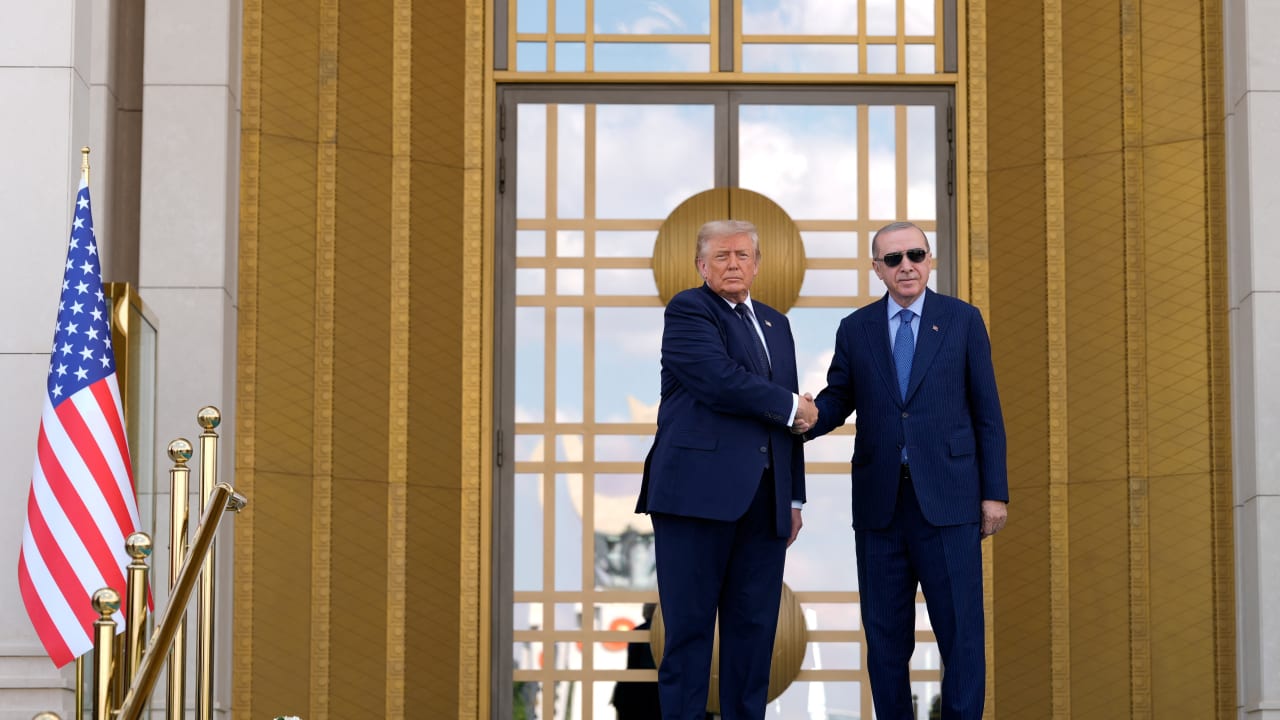
US President Donald Trump did not announce in Ankara on Tuesday that the United States would sell F-35 fighter jets to Turkey. He did something more important: alongside Recep Tayyip Erdogan, at the opening of the NATO summit, he explained why, from his perspective, opposition to the deal was no longer self-evident.
"This is a decision we are going to make," he said, adding that the United States would consider the move because its ties with Turkey are better than with other countries that Washington had expected would be more loyal. Erdogan quickly completed the message, saying that Turkey had already been promised five aircraft and that Trump "always keeps his commitments."
It was there, more than in the official statement itself, that the real debate was exposed. Trump does not see Erdogan the way he is seen in Israel. To him, Turkey is a NATO power with a strong army, a country that could have chosen "a different path" on Israel and Iran and chose not to do so. He praised Ankara for not joining the fighting "on the other side," and even hinted that it may have refrained from doing so because of him.
In Israel, the reading is completely different. Ankara hosts Hamas, is intensifying its diplomatic confrontation with Israel, has considered, according to the US president, attacking Israel alongside Iran, is clashing with Greece and Cyprus, and is trying to expand its influence in the eastern Mediterranean.
Behind the debate over the arms deal lies a much heavier question: What is Erdogan’s Turkey today in the eyes of Washington and in the eyes of Trump?
Trump wants to bring Turkey back to the West
The F-35 has become a symbol of that dispute. Trump wants to bring Turkey back to the center of the Western system. After years in which Ankara paid a price for purchasing Russia’s S-400 system, US sanctions imposed in 2020 under CAATSA and removal from the F-35 program, Trump is signaling that this chapter, in his view, can be closed.
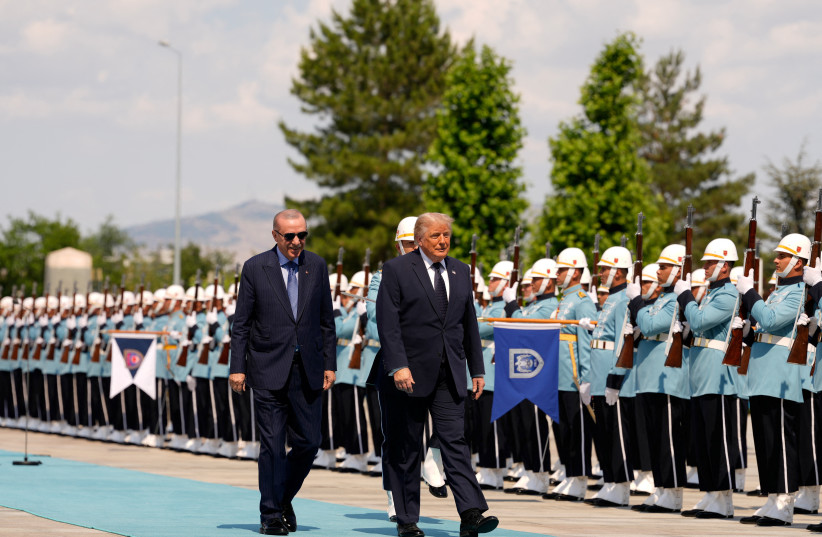
"I don’t want to impose sanctions on friends," he said, opening the door to easing pressure on Turkey and to a more forgiving approach toward a wayward, but still vital, ally.
His logic is not complicated. Turkey controls the passage between the Black Sea and the Mediterranean, has influence in Syria, knows Iran well, has one of the largest armies in NATO, and, in Trump’s perspective, it could help stabilize the region, curb Russian influence and keep Ankara inside the Western camp. In his view, pushing Turkey away has not changed its behavior; bringing it back into the American framework may, perhaps, better serve the American interest.
In Israel, this reading is difficult to accept. Erdogan’s Turkey is no longer seen there as a complex Western ally whose deviations can be tolerated. In recent years it has gradually become a regional rival. Political support for Hamas, the harsh statements against Israel since October 7, involvement in Syria, the clashes with Greece and Cyprus, and Turkish ambitions in the eastern Mediterranean are not seen in Jerusalem as a random series of crises.
They point, in Israel’s view, to a pattern of behavior by a state expanding its influence at the expense of its neighbors. The Israeli question, therefore, is not limited to Turkey’s NATO membership. It concerns the possibility of continuing to see it as a "normal" Western ally.
This is also the source of Israel’s opposition to the deal, which is not limited to the Air Force. In recent years, the defense establishment has developed a view that the maritime arena will be one of the main friction points in the coming decade.
Gas discoveries, trade routes, energy facilities, and the project to connect Israel to the European power grid via an undersea cable through Cyprus and Greece have turned the eastern Mediterranean into a strategic asset.
At the same time, Turkey is advancing the "Blue Homeland" concept, which expands its claims and influence in the maritime domain and challenges some existing arrangements. The concern in Israel is that a military buildup in Turkey will not only affect the balance of power in the air, but also Ankara’s confidence as it applies pressure around those strategic assets.
Israel makes statement after Trump, Erdogan meeting
Against that backdrop, Prime Minister Benjamin Netanyahu’s highly publicized appearance alongside the navy commander, shortly after the statements by Trump and Erdogan, does not seem accidental. It was a deliberate signal.
Israel wanted to make clear that it does not see Turkey only as a future aerial threat, but as a broader strategic challenge, one that could affect freedom of navigation, energy infrastructure, and deepening cooperation with Greece and Cyprus.
In Athens and Nicosia as well, developments are being closely followed. For them, the issue is not limited to the number of aircraft Turkey may receive, but to the renewed legitimacy Washington may grant Ankara’s regional policy.
For Erdogan as well, the F-35 is much more than an aircraft. Returning to the procurement track would be a diplomatic victory for him. He could argue that despite the S-400 affair, despite the sanctions and despite the clashes with Israel, the United States recognizes Turkey’s status as a regional power without which the new order cannot be shaped. From his perspective, opening the door is almost as important as the deal itself; it restores Ankara to the standing it was pushed from years ago.
Still, the gap between Trump’s statements and a signed deal remains wide. The S-400 is still a legal and political obstacle, and opposition in the US Congress is expected to be significant. Beyond the political issue, there is also professional opposition, the concern that a Russian system stationed in Turkey could help gather information on the stealth capabilities of the F-35, and thus harm not only Israel but all the countries operating the aircraft. Even a determined president will have difficulty turning the statements in Ankara into a deal without a complicated fight in Washington.
Even if the deal is not completed soon, the message Trump delivered in Ankara is clear. For years it seemed that preserving Israel’s qualitative military edge was the starting point of every American discussion about the sale of advanced weapons in the region. His remarks suggest a change in emphasis: Israel remains a close ally, but it is no longer the only consideration. In Trump’s view, Turkey too is a strategic asset that should be brought back to the center of the game.
That is why the debate over the F-35 goes beyond the aircraft themselves. It concerns how the United States balances its relations with its two important allies in the eastern Mediterranean. If Trump does succeed in returning Turkey to the F-35 track, the significance will not be limited to another arms deal. It would be an American declaration that the new regional order will also be built around Turkey. For Israel, this is not only a security problem, it is a possible shift in the starting point of American policy in the region.