Taiwan will continue to keep in close touch with the US to promote the implementation of arms sales according to plan, a defense ministry official said on Wednesday, ahead of a meeting between the US and Chinese leaders in Washington.
China views democratically governed Taiwan as its own territory and has repeatedly demanded US arms sales end.
While US President Donald Trump approved an $11 billion package for Taiwan in December, the largest ever, he said in May after visiting Beijing that a second package, worth some $14 billion, was being kept in abeyance.
Chinese President Xi Jinping is expected to press Trump to halt sales when the two of them meet in Washington this week.
Speaking to reporters in southern Taiwan's Tainan during a media trip, Taiwan defense ministry deputy spokesperson Chiao Fu-chun said maintaining security and stability in the Indo-Pacific region was a "common interest of democratic nations."

"The US government and Congress have repeatedly expressed their support for Taiwan's ability to defend itself," he added.
"Therefore, we will continue to maintain close contact with the US Department of War and continue to promote the implementation of arms sales according to plan."
Taiwan's domestic weapons development
Taiwan President Lai Ching-te has embraced Trump's call for US allies to spend more on their defense.
While the US is Taiwan's most important arms supplier, Taipei has its own weapons development program, covering everything from submarines and fighter jets to long-range missiles.
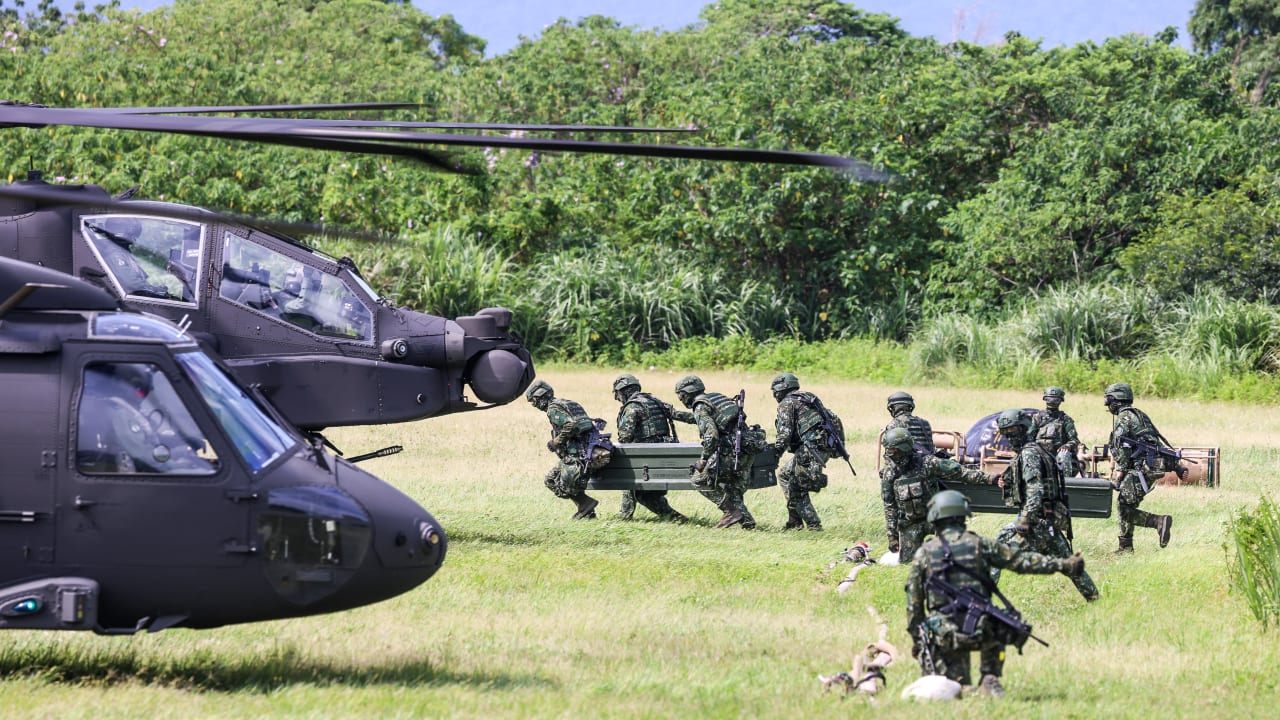
Taiwan's army on Wednesday showed off its new eight-wheeled armored combat vehicle fitted with a 105mm gun, practicing live-fire exercises to demonstrate the domestically made weapon's fighting abilities.
The military also put on display, but did not fire, some of its US-made weapons, such as Lockheed Martin-made HIMARS rockets.
Taiwan routinely holds live-fire drills and takes reporters to military bases to watch exercises.
China has never renounced the use of force to bring Taiwan under its control, and its military operates around the island on an almost daily basis.
Taiwan's government rejects Beijing's sovereignty claims, saying only the Taiwanese people can decide their future.