
Women of the Wall is urging Israel’s political parties to commit to implementing the frozen Western Wall compromise, placing the future of egalitarian prayer at Ezrat Yisrael - and Israel’s relationship with Diaspora Jewry - before those seeking to form the next government, the organization said in a statement.
As diaspora minister, Naftali Bennett helped establish the southern prayer space in 2013. Benjamin Netanyahu’s government approved the broader agreement intended to secure its status, then froze it.
Neither leader’s record amounts to delivering the full compromise.
“In recent years, and especially since October 7, we have all come to recognize how important - even critical - our ties with Diaspora Jewry are to the existence of the Jewish people and the State of Israel,” Women of the Wall said.
“Yet Israel has repeatedly slammed the door on Diaspora Jews, sending an unmistakable message that they have no place here with us.”
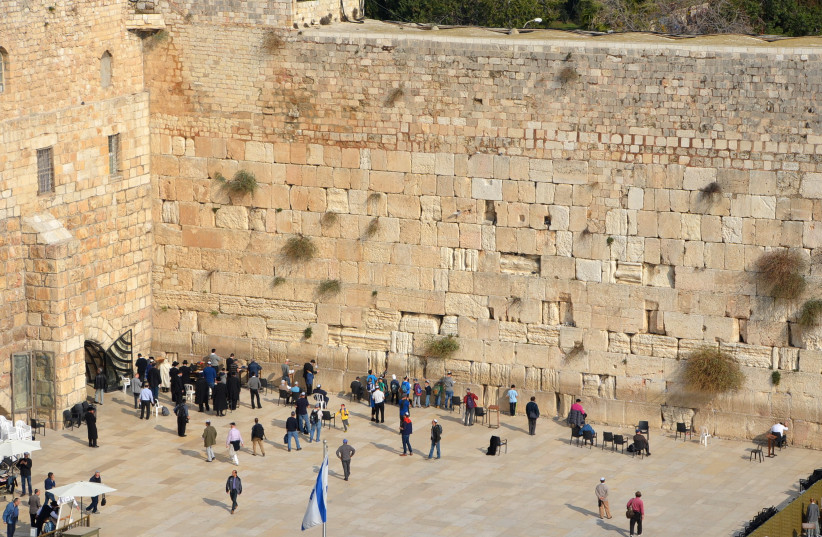
For the organization, the Western Wall exemplifies that contradiction: a site meant to connect Jews to their shared heritage has become a recurring source of exclusion and political confrontation.
Bennett’s B’Yachad party approaches the issue through the language of belonging and reconciliation. Its doctrine addresses the Wall under the heading “Only Together Can We Create a Home for Every Jew.”
“The Western Wall is a sacred and unifying place, and it should be a place of Shalom Bayit [domestic harmony], not civil strife,” the document states.
Women of the Wall: Preservation is not enough
Its practical commitment is to preserve the southern prayer space while maintaining Orthodox arrangements at the main plaza.
“In this spirit, the Ezrat Yisrael solution on the southern end of the Western Wall – intended to facilitate prayer and gatherings in diverse ways – should be preserved, without disrupting Orthodox prayer arrangements at the Western Wall Plaza.”
That wording supports the continued existence of a space accommodating diverse forms of Jewish worship. It does not explicitly promise to implement the full 2016 compromise, establish its proposed management framework, or complete specified improvements within a stated timetable.
The distinction matters because Ezrat Yisrael predates the broader agreement.
In August 2013, Bennett’s Jerusalem and Diaspora Affairs Ministry announced the completion of a roughly 450-square-meter prayer platform near Robinson’s Arch. Developed in coordination with the Prime Minister’s Office and Jewish Agency chairman Natan Sharansky, it was presented as an interim solution for egalitarian and pluralistic prayer ahead of the High Holy Days.
Netanyahu’s government approved the agreement in January 2016, and it went further. It called for a recognized egalitarian prayer area, a management framework with representatives from the Reform and Conservative movements and Women of the Wall, and state funding for maintenance and services. Orthodox authorities would retain control of the main plaza. The government froze the plan in 2017 under pressure from haredi parties.
Women of the Wall described the agreement as an effort to provide a dignified, equal place for women and to represent liberal Jewish movements representing millions of Diaspora Jews. Its statement blamed haredi and hardline religious Zionist pressure for the freeze and called for the agreement’s implementation.
More recently, the dispute has extended beyond infrastructure to the authority to determine permissible prayer practices.
Last February, the Knesset advanced a private bill sponsored by far Right Noam MK Avi Maoz that would give the Chief Rabbinate authority to determine what constitutes desecration at Jewish holy sites and make it the religious representative consulted over regulations. The proposal passed its preliminary reading 56–47 and still required further readings to become law.
Netanyahu had prevented the proposal from receiving the Ministerial Committee for Legislation backing by canceling its meeting, reportedly to avoid a crisis with Diaspora Jewry. Nevertheless, it advanced by a free vote, with support from Likud Justice Minister Yariv Levin, who called for completing the legislation to end High Court intervention in the Wall’s management, a move Shas and United Torah Judaism also supported.
Women of the Wall cited Maoz’s proposal, alongside legislation submitted by Shas leader Arye Deri in 2023, as measures that it said sought to exclude liberal Jews and women and undermine the prayer rights of Diaspora Jews.
Its criticism places the issue within a broader argument about Jewish peoplehood: decisions negotiated among Israeli coalition partners also affect communities abroad whose religious practices differ from those enforced at the main plaza.
Bennett’s record raises a separate question about the distance between support for egalitarian prayer and the ability to overcome coalition opposition.
During negotiations to establish the Bennett-Lapid government in 2021, implementation of the compromise had been included in the coalition agreement at Yisrael Beytenu’s request.
This arrangement envisaged access from the main Western Wall complex and a governing board including progressive Jewish and Women of the Wall representatives.
By January 2022, however, Bennett acknowledged that his government could not implement the full plan. Speaking to The Jerusalem Post that year, he cited opposition within Yamina and New Hope, and said his government instead intended to pursue physical improvements without implementing the agreement’s other provisions.
Women of the Wall is asking parties to make that additional commitment. It urged the next government to take a broad, farsighted approach that weighs the relationship with Diaspora Jewry and the future of the Jewish people alongside political alliances with haredi parties.