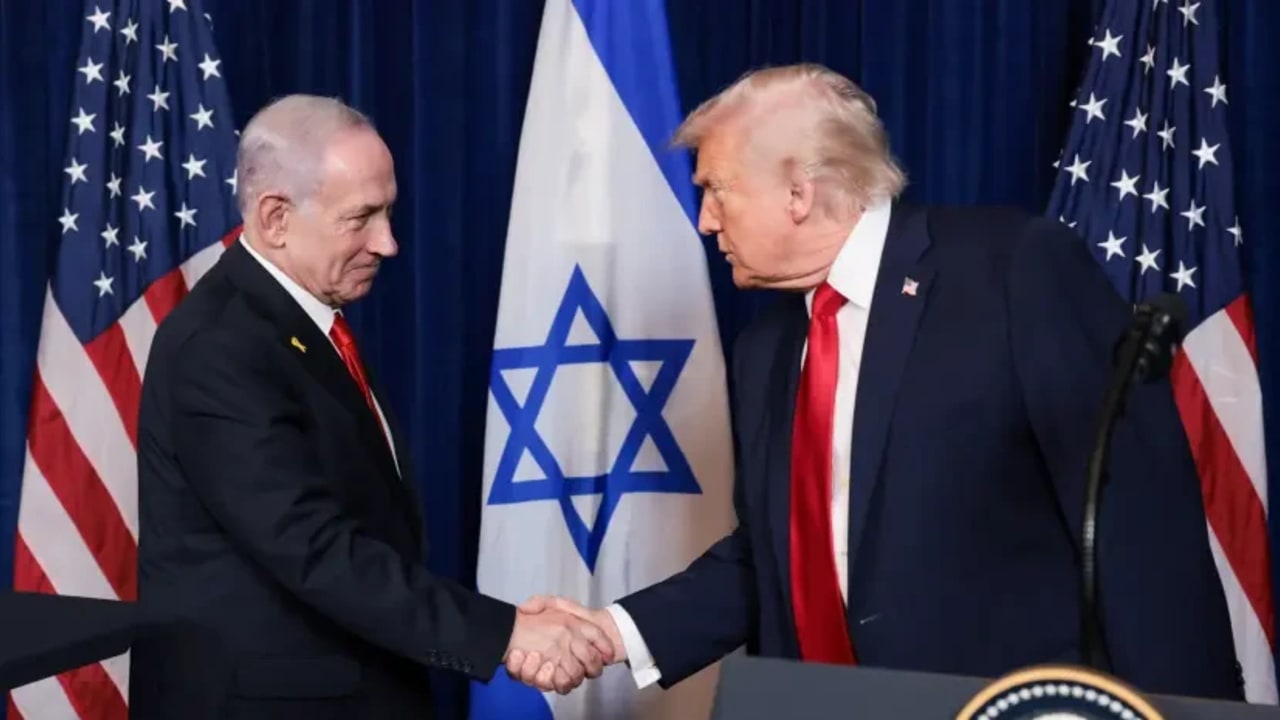
Prime Minister Benjamin Netanyahu and US President Donald Trump may soon find they have something else in common: executive power without legislative control.
In the United States, that is a familiar outcome of midterm elections. Recent polling suggests the Democrats are poised to win control of the House in Tuesday’s vote, and possibly the Senate - though that is a more uncertain prospect. Should Republicans lose either chamber, Trump would face greater constraints on his ability to advance his legislative agenda than during the first two years of his second term.
In America, divided government - the presidency in the hands of one party, and one or both houses of Congress in the hands of another - is common.
Not so in Israel, where coalition discipline generally ensures that the executive and legislative branches - the government and the Knesset - are on the same page. The government ordinarily commands the parliamentary majority, which in turn advances its agenda.
Tuesday’s election, however, and the logjam it produced, could loosen that bond. An unusually independent Knesset - at least in the short term - could emerge as a consequential product of the current political deadlock.
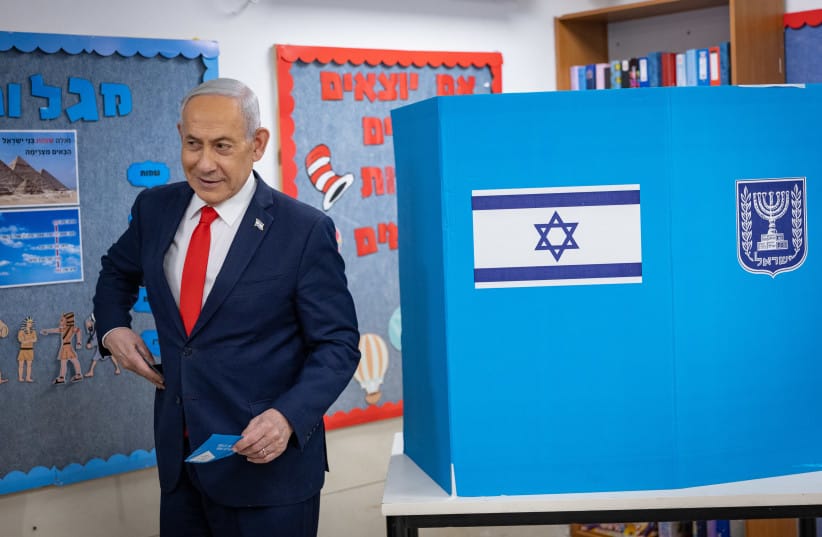
The question now is whether Netanyahu’s opponents can sustain parliamentary cooperation even if they cannot agree on forming a government.”
Opposition bloc aims to replace Knesset Speaker Amir Ohana
Amid all the speculation about a unity government, which parties will join forces and who will have to break promises wiser politicians would never have made in the first place, one concrete possibility is taking shape: the opposition parties joining together to replace Likud Knesset Speaker Amir Ohana.
The change bloc’s 48 seats, together with the Arab parties’ 19, give them the numbers to elect a replacement - provided they agree on a candidate and are willing to cooperate.
The significance extends well beyond who sits in the speaker’s chair. Installing a speaker from the change bloc would give Netanyahu’s opponents greater control over the parliamentary agenda and help them advance far-reaching measures: establishing a state commission of inquiry into October 7, legislating haredi conscription and rolling back judicial-overhaul legislation passed by the previous Knesset.
These efforts could begin while coalition negotiations are underway and Netanyahu’s outgoing government remains in office. His opponents could, in other words, begin exercising legislative power before securing control of the government.
Electing a speaker, however, would be only the beginning. Passing legislation also requires functioning Knesset committees and agreement on what the laws should actually say. Establishing a state commission of inquiry would likewise require a specific legal route; replacing the speaker would not, by itself, bring one into being.
This gives added significance to President Isaac Herzog’s choice of whom to task first with forming a government, following consultations with the parties about who has the best chance of succeeding. That candidate’s party gets to chair the Arrangements Committee, the temporary body that helps organize the Knesset’s work and set up its committees.
The new Knesset will be sworn in on November 10. It need not wait for a new government to begin its work, although advancing legislation will require the relevant committees to be up and running.
If Eisenkot receives the first mandate and his allies elect a new speaker, they would be well placed to begin translating their parliamentary numbers into action. If Netanyahu receives it, Likud would retain an important procedural foothold, giving it opportunities to complicate and delay those efforts. Chairing the Arrangements Committee would not, however, give Likud an automatic majority on it.
But the larger challenge would remain political. Agreeing to replace Ohana is one thing. Agreeing on a law to draft haredim or deciding which judicial changes to undo is another.
Can the opposition bloc rely on Arab parties' votes?
Then there is the question of whose votes they would accept to make those changes. B'Yachad head Naftali Bennett and Yisrael Beytenu chairman Avigdor Liberman have explicitly ruled out relying on the Arab parties to form a government. Would they nevertheless rely on those same parties to pass major legislation?
They could argue, with ample precedent, that voting together on individual laws is different from depending on Arab support to govern. The distinction, however, becomes politically harder to defend when those votes are indispensable to advancing a broad agenda against the outgoing government. Netanyahu would have every incentive to portray that cooperation as a breach of their promises not to depend on the Arab parties.
None of this solves the coalition conundrum. If the legally prescribed process to form a government is exhausted without success - a process that can take nearly four months - another election follows within roughly three months, with Netanyahu remaining prime minister until a replacement government takes office. The Knesset, meanwhile, continues serving until the next Knesset convenes and retains its legislative powers, although committee activity during the election campaign is generally very limited.
But that does not mean the period ahead must consist solely of speculation about negotiations behind closed doors. There could also be a public test of whether Netanyahu’s opponents can turn their combined numbers into a working parliamentary majority.
They may not yet be able to replace his government. They could nevertheless begin checking its power.
Netanyahu, Trump may face similar issues
That would put Netanyahu in a position Trump may soon recognize: still holding the highest office, but facing a legislature he can no longer count on to advance his agenda.
But the two leaders would be operating on different clocks. Trump could face opposition control of one or both chambers of Congress for the final two years of his presidency. Netanyahu’s predicament would lead to another electoral test within months if no government can be formed.
For Trump, divided government could become the condition under which he finishes his term. For Netanyahu, it could become the battleground on which the next election is fought.