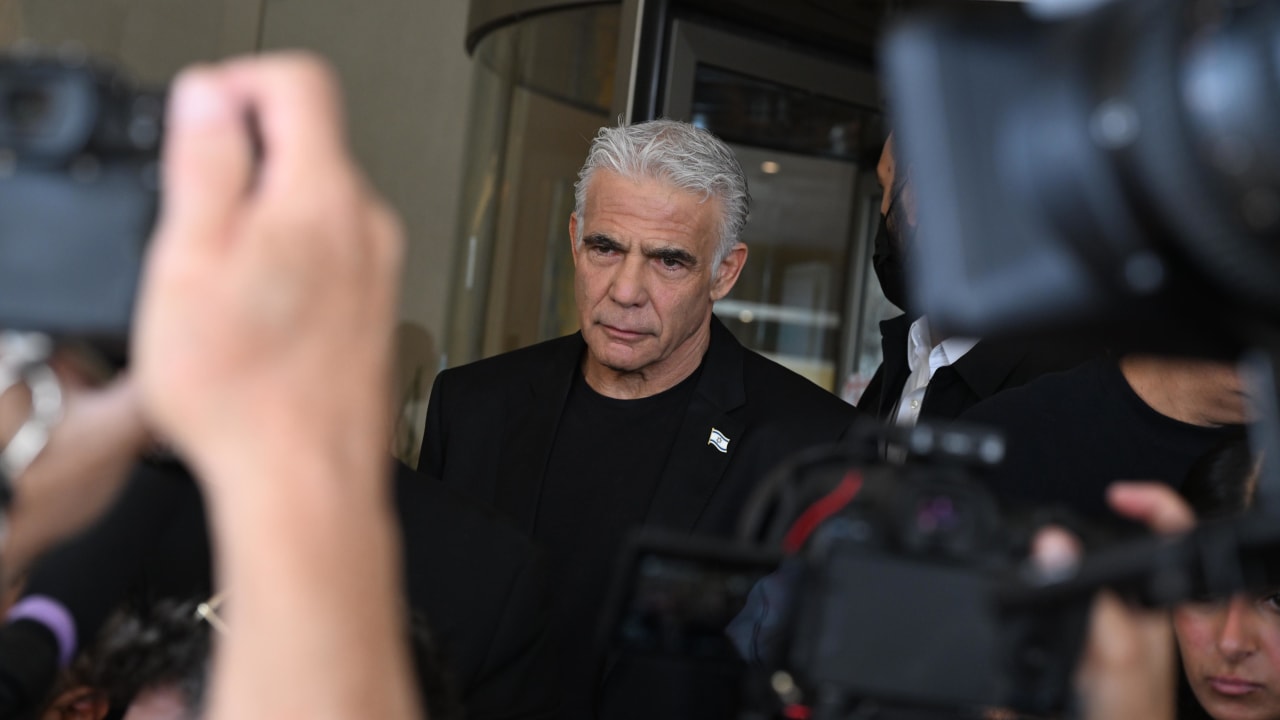
Party leaders in the opposition bloc seeking to replace Prime Minister Benjamin Netanyahu met on Tuesday for their first joint meeting since the election, amid disagreements and a political deadlock between the two blocs, with no clear path toward forming a government.
Those attending included Gadi Eisenkot (Yashar), Naftali Bennett (B'Yachad), Avigdor Liberman (Yisrael Beytenu) and Yair Golan (the Democrats), along with outgoing opposition leader Yair Lapid, who holds the second slot on the B'Yachad Knesset slate.
Lapid said upon arriving outside the meeting that the bloc must form a government.
"We are facing a serious and dangerous attempt to undermine the election results. We must form a government," he said. Netanayhu's Likud has alleged in recent days that there was election interference and that the Arab parties had “stolen” the election.
"The events of the past few days are just another reminder that we need to remove Netanyahu from the Prime Minister's Office," Lapid added.
Victims and family members of those killed in the October 7, 2023, Hamas attacks arrived outside the meeting of party leaders to demand that they form a government to replace Netanyahu.
"You have a mandate. Do not lend a hand to legitimizing the leaders who were at the helm during the October 7 massacre. Establish a change government," they stated.
"The people voted no confidence in the October 7 government and gave 67 seats to the demand for change. You have received a mandate. Do not waste it on compromises that would legitimize those who were at the helm on October 7," they added.
The meeting comes amid numerous disagreements between the party leaders, although all have agreed to recommend Eisenkot, whose party won the most seats within the opposition bloc, to President Isaac Herzog as the candidate to form the next government.
Consultations at the President's Residence are set to begin on Wednesday. By law, the president is required to consult the Knesset factions before deciding who receives the task of forming a government.
Golan has called on the opposition party leaders to form a government with the Arab parties - Ra'am and the Joint List - who won a record-breaking 19 seats combined in the elections. With Arab parties, the opposition bloc would have a Knesset majority of 67 seats.
However, Liberman reiterated on Tuesday ahead of the meeting that a coalition with the Arab parties was not an option. Bennett had also drawn a red line ahead of the elections against forming a government with the Arab parties.
Political deadlock could lead to another election
The opposition bloc lacks the required 61-seat Knesset majority without the support of the Arab parties. The election results showed that Netanyahu’s bloc maintained its lead, securing 53 seats in the next Knesset, while the opposition bloc won 48.
The political deadlock could ultimately lead to another election, although the parties may still reach an agreement through coalition negotiations. Other possible outcomes include a unity government between Netanyahu and members of Eisenkot’s bloc, or a minority government.
Liberman also announced on Monday that he was against both a minority government and a unity government with Netanyahu.
Meanwhile, the Arab parties have expressed willingness to cooperate with the opposition bloc to replace Netanyahu.
The meeting between the oppostion party leaders also comes amid debate regarding who to select as the candidate to replace Knesset Speaker Amir Ohana, who is a member of Netanayhu's Likud.
Opposition party leaders have reportedly agreed that their first move after the new Knesset is sworn in on November 10 would be to oust Ohana.
The move would require a majority in a Knesset vote and could be achievable with the support of the Arab parties, bringing the potential backing to 67 seats.
Replacing Ohana would give the opposition bloc greater control over the parliamentary agenda, including votes, legislation, and committee appointments, even if Netanyahu remains in office as head of a caretaker government.
The Knesset is expected to be sworn in on November 10, regardless of any government or coalition talks.