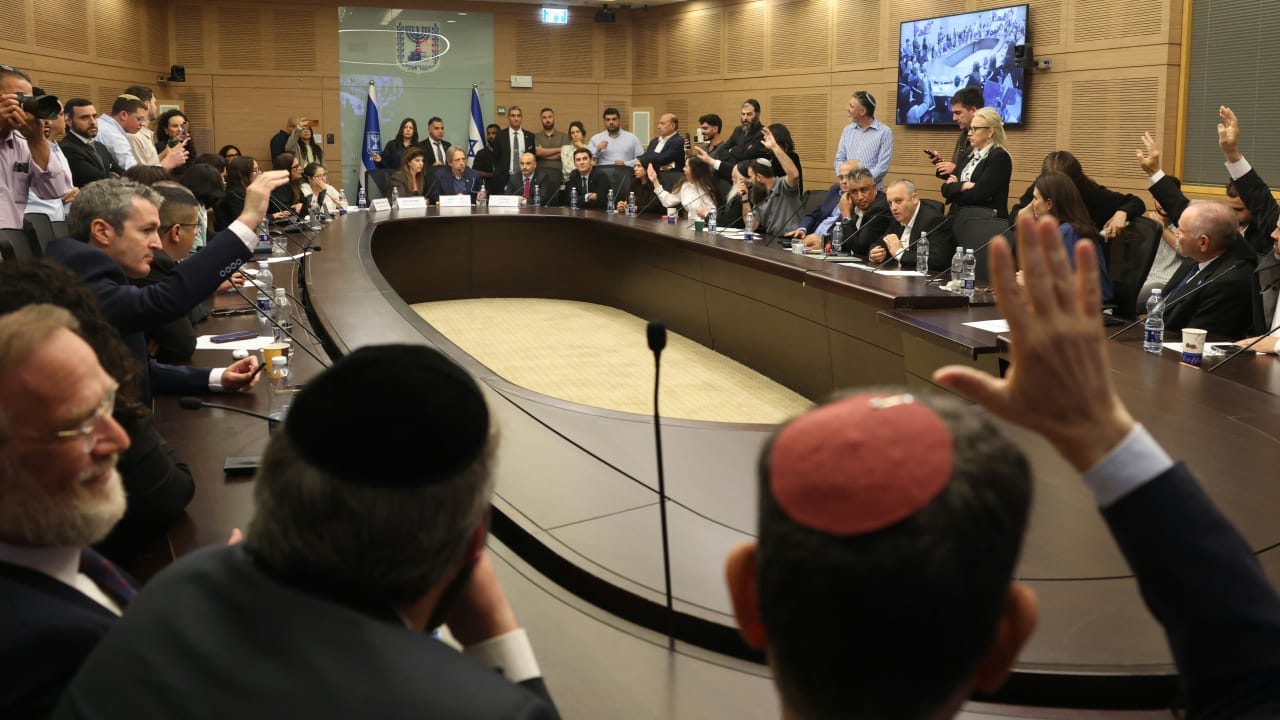
The Knesset's newly appointed Arrangements Committee, which determines the composition of key committees overseeing legislation at the start of the new parliamentary term, voted Wednesday to approve MKs from the bloc seeking to replace Benjamin Netanyahu as prime minister to head the Knesset's Foreign Affairs and Defense Committee (FADC) and Finance Committee.
Yisrael Beytenu leader MK Avigdor Liberman was approved to serve as temporary chairman of the FADC, while MK Liran Avisar Ben-Horin (B'Yachad) was approved to head the Finance Committee.
Both committees are highly influential: the FADC oversees national security matters and military budgets and, notably, handles legislation related to IDF conscription.
Yashar leader Gadi Eisenkot, who received the mandate from the president to form the next government, has been pushing for his bloc to pass as much legislation as possible in the period until a new government is formed.
It was agreed that both new panels would comprise 17 members, drawn from various parties. The proposals were approved following a stormy discussion in the Arrangements Committee by a vote of 13 in favor and nine against. The decisions still require final approval by the Knesset plenum.
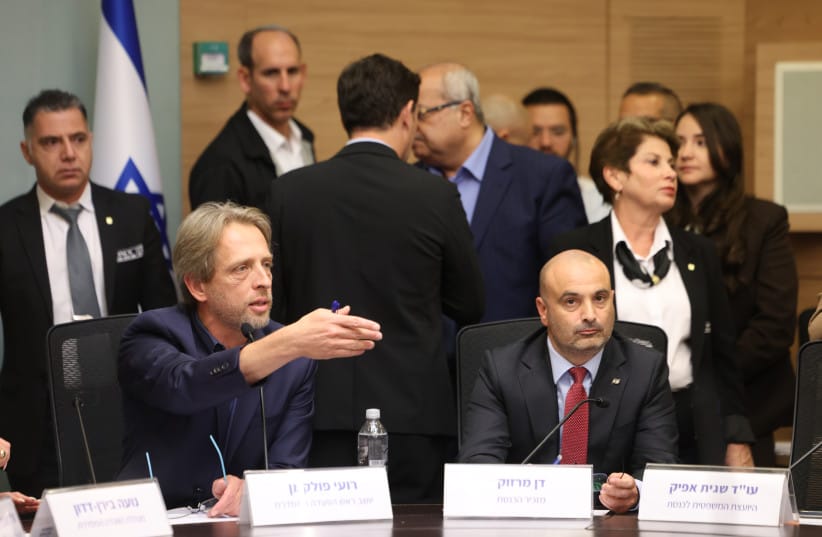
Arrangements Committee approved earlier in the day by Knesset plenum
The Knesset plenum had earlier in the day approved the composition of the Arrangements Committee, with the Eisenkot-led bloc seeking to replace Prime Minister Benjamin Netanyahu, securing a majority for its proposed lineup.
The Arrangements Committee is a temporary Knesset committee that organizes the Knesset’s work at the start of a new parliamentary term and determines the composition of the key committees that will oversee legislation.
The Eisenkot-led bloc’s proposal for the Arrangements Committee's composition passed with 63 MKs in favor and 50 against. It was the first vote held in the plenum after the swearing-in of the 26th Knesset on Tuesday.
The vote demonstrated the ability of the Eisenkot-led bloc to secure a Knesset majority following the October 27 elections, in which the Eisenkot-led bloc, including the Arab parties, received 67 seats, while Netanyahu’s bloc won 53 seats.
However, no government has yet been formed, as Eisenkot-led party leaders have drawn a red line against partnering with the Arab parties. Nevertheless, their support could still allow the bloc to pass key legislation, even while Netanyahu heads a caretaker government.
MK Roy Folkman, a member of Eisenkot’s Yashar party, will head the Arrangement's Committee, in accordance with the law stipulating that the panel be chaired by an MK from the faction the candidate tasked by the president with forming the government.
Yashar announced on Tuesday that Folkman was selected for the position. The decision was made in agreement with party leaders from the Eisenkot-led bloc.
The vote on the committee's composition paved the way for the Eisenkot-led bloc seeking to replace Netanyahu by appointing its nominees to head key committees and advance legislation until a new government is formed.
Liberman, Ben-Horin to lead foreign affairs, defense, finance committees respectively
On Tuesday, the Eisenkot-led bloc announced Liberman and Ben-Horin as its nominees to head the FADC and Finance Committees.
The Arrangements Committee will discuss and finalize the composition of the committees during its deliberations.
Yashar stated on Tuesday that the appointments would then be brought to the Knesset plenum for approval next Wednesday.
Under Folkman's proposal for the Arrangements Committee, which was approved by the plenum, the panel will consist of 22 MKs. The number of MKs representing each party in the committee is proportional to the proposal laid out by Folkman, in which parties receive one seat on the committee for every five MKs they have.
From the Eisenkot-led bloc, Eisenkot’s Yashar will have four representatives; Naftali Bennett’s B’Yachad and Yair Golan’s Democrats will each have two; and Avigdor Liberman’s Yisrael Beytenu will have one.
From Netanyahu’s bloc, Likud will have five representatives, while National Security Minister Itamar Ben-Gvir’s Otzma Yehudit, Finance Minister Bezalel Smotrich’s Religious Zionist Party, Yakov Asher’s United Torah Judaism, and Arye Deri’s Shas will each have one representative.
Arab parties to be represented by total of four MKs across the two committees
The two Arab parties, the Joint List and Ra’am, will each have two representatives, leading to a total of four MKs.
This composition for the committee contrasted with a separate proposal submitted by Likud MK Ofir Katz, which failed to secure a majority.
Likud criticized the Eisenkot-led bloc for voting with the Arab parties, reiterating its claim that the bloc was "cooperating with supporters of terrorism."
Although Eisenkot received the mandate to form the next government from the president - with recommendations from the Arab parties - he is not required to form a coalition with them.
The bloc has recently shifted toward opening coalition negotiations with the haredi (ultra-Orthodox) parties, which have been key partners in Netanyahu’s coalition, to secure a majority instead.