
Israel’s volunteer and donation efforts in the first three months of the war was worth an estimated NIS 14.78 billion, but the government entered the crisis without a body responsible for coordinating those efforts, State Comptroller Matanyahu Englman found.
The audit, published on Tuesday, focused on the state’s relationship with volunteer groups, charities, philanthropic bodies, and civilian initiatives that assisted the home front after October 7.
According to the report, the NIS 14.78b. estimate included some NIS 8.56b. in the assessed value of volunteer labor and NIS 6.22b. in money and in-kind donations between October and December 2023.
That was about three billion shekels more than the NIS 11.8b. the state allocated for civilian needs over the same period.
The audit found that nearly half of Israeli adults volunteered in October 2023, with an average of 2.23 million people volunteering between October and December. During that period, 3.6 million people donated.
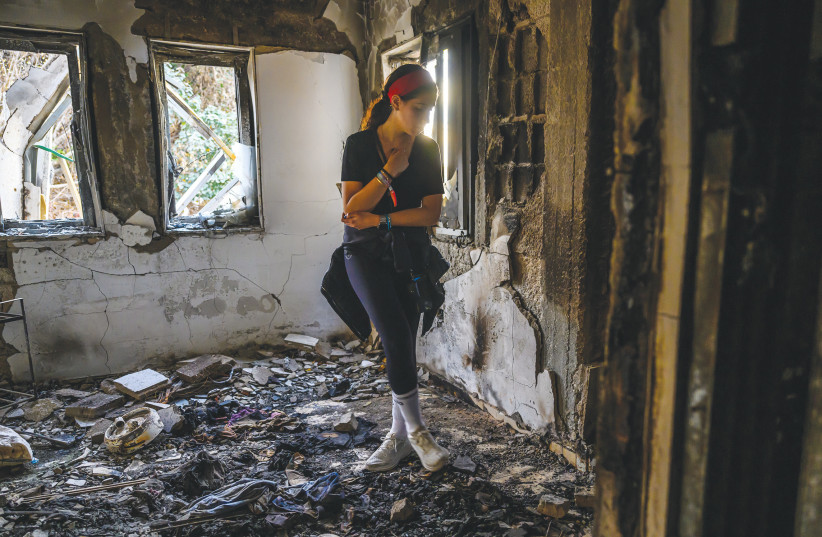
Large amount of emergency volunteer initiatives were formed spontaneously
More than 1,000 civilian emergency rooms, volunteer networks, and community initiatives operated during that period, helping more than two million people and providing assistance estimated at over NIS 250m. About 80% of those initiatives were formed spontaneously.
The scale of the response made coordination essential, the report said. Donations, food, equipment, accommodation, transport, and volunteer manpower were all directed toward needs that were also the responsibility of government ministries and local authorities. However, no government body was tasked with coordination.
From 2018 until the end of the audit in July 2025, no central government authority was responsible for coordinating government activity with donor and volunteer bodies during emergencies.
The National Emergency Authority’s resilience division, which had coordinated part of that work, was closed in 2018 during an organizational change. No replacement body was appointed.
The government attempted to create a central, cross-sector coordination mechanism after the war began, but those efforts failed.
Seven of the 15 ministries examined had no designated official responsible for the necessary coordination. Before the war, 10 of the ministries had not mapped the areas in which outside organizations might be needed, nor the groups that could provide assistance.
The Prime Minister’s Office’s unit for cross-sector partnerships was also unprepared. The unit was established under a 2008 government decision intended to strengthen coordination with civil society and philanthropy. Before the war, it employed only a director and coordinator; in the first months of the war, it operated with only the director.
The audit found that the unit had not completed a government-wide digital system meant to connect ministries and civilian groups. Nor had it completed the work of appointing ministry-level contacts, compiled information about relevant organizations, or established a central public information line for donors and volunteers.
This meant that organizations often struggled to identify the relevant official in a ministry, while ministries had no comprehensive picture of who was operating in their field, what they were providing, or where help was still needed.
The same problem had surfaced after the Second Lebanon War
The report noted that the same problem had surfaced after the Second Lebanon War. A 2007 comptroller report found major gaps in coordination as it related to northern residents. The government adopted a decision in 2008 recognizing the importance of partnership with civil society, while stressing that volunteer work could not replace the state’s obligation to provide essential services.
The system was still not in place when the next national emergency arrived.
The audit also examined a government emergency fund for nonprofit organizations. The fund was established during the COVID-19 pandemic with philanthropic foundations and distributed about NIS 50m. to 302 organizations affected by the crisis.
When the war began, many nonprofits expanded their work while losing income due to suspended contracts and frozen government budgets. But the Treasury could not activate the existing fund quickly because problems identified after the pandemic had not been resolved.
Instead, the Treasury published a separate NIS 40m. support program for nonprofits in December 2023, roughly two months into the war.
Englman called on the Prime Minister’s Office and the National Emergency Management Authority to decide which body will be responsible for coordinating government activity with volunteer and donor organizations during emergencies.
That body, he wrote, should have clear authority, staffing, funding, digital tools, and working procedures with government ministries, the Home Front Command, and civilian organizations. It should also be trained during routine periods rather than assembled once an emergency is already underway.