
More than four years after his son murdered Tomer Morad, Barak Lufen and Eitam Magini in the heart of Tel Aviv, Fathi Hazem, the father of terrorist Raad Hazem, was killed overnight Thursday in Jenin.
According to the IDF, Hazem attempted to stab troops operating in the area and was shot dead. For Tal Morad, Tomer’s sister, his killing does not close a circle. In her eyes, the circle that began on April 7, 2022, cannot be closed as long as her brother is not here.
In a conversation with Walla, Tal said that just minutes before she learned of Hazem’s killing, her mother called her and told her about an unusual dream in which she had seen Tomer.
“Just before I heard, I spoke with my mother, and she called to tell me that she had dreamed about him. She dreamed that he was wounded in a hospital, and standing next to him was a wounded man wearing a galabeya. Tomer tells her: ‘Mom, don’t touch me, I’m wounded,’” Tal said.
She said the dream continued in a way that became especially chilling for the family after they learned what had happened in Jenin.
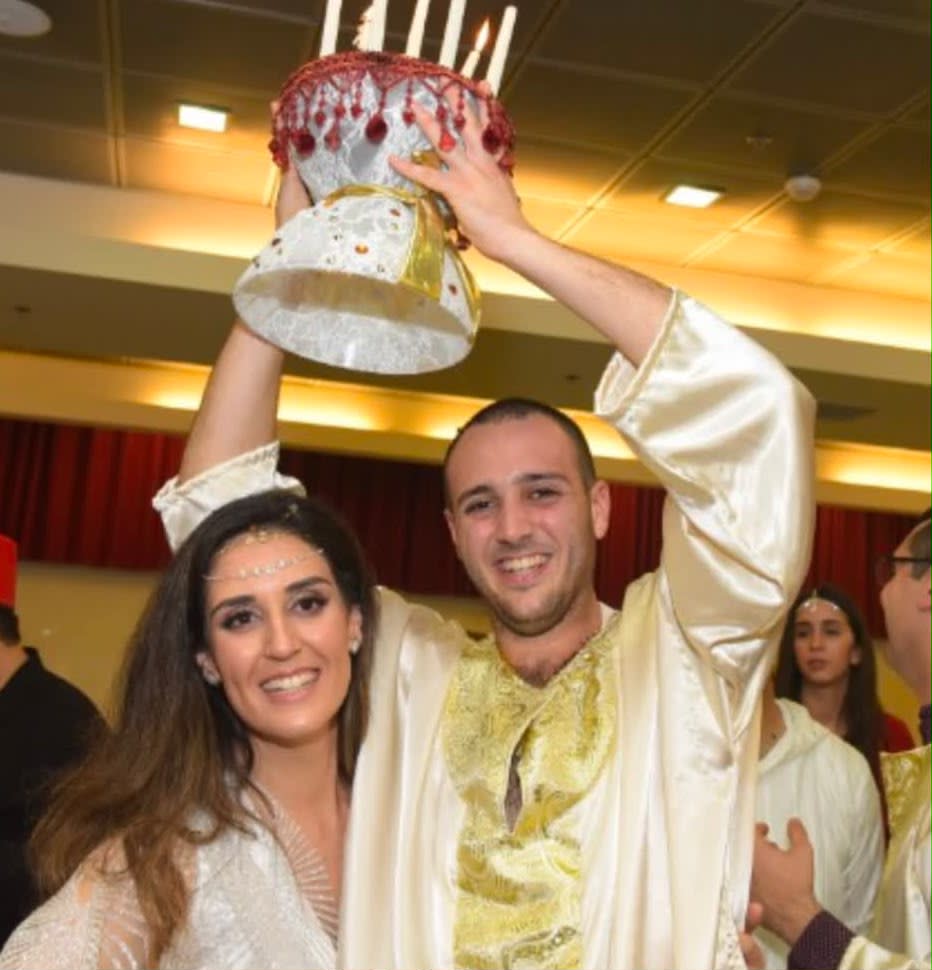
“She dreams that someone comes to her, an army officer, and takes her to Tomer in the hospital. She told her: ‘This can’t be; Tomer is not alive.’ Then, next to Tomer, stands someone wearing a long white galabeya, wearing a large knitted kippah, with his hands joined in front of his body, as if he is standing there guarding him. Then Tomer says to her: ‘They put him in his place.’ After he smiled at her, she woke up. He told her that this man was in his place.”
Shortly after that conversation, news arrived of Hazem’s killing. But Tal said her first thought was not about the man who had been killed, but about the soldiers operating in the area.
“The first thing I did was check that none of our forces had been injured and that nothing had happened, because that is the most important thing,” she said. “From what I understand, Hazem tried to stab a soldier, and they shot back at him. That is what brings us the most comfort and relief as a family, because if something had happened to a soldier, to one of them, in my eyes it would not be worth anything. Tomer is no longer with us, and that will not change it. The fact that Tomer is no longer here will never change.”
Alongside those comments, Tal did not hide her sense of relief that Hazem is no longer alive.
“I am mostly happy that a man with so much hatred, who spreads so much hatred, is no longer with us. He would hold conferences and send people out to carry out attacks, so mostly, thank God, this man is no longer with us.”
Jenin camp resident murders three, wounds 15
The attack in which Tomer was murdered took place on April 7, 2022. Raad Hazem, a resident of Jenin refugee camp, arrived on Dizengoff Street in Tel Aviv and opened fire at people spending time there. He murdered Barak Lufen, Tomer Morad, and Eitam Magini, and wounded 15 others. After the shooting, Hazem fled the scene and was located near a mosque in Jaffa after a nine-hour manhunt.
Two operatives from the Shin Bet (Israeli Security Agency)’s operational unit who were patrolling the area identified a person matching the terrorist’s image and the details provided to forces. They exited their vehicle and ordered him to stop. Hazem raised his hands, but then ran to hide behind a vehicle, pulled out a handgun, and fired 10 bullets at them. The forces charged toward him, returned fire, and killed him.
After his son’s death, Hazem left his home in Jenin and delivered a speech in which he spoke about continuing the struggle and future victory. Among other things, he told a crowd gathered at the scene that he hoped they would see “victory,” “freedom,” and “independence,” and called for the liberation of the Al-Aqsa Mosque.
Several months after the attack, IDF forces demolished Raad Hazem’s home in Jenin. During the operation, clashes and exchanges of fire broke out between armed Palestinians and the troops. As the soldiers left the refugee camp, heavy objects, stones, and firebombs were thrown at them. Palestinians reported one person killed and several wounded at the time.
For Tal, all these details are part of a story that has no ending point. When asked whether Fathi Hazem’s killing closes a circle for her, she breaks down in tears.
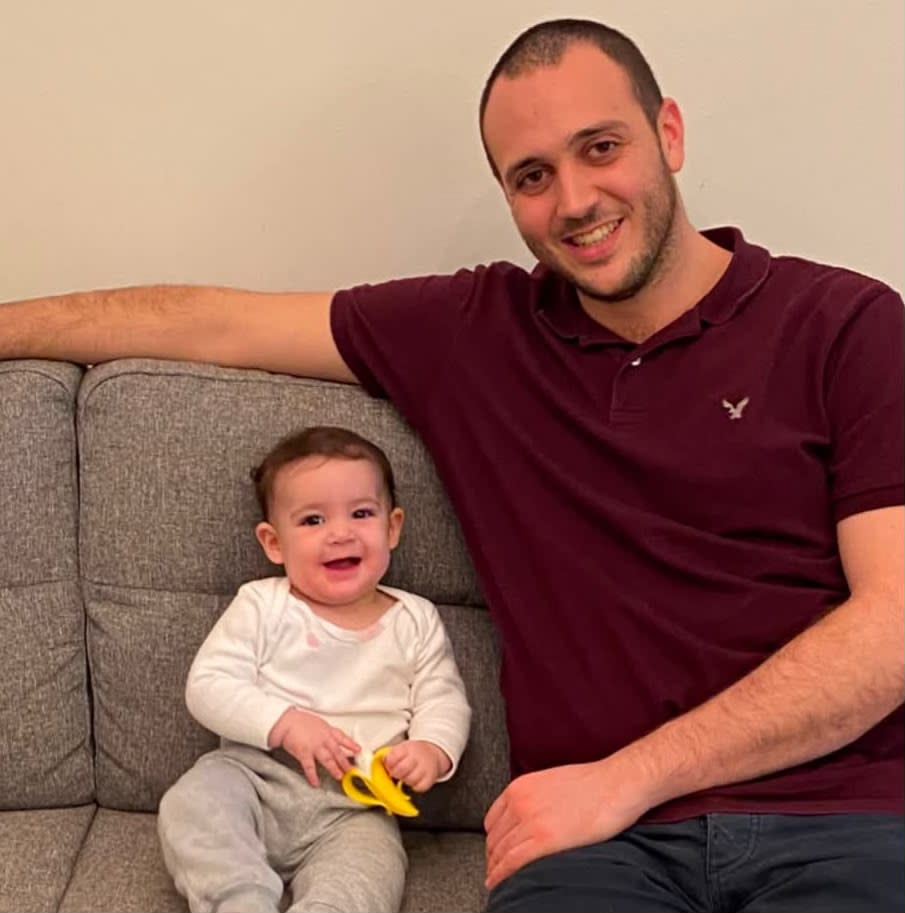
“My circle will never close,” she says. “I am happy he is not there. Our circle will close when we meet Tomer. But it is good that he is not here.”
Victim's sister worried about endangerment of IDF soldiers
On the very day the father of the terrorist who murdered her brother was killed, Tal sought to make clear that, in her eyes, such a killing does not restore the justice taken from her family. She also worries about the price soldiers may pay when sent to carry out such operations.
“No killing will bring justice. It only endangers our soldiers. It is another family destroyed like mine, and it is not worth it. They should not be here, and I wish we could take care of this without endangering our soldiers, for one terrorist, and another family like this will be destroyed. I choose that this should not happen.”
For her, even the killing of one person does not change the broader reality.
“You only think about how different we are from these people, and how much they are driven by hatred. And no matter how many generations pass, unfortunately, it will not change. I do not know whether the killings will change anything, because one person goes and another one rises. I only think about how bitter our fate is, that we are destined to live alongside them.”
Since April 7, 2022, she said, almost every incident of loss in Israel brings her back to the night her brother was murdered. Even four years and four months later, the memory does not need news about the Hazem family to awaken again.
“I always return to the attack, even during the war. Every face of a child that appears on television takes me back to that same evening. It is simply a cruel fate,” she said.
“Life in this country makes us see this not as a symbol or as someone specific. Every mother standing at a funeral, every person, every sister, every face of a child, with a uniform or without a uniform, everything brings us back. We live this. I do not need a news report to remind me. I am just happy that his father was killed and is no longer here.”
Most important thing is to prevent it from happening to anyone else
When asked how she thought Tomer would have reacted if he had heard that the father of the terrorist who murdered him had been killed, Tal said: “Tomer would have said that ‘every dog has its day’ [a Hebrew expression meaning that bad people are punished at their time]. That is Tomer.”
Alongside her memory of her brother, Tal said that, in her view, the story is bigger than simply commemorating Tomer. She wants him to be remembered, but more than that, she wants to see a reality in which more families do not have to go through what hers experienced.
“I cannot say that it is not important to me that everyone remembers who Tomer is, so we do things for that. But at the level of the country and the public, what is most important? The most important thing is that someday soon a solution will be found that will stop us from having to live this way. But if I am being honest, as the years go by, I believe this is the fate of the country, to live this way.”
Four years and four months after that evening on Dizengoff Street, time has not stopped the longing for the Morad family. Tomer remains present in every memory, every picture, and every moment that takes them back to the life they had before April 7, 2022. Even this morning, amid the news from Jenin, Tal ultimately returns not to the man who was killed, but to the brother she lost: his smile, the things he used to say, and the hope that one day the pain will become a little less heavy.